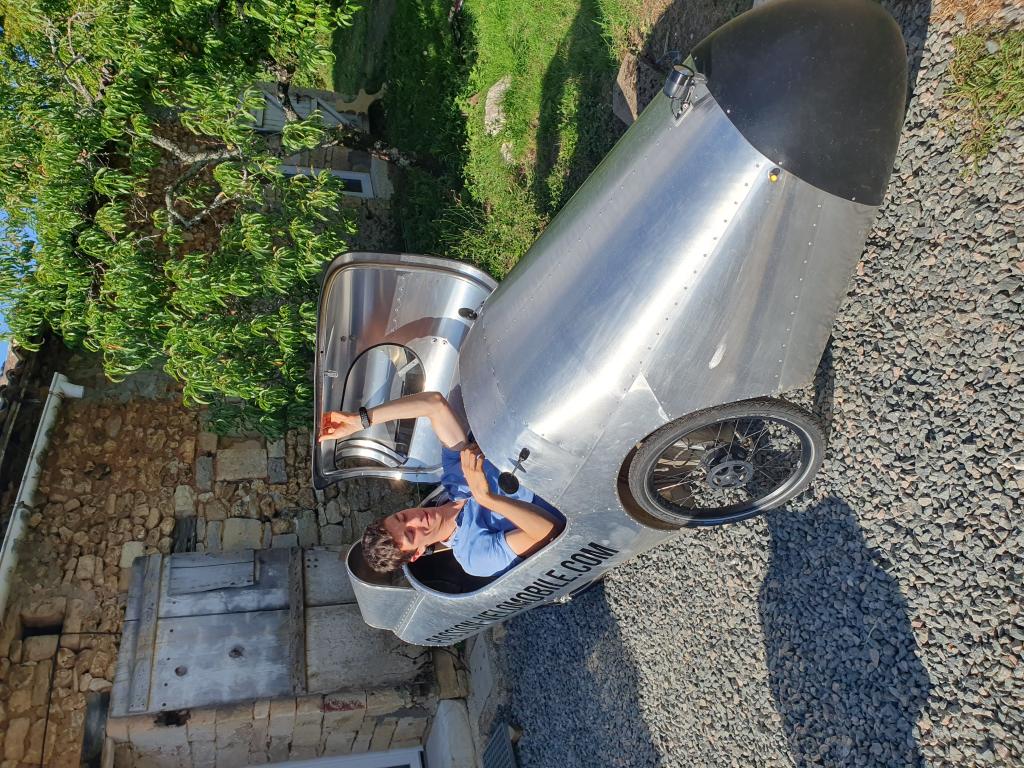
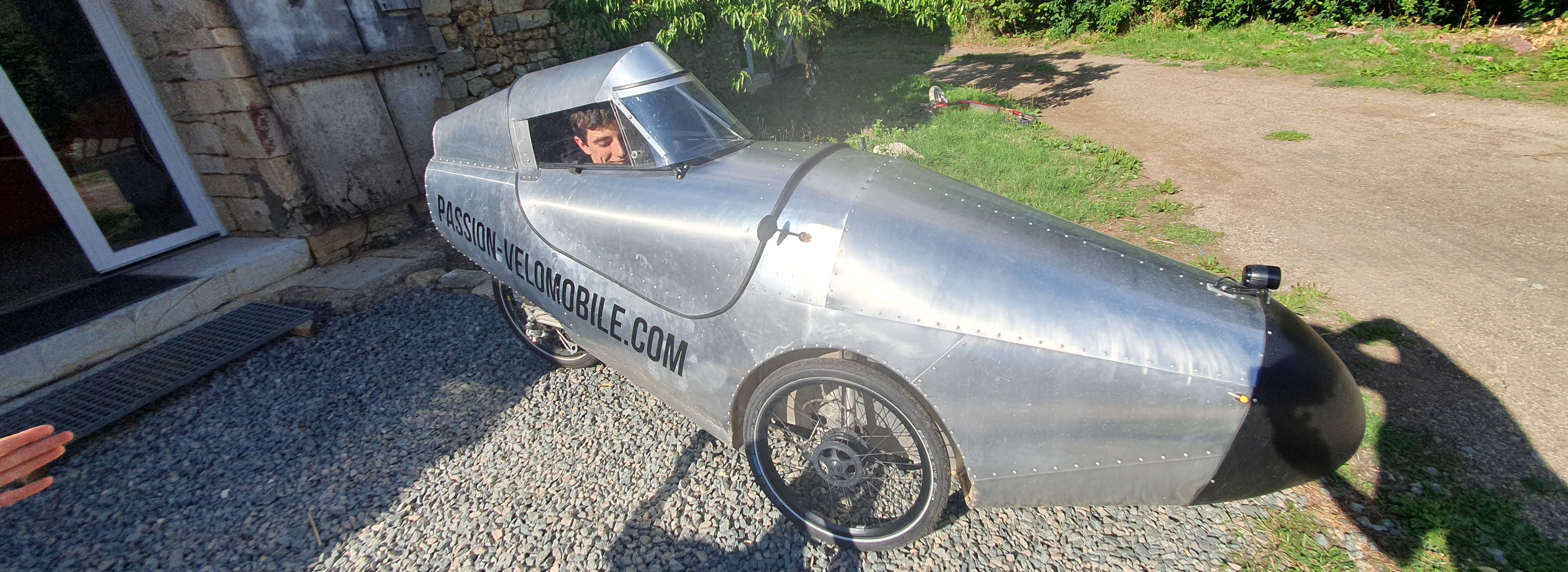
A first-year engineering student in Grande Ecole Engineering Programme PGE) at the Arts et Métiers campus Arts et Métiers Lille, Séraphin Rossignol is launching his entrepreneurial venture with the goal of making the velomobile more accessible—this ultra-aerodynamic pedal-powered vehicle capable of reaching speeds of 35 to 40 km/h on flat terrain, and even higher for sprinters (80 to 100 km/h).
Democratizing the velomobile, an ultra-aerodynamic pedal-powered vehicle
High-performance, stable, protective, and environmentally friendly, velomobiles could become a real alternative to cars... if their price weren't such a major obstacle. Today, the models available cost around €10,000 to €12,000, as they are made of carbon fiber and produced in small batches.
"It's a shame that such an efficient vehicle is reserved for a select few enthusiasts. I want to offer a simpler, more environmentally friendly, and above all, much cheaper alternative," explains Séraphin.
Innovative architecture inspired by aeronautics
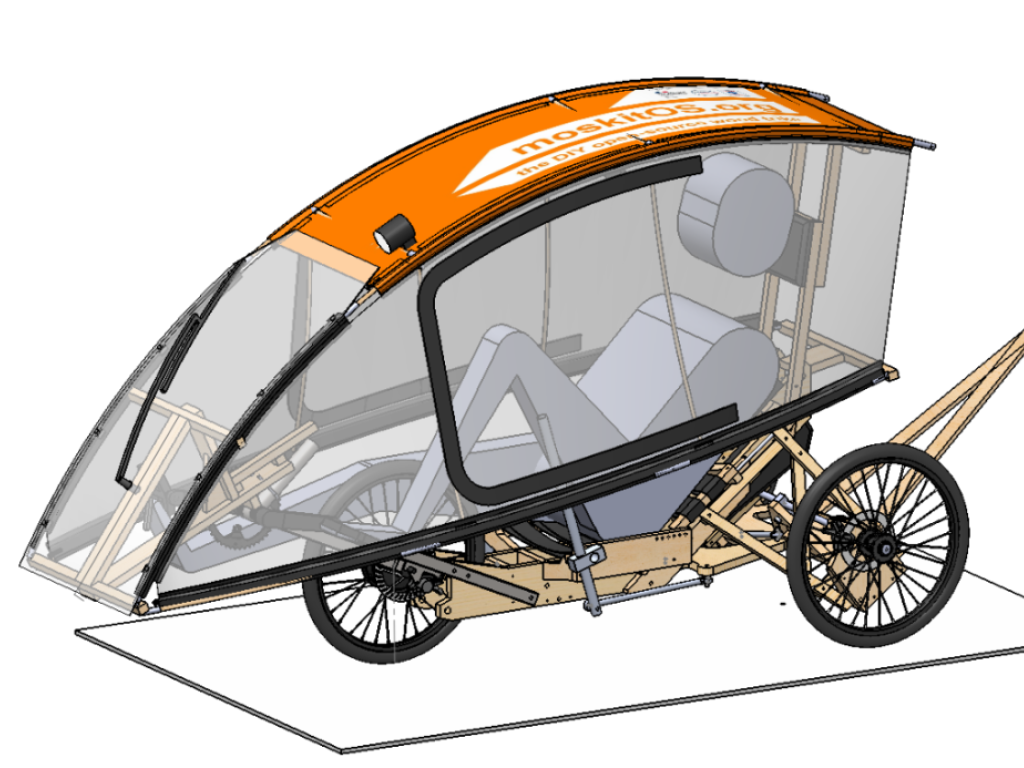
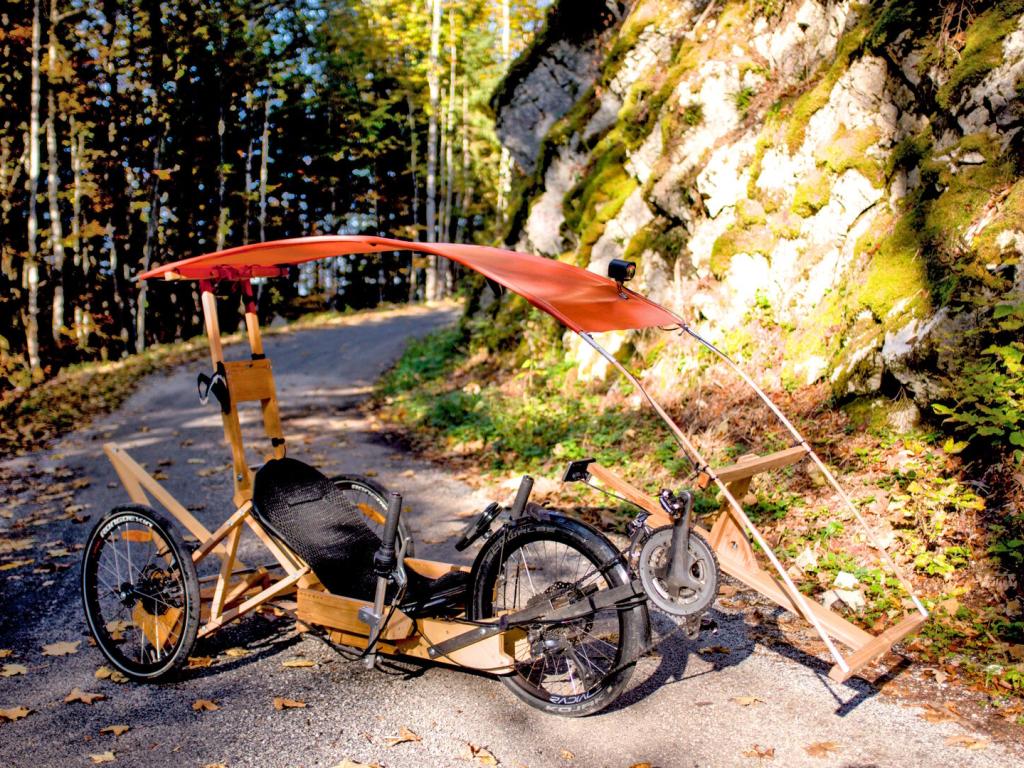
To completely rethink the velomobile, Séraphin drew inspiration from the wooden and canvas biplanes of early aviation. His concept is based on:
- A wooden frame with an aluminum reinforcement, covered with a lightweight and sturdy French linen canvas used in aeronautics.
- Front-wheel drive and rear-wheel steering, simplifying the mechanics and optimizing flow.
Thanks to this approach, the student is aiming for a marketable model costing around €3,000, which is four times less than current velomobiles, while maintaining performance and durability.
"The potential is huge: low-cost materials, simplified architecture, and the possibility of French production using, for example, the flax industry."
A project rooted in open source and responsible innovation
As part of his project, Séraphin researched existing solutions, which led him to collaborate with the MoskitOS association, which has already developed a prototype open-source velomobile supported by ADEME.
Its objective: to improve the existing solution, which is not commercially available but can be manufactured independently by users who wish to acquire the product using the plans and manual provided, and then make the product industrially viable so that users can purchase the finished product directly.
Supported by regional youth entrepreneurship initiatives, Pépites Hauts-de-France and Les Entrep’, he also receives support from the PEIT Arts et Métiers program, under the mentorship of Sylvain BIGOT and supervised by Sandra Cologne, enabling him to structure his project, business model, and roadmap, including access to the Etincelle certification program offered by EDHEC.
A structured schedule for the production of an industrializable prototype
Beyond access to EDHEC's Etincelle program, the PEIT Arts et Métiers course Arts et Métiers enabled Séraphin to connect with a network of experts. If his project requires it, he will be able to access rare resources such as the aerodynamic wind tunnel on the Paris campus to carry out simulations.
Séraphin has also secured an internship opportunity at the world's only factory that mass-produces velomobiles, Vélomobile World, located in Romania, which will allow him to strengthen his understanding of industrial issues.
An upcoming deadline scheduled for May
Thanks to the internship organized by the MoskitOS association, Séraphin will have the opportunity to build a velomobile based on existing plans provided by the association. This highly advanced prototype will be on display on campus starting in May and will serve as the basis for future prototyping work.
The creation of an industrializable prototype incorporating new mechanisms will be the subject of a PJT 2A (second-year educational project) supervised by campus faculty.
A sustainable mobility project combining passion and ecological commitment
For Séraphin, this project is above all the meeting point between a lifelong passion—cycling and mechanics—and a desire to offer more sustainable mobility solutions.
"Driving fast, sheltered from the rain, with minimal carbon impact... This is exactly the kind of innovation our society needs. My ambition is to develop it by drawing on the knowledge and skills I acquired during my engineering training atArts et Métiers."
Through this project, Séraphin fully embodies the spirit of the school: engineering, passion, and commitment to more responsible mobility.
Towards a new generation of velomobiles?
With his fresh perspective, pragmatic approach, and the resources provided by Arts et Métiers, Séraphin hopes to contribute to a major shift toward sustainable transportation.
His ambition is clear: to democratize a vehicle that is still relatively unknown but has considerable potential for the cities of tomorrow.