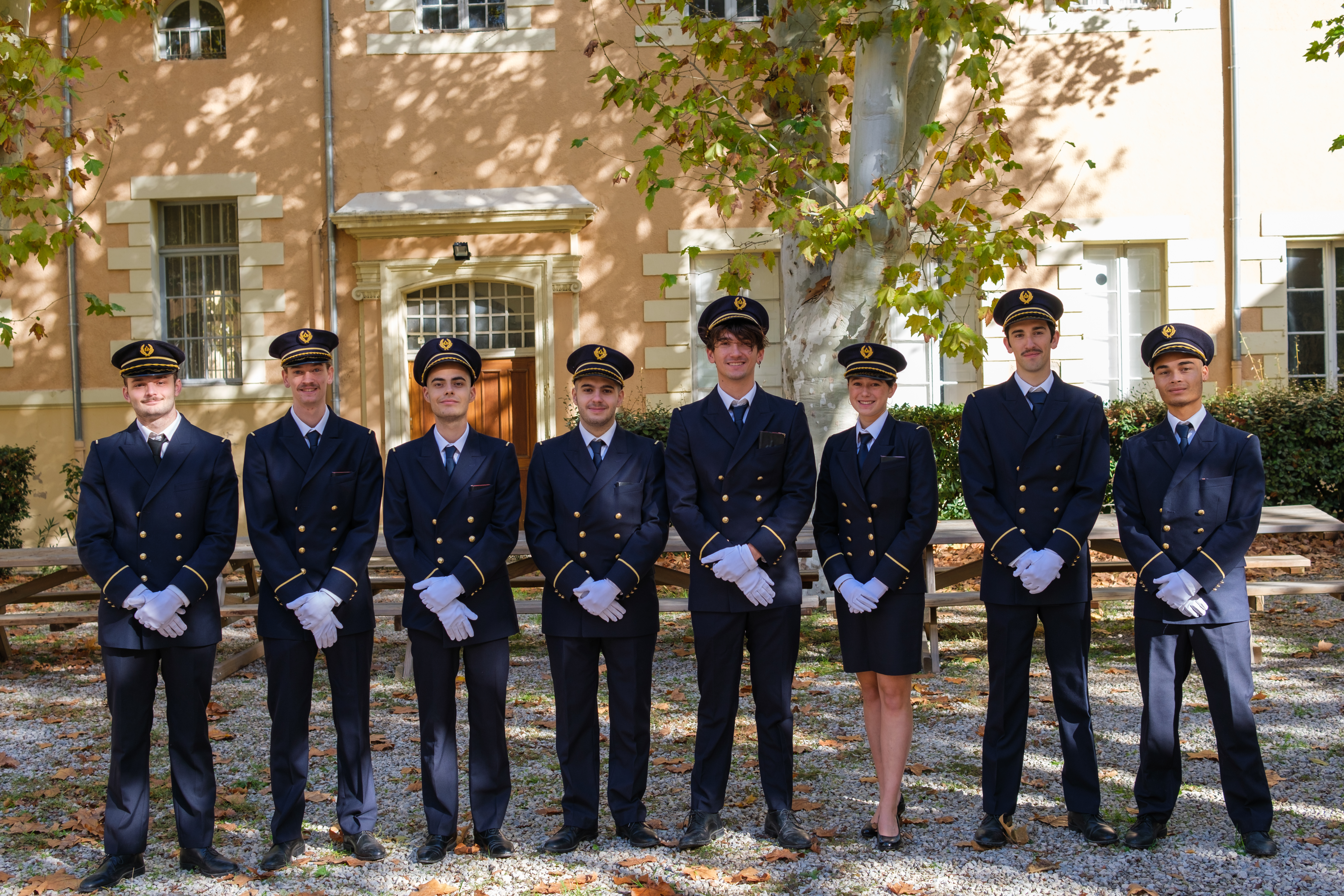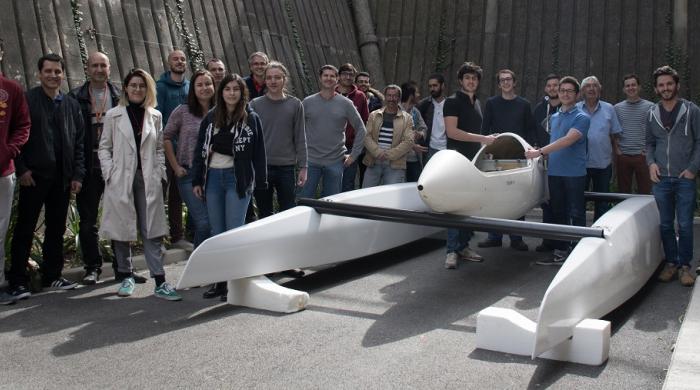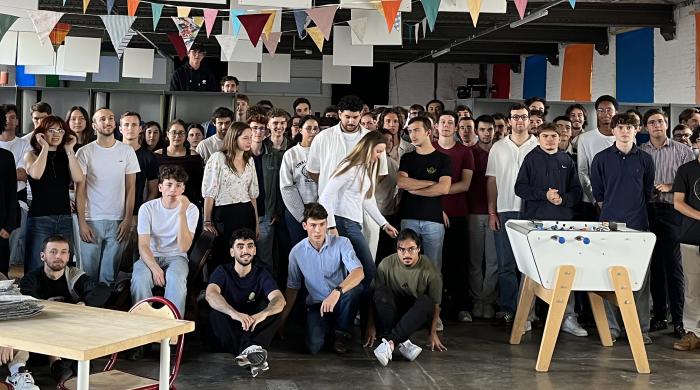

A new team of students is taking over with the goal of getting the Hydrogadz single-seater back on track and entering it in the competition. Monaco Energy Boat Challenge , which will take place on July 1, 2024, in Monaco.
The project’s origins date back to 2017, when two first-year students from the Grande Ecole Engineering Programme in Aix-en-Provence Grande Ecole Engineering Programme to enter the 2019 Monaco Energy Boat Challenge.
A major challenge to overcome: increasing the energy efficiency of the boat's propulsion chain
This challenge stimulates the creativity of engineering students and professionals around mobility that uses clean energy. It involves working on the energy efficiency of the powertrain and presenting a single-seater prototype that complies with constraints limiting the mass and amount of energy on board, while achieving sporting performance in terms of maneuverability, endurance, and speed.
Hydrogadz's dual challenge to get into the race
- A financial challenge
In order to revitalize the project and develop it further, the students set out to find new sponsors.
Very quickly, a sponsor was won over by the project and agreed to finance it.
- A technological challenge
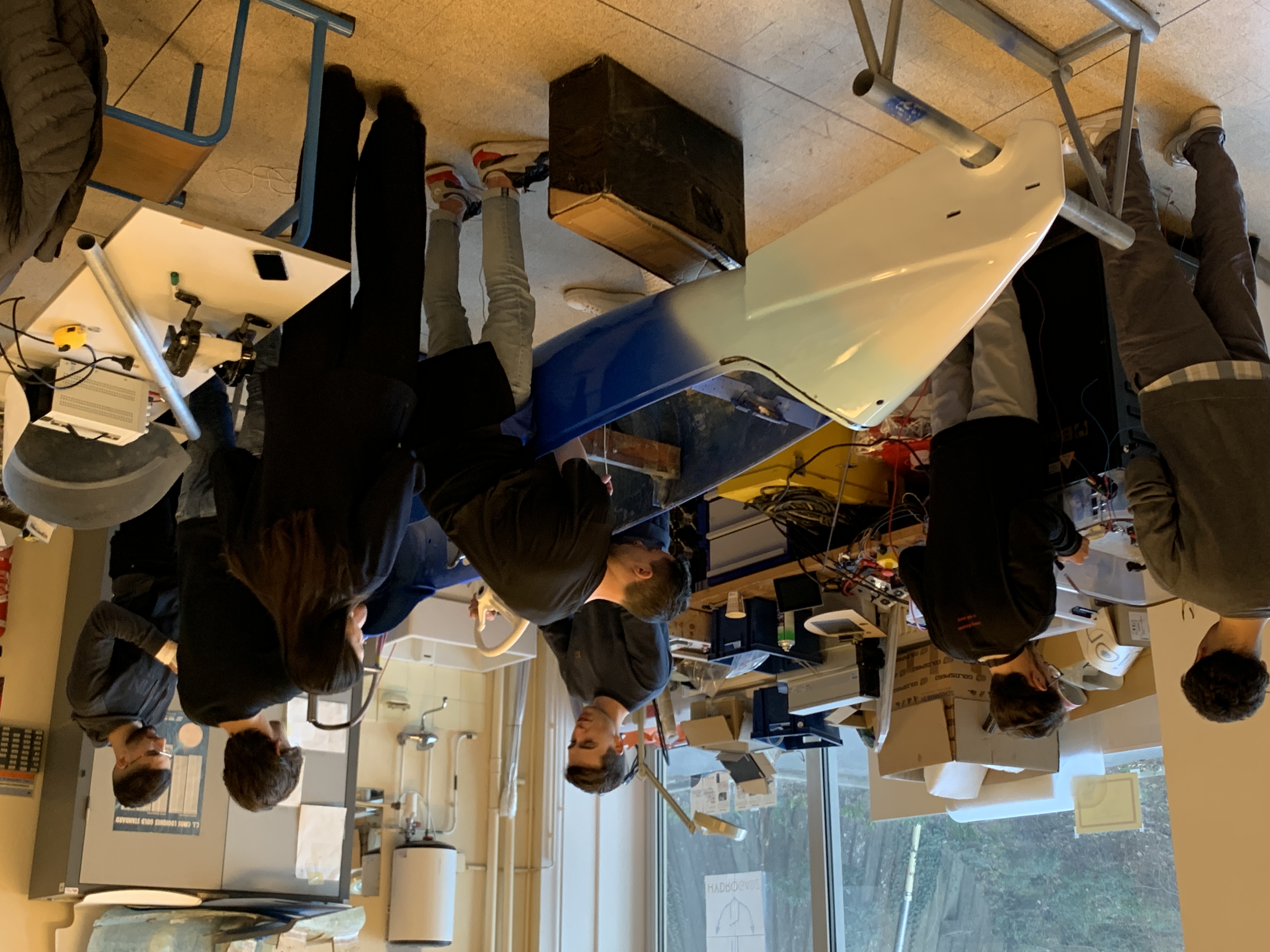
The team was also looking for cutting-edge technical partners to help them get their boat back on track. A consulting firm that had already competed in the Monaco Energy Boat Challenge signed a technology partnership with Hydrogadz and proposed merging their two boats to achieve better performance. In addition to technical support, the consulting firm provided the fuel cell, battery, and on-board control system.
Renewed academic support
Successive student teams can always count on the material and human support of the campus, which fully integrates this project into its educational model throughout the semester through 44 hours of project-based teaching (PJT).
The knowledge and skills acquired during their Arts et Métiers engineering training enable Arts et Métiers to achieve all of their objectives.
The team will be supervised by three teachers. The aim of the project is to study power transmission in order to determine the optimal speed of the boat during speed and endurance races.
In their spare time, the students will ergonomically design the cockpit, distribute the components to optimize the boat's center of gravity, and also build a cooling system for the electronic components.
Technological objectives to be met
In order to meet the technological objectives set by the challenge organizer, the new team's project consists of creating an energy chain based on a hybridization of sources. The main energy source is the fuel cell. However, it is necessary to have a small energy storage capacity in batteries to adapt electricity production to consumption and avoid wasting energy.
The quest for performance, particularly in terms of maximum speed and range, requires the optimization of certain boat equipment in order to achieve first place in the overall ranking of the 2024 Moncao Energy Boat Challenge.
The team has no shortage of plans to bring its project to fruition.
- Optimize the single-seater catamaran, from the cockpit to the pilot compartment and engine compartment.
- install an auxiliary power source to compensate for the limitations of the fuel cell by "absorbing" sudden power variations and to power the on-board electronics,
- choose a new direction in line with the geometry of the cockpit in order to achieve better responsiveness during the slalom event,
- Improve the connection with the ground to transmit data measured on the fuel cell and engine, communication between the pilot and the ground crew, and the pilot/boat interface.
It's an incredible opportunity to be able to take part in this adventure.
With the support of her teammates, Agathe Frémont—a sophomore in the Grande Ecole Engineering Programme president of Hydrogadz—will be at the helm of the boat and, we all hope, will lead her team to victory, building on their previous achievements: 1st place in the Hydrogen category, 4th place overall, and winner of the Zero Emission Award.
Agathe Frémont explains: " This project is an exceptional experience, both technically and personally. It gives us the opportunity to develop skills in team management, deadline management, and budget management, as well as technical skills, from the design phase to the steering of the boat, including manufacturing, assembly, and sea trials.
I am eagerly awaiting the first day of the race in Monaco. We will meet students from all over the world with whom we will be able to discuss the different technologies used in our boats.
At a time when ecological transition is more necessary than ever, we are convinced that hydrogen is one of the energy sources of the future and we hope to encourage and promote its use. As part of the competition, we are committed to using hydrogen produced from solar panels installed at the Monaco Yacht Club.
Team composition
Agathe Frémont, president
Roman Frédière-Boiteau: vice-president
Benjamin Duportal: treasurer
Guilhem Leclère: secretary
Clément Parachini: communications
Mathias Perrot: PJT manager
Thomas Lissorgues: sponsorship manager
Maël Andrianarivelo: sponsorship manager