In the PA12 report, Materials and Additive Manufacturing (MadMan), the goal is to train students in Grande Ecole Engineering Programme additive manufacturing technologies by teaching them the fundamentals of design principles and the associated digital approaches. This course introduces a rapidly evolving process that enables flexible and rapid prototyping as well as customized products.
Industry-related prototypes
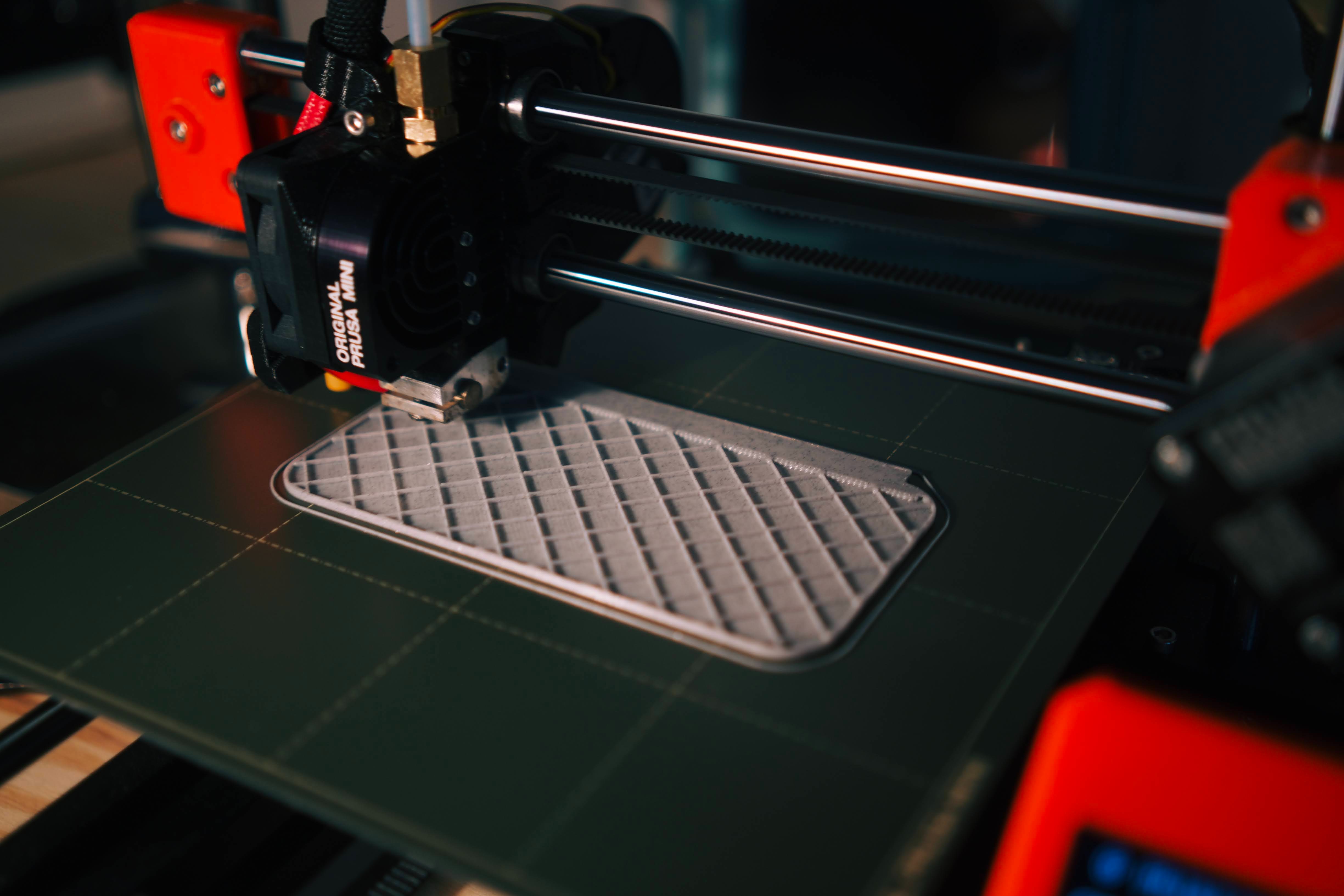
3D printing, or additive manufacturing, is a relatively recent process that involves adding layers of material one by one to create complex geometric parts that can be made lighter. Various technologies exist and are suitable for a wide range of materials (metal, polymer, wax, ceramic, plaster, etc.). "These processes are very interesting for the design and production of prototypes and are increasingly being used in industry (aeronautics, automotive, healthcare, etc.) to produce complex, customized parts or parts that can no longer be manufactured in any other way, particularly through reverse engineering," says Sébastien Roland, head of expertise and lecturer-researcher at the Laboratory Processes and Engineering in Mechanics and Materials (PIMM).
Materials and Additive Manufacturing (MadMan) expertise is aimed to a limited audience of students whose semester is staggered (from February to the end of June). Its objective is to showcase additive manufacturing technologies associated with materials, each of which requires specific techniques.
In this expertise, the teaching modules are organized in such a way that the entire digital chain associated with additive manufacturing is covered. For example, this ranges from surface or free-form design, through reverse engineering and topological optimization, to surface reconstruction and distortion calculation. Manufacturers are now moving towards process automation, a challenge that would improve its industrialization.
Innovative projects on several fronts
Last year, students specializing in this field studied the design of a topologically optimized bridge. The challenge set for the students was to maximize the rigidity of a bridge using as little material as possible. The structures printed on the school's printers are tested on mechanical testing machines to assess their weight resistance.
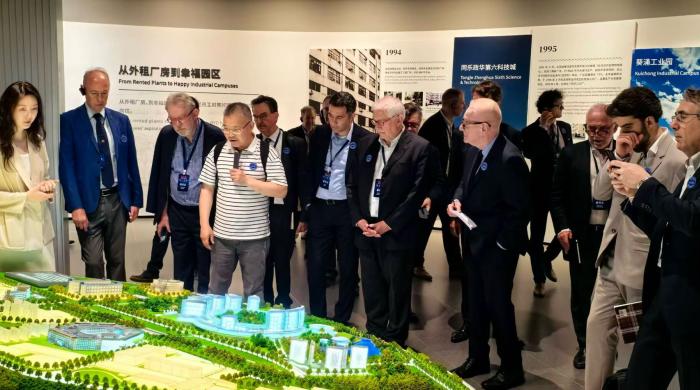
Arts et Métiers students alsoArts et Métiers part in an international competition organized by NIIAM (National Institute of Innovation of Additive Manufacturing, based in Xi'an, China) on the theme of "green living." They presented an innovative composting pot, which was clearly appreciated by the jury, earning them second place in the competition.
Testimonials from former students of the program
Antoine Raffray (Class of 218)
- What did you appreciate most about this expertise?
I really liked the way this expertise was approached. We had theoretical classes that allowed us to acquire the knowledge necessary to fully understand additive manufacturing. We also had regular practical sessions that allowed us to put the concepts studied in class into practice.
- Which project did you like best?
I preferred the project on the topological optimization of a bridge. The goal was to build a bridge that had to be both:
- as strong as possible (by compression testing);
- as light as possible (by weighing the deck);
- as aesthetically pleasing as possible (by preference vote of 10 people chosen at random).
This project interested me because the issue seemed very interesting, but also because it allowed us to actually print our own physical product. It allowed us to carry out a project from its creation to its completion.
- To what extent is the additive manufacturing studied in this program useful to you in your professional career?
I am currently a student in Master of Science Entrepreneurs Master of Science program, and my long-term goal is to start my own business.
Still considering the sector of this company, I am particularly interested in the healthcare, energy, and circular economy sectors.
If I go into healthcare, additive manufacturing could be particularly useful to me, as this manufacturing process allows innovative products with complex shapes to be designed quickly.
I am thinking, for example, of the start-up Bone 3D, created by an engineer from Arts et Métiers, which uses additive manufacturing to produce medical devices and surgical simulators for training healthcare professionals.
Armand Kail (Ch. 218)
What did you appreciate most about this expertise?
For me, the group dynamic was the highlight of this semester. In this course, we were a fairly small group of students, brought together around an emerging family of processes and supervised by enthusiastic professors. This created a movement that encouraged cooperation on projects in an atmosphere that was enjoyable for everyone.
Which project did you like best?
The design of a bridge model combining CAD, process knowledge, and Abaqus's topological optimization module made the biggest impression on me. The goal was to print a bridge that would maximize the ratio between its resistance to a bending test and its weight. The design and documentation aspects made this project a fairly comprehensive summary of what is expected in design and prototyping in additive manufacturing. It was an exciting challenge. What's more, getting together to put our bridges through the press, anticipating and analyzing their failure, was a great finale: the broken bridge I made on that occasion is still on my desk!
To what extent will the additive manufacturing studied in this program be useful to you in your professional career?
In my opinion, the main aspects that the expertise develops are found in the articulation of design and processes. For design, this is done through courses on creativity and prototyping methods. With advanced CAD and calculation courses, you acquire a good foundation for a design office. Of course, once the object has been designed, it must be produced. In addition, the expertise project provides a real mastery of processes, polymer materials, as well as the constraints and quality of 3D printing. In general, this expertise provides the knowledge and skills necessary for an industrial engineer (especially if they want to work in an SME).
More information:
Materials and additive manufacturing (MadMan) | Arts et métiers artsetmetiers.fr)