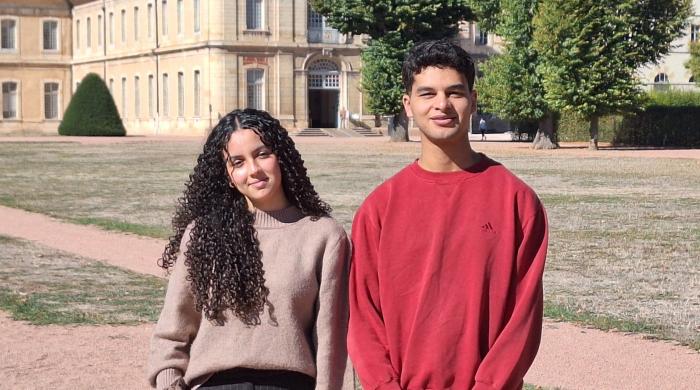
Anthony Gentelet is an engineering student Arts et Métiers. He took part in the 2019 Solar Decathlon to propose energy renovation solutions for homes by 2030. Let's take a look back at this experience, in which his team won first prize!
The Solar Decathlon: Designing housing prototypes for a carbon-free future
Anthony Gentelet is a Arts et Métiers engineering student Arts et Métiers . After completing a preparatory class for the Grandes Ecoles in math and physics at the Lycée Sainte Geneviève in Versailles, he enrolled at Arts et Métiers Lille. "I was looking for a practical course that would allow me to combine technical knowledge with my interest in entrepreneurship," explains Anthony. In his second year at engineering school, he discovered the Solar Decathlon, an international university competition that challenges teams from around the world in the field of renewable energy, particularly passive, bioclimatic, and solar energy. The goal of the challenge? To propose a functional prototype that would enable the renovation and thermal improvement of terraced houses from the industrial period (1850–1950), which are often poorly insulated, by 2030.
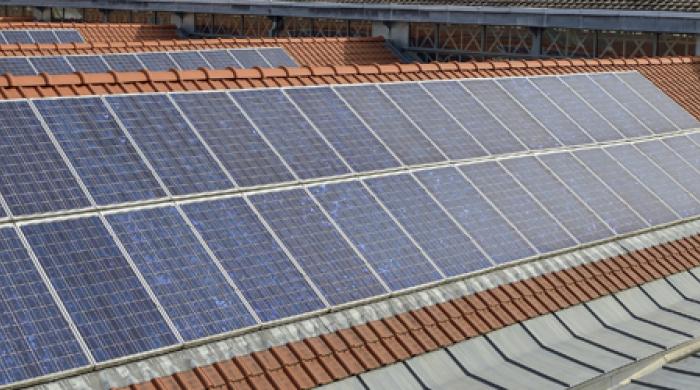
He then approached his teachers at the Arts et Métiers campus Arts et Métiers Lille to see if he could incorporate his participation in this competition into his second-year project. After putting together a project team (PJT) at Arts et Métiers, Anthony joined the Habitat2030 team, made up of architects from the École Nationale Supérieure d'Architecture et de Paysage de Lille, the Compagnons du Devoir et du Tour de France de Villeneuve d'Ascq, and engineers (from Mines de Douai, FSA Béthune, Ensiame de Valenciennes, Centrale, and HEI in Lille). "My study project consisted of dimensioning the entire photovoltaic part of the prototype, but also studying the house's electricity consumption." Over the course of a year, Anthony developed his technical knowledge, particularly in photovoltaics and energy. But above all, he gained managerial experience: "Working with experts from other schools allows you to optimize the way you communicate; you have to explain your choices and defend your ideas."
From theory to practice
This initial phase of studies led to the creation of a prototype installed in the Lille region, which had to be dismantled and reassembled in Hungary, where the final stage of the competition took place. "I was able to work on this project in its entirety: from the theory of dimensioning to the practical aspects of assembling the prototype. The practical approach of Arts et Métiers engineers Arts et Métiers very useful Arts et Métiers !" "
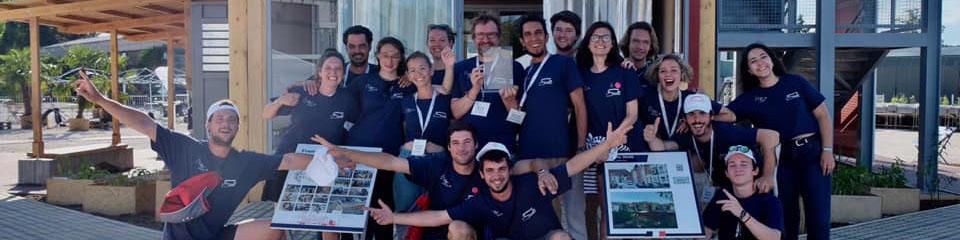
Anthony traveled to Hungary for the competition finals. As the only engineer on site, he was able to take charge of the entire house. "It was an extraordinary experience, even though we had to deal with numerous technical, budgetary, and even human constraints in an international competition setting!" For 10 days, the team simulated the normal functioning of a home according to very strict specifications . The goal was to observe the home's actual consumption and compare the data with our predictions. Anthony's team stood out in three areas in particular: circularity and sustainability, urban integration and impact, and energy balance, winning the challenge!
This team victory is all the more important to me because we were committed to the principle of frugality in creating this prototype: consuming as little as possible by reusing what already exists rather than breaking it.
After this enriching experience, Anthony completed his engineering studies Arts et Métiers a specialization in "Business and Activity Creation" at the Paris campus, so that he could continue to imagine the homes of tomorrow.
Arts et Métiers in this competition
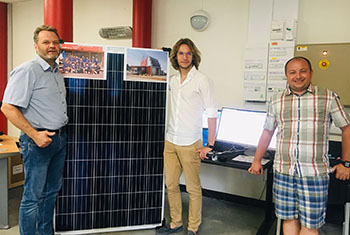 During the two years of the competition, severalArts et Métiers students and teachersArts et Métiers able to participate in the work. In addition to the project team assembled around Anthony as part of the second-year project, third-year students in Energy Efficiency Expertise for the Factory of the Future as well as students from SYSPEC Specialized Master's Degree contributed to this success. Their work drew on the expertise of Thomas Roillet and Daniel Marin, electrical engineering research engineers at the Arts et Métiers campus Arts et Métiers Lille. "We were able to use the data and know-how acquired in the project Citizen photovoltaic self-consumption by 2020 (APC 2020) that the L2EP led," explains Thomas Roillet.