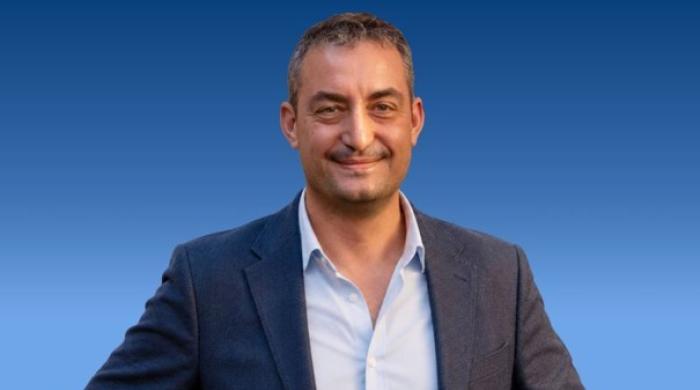
Digital simulation to design a safe factory of the future: this is one of the guiding principles behind the work of the teams at LC2S, a joint laboratory run by Arts et Métiers INRS. We meet Patrick Martin, professor emeritus at the Design, Manufacturing and Control Laboratory on the Arts et Métiers campus Arts et Métiers Metz and co-director of LC2S.
A robot does not do exactly what it is told to do.
Contrary to popular belief, it is not enough to program a robot to do exactly what you want it to do. But what causes its response to vary?
" The sensors are not placed at the very ends of the robot, but rather at the axes, which is less precise. In fact, it is often difficult and impossible to know the exact quality (geometry, technology) of the part in real time, " explains Patrick Martin.
Secondly, although there is a specific order, the variability of the manufacturing process and the geometric uncertainty of the part and machine behavior lead to errors that are only checked afterwards. Furthermore, not all possible geometric and kinematic configurations (tools mounted on the robot, robot mounted on an autonomous cart, etc.) are provided for in the simulations or in the control systems.
Finally, it is important to note that robot programming is based on an ideal model that always differs from reality.
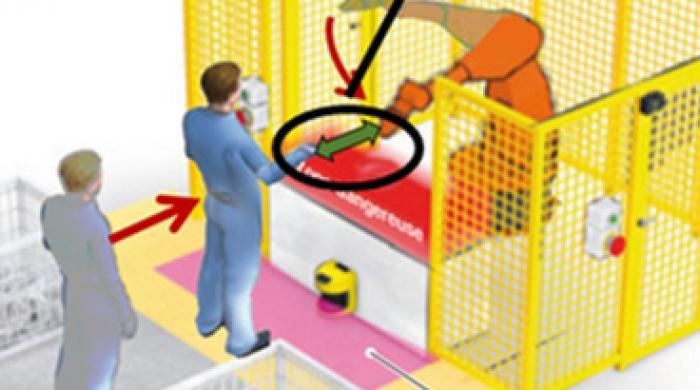
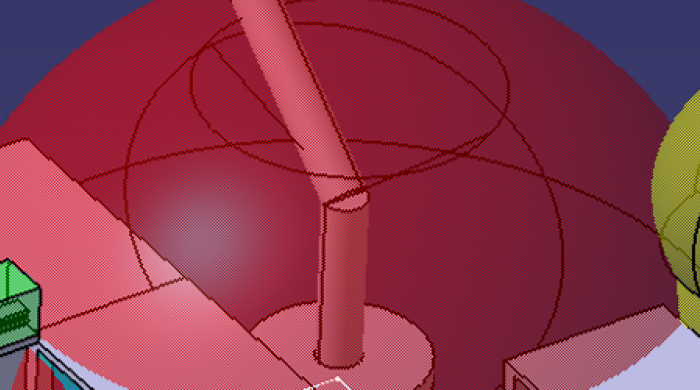
To create safe human/robot interaction zones for operators and assess the performance of "safe" control systems, LC2S is working on the development of digital models.
Models for securing the factory of the future
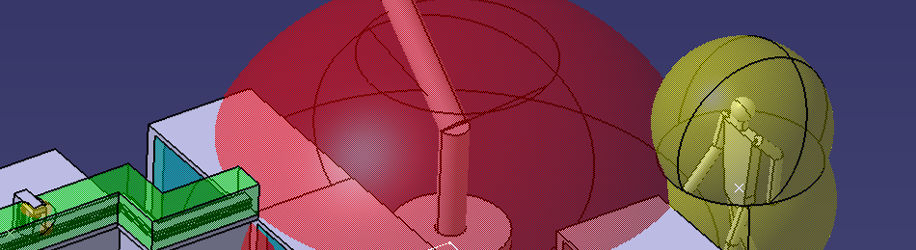
The digital simulation of a robot or, more generally, of a production system and operators developed by the laboratory makes it possible to detect intersections between the two spaces (that of the robot and that of the operator(s)) and thus identify sensitive areas with two objectives. On the one hand, to alert the workstation designer to these dangers. And on the other hand, to help the production manager plan tasks in a context of highly variable demand.
Within two to three years, the laboratory would like to provide solutions to workstation designers so that they can offer physical solutions (sensors, touch-sensitive flooring to reduce the speed of the robot, etc.), organizational or technical solutions, and assist prevention specialists in their diagnostic, business consulting, and standardization tasks.
" Twenty years ago, production lines were installed for many years, but today, factory reconfigurations are much more frequent. Thanks to the use of digital tools, the work will provide methodologies and tools for engineers and designers of factories and workshops, as well as for production engineers, making these (re)configurations easier for them," concludes Patrick Martin.
On Wednesday, September 16, Patrick Martin will participate in a digital business lunch on integrating human safety at work with the help of modern technologies, during which he will discuss this project in particular.