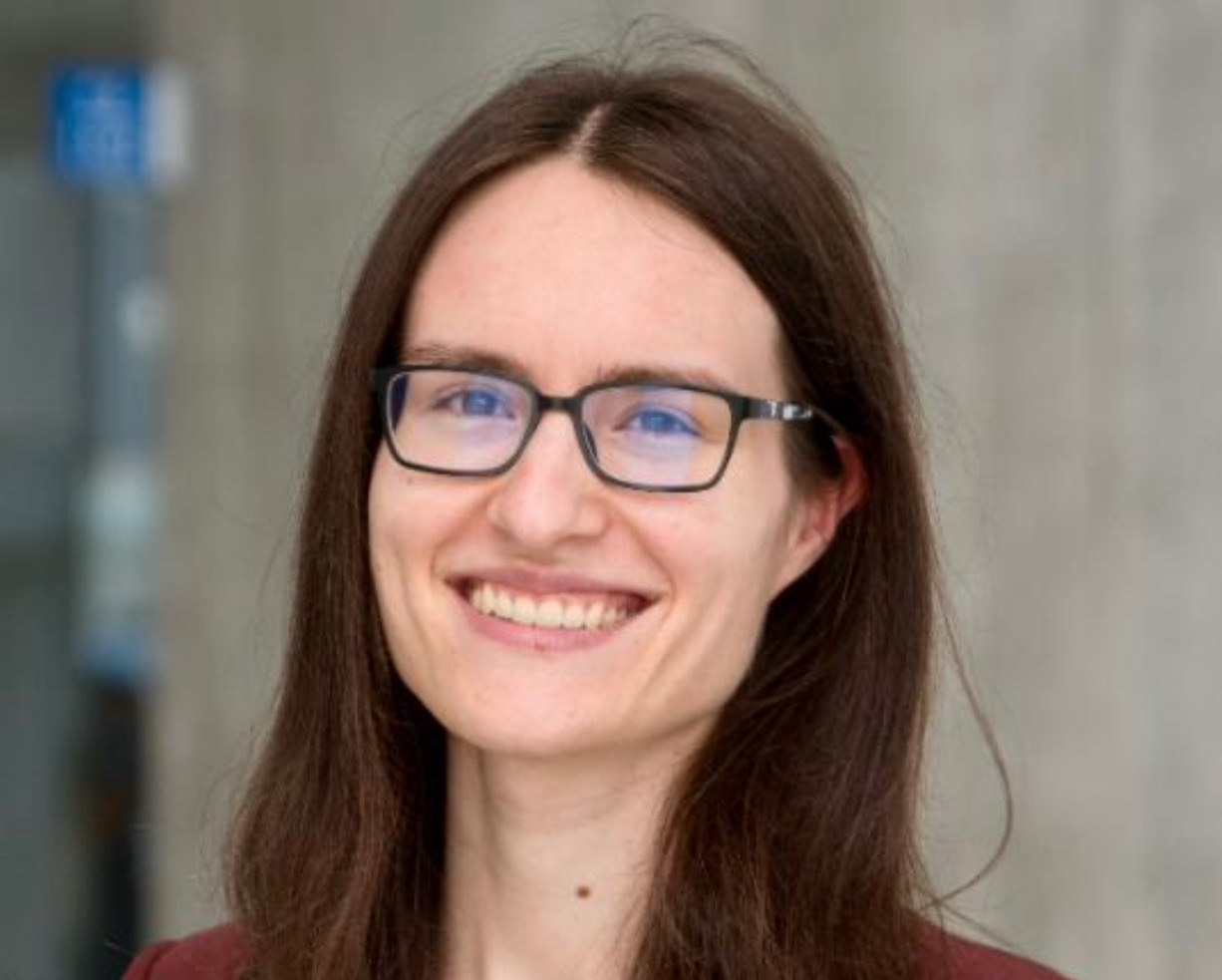
Audrey Laventure, originally from the University of Montreal, was invited to join the PIMM laboratoryArts et Métiers collaborate with Sébastien Roland and his team. After spending two months in France, she speaks of how enriching the experience was, both scientifically and personally.
"Research feeds intellectual curiosity, and teaching shares it."
What made you decide to accept this invitation to Arts et Métiers, and how did your collaboration with Sébastien Roland come about?
Our collaboration with Sébastien Roland has a rather unique history: it dates back to when we met at the University of Montreal, when I was finishing my bachelor's degree and he was finishing his PhD. At the time, our paths briefly crossed in separate laboratories, but we shared a common interest in the physical chemistry of polymers. Years later, we discovered that we were both working independently on similar issues related to electroactive materials and actuators, particularly in connection with piezoelectricity. That's when we got back in touch, realizing how complementary our expertise could be: I was more focused on the preparation and characterization of materials, while he had greater access to devices, processes, and engineering aspects. The invitation to Arts et Métiers to give concrete structure to this partnership. I was able to meet several members of the PIMM laboratory team, which facilitated exchanges beyond the initial partnership with Sébastien. We set up an initial student exchange, began shared experiments using complementary equipment (including X-ray measurements and atomic force microscopy), and even initiated discussions with external partners, particularly in Montpellier, to develop larger-scale collaborative projects. The collaboration thus solidified on both a scientific and human level.
How do you feel after spending two months in France?
Overall, this stay was extremely positive. Paris is a city that I really enjoy, so coming here to work was a real privilege for me. It wasn't my first visit to France, but it was my first time here for such an extended period of collaborative research. The welcome I received at the laboratory was excellent. I was able to take part in the life of the laboratory as if I were an integral part of it. What really struck me was the richness of the interactions. Being on site allows for incomparable efficiency compared to virtual meetings: discussions are more spontaneous, ideas flow more freely, and projects move forward more quickly. I even had the pleasure of going back to my roots a little by doing some of the lab work myself, which I do less often in Montreal. This immersion was therefore as much scientific as it was human, and particularly stimulating.
In your opinion, what are the benefits of international collaboration? And what are the specific features of your collaboration with Arts et Métiers
In my opinion, international collaboration is essential in science. It allows us to transcend institutional and cultural boundaries to address global issues with complementary expertise. At the University of Montreal, we are strongly encouraged to establish these types of links, as they are sources of innovation and renewal. What makes Arts et Métiers interesting is its strong roots in industrial realities, with an applied approach that perfectly complements the more fundamental research I conduct in Montreal. The PIMM environment has exposed me to concrete concerns from industry, which is less the case in my usual university setting. The diversity of profiles (engineers, researchers, teacher-researchers) and the richness of the exchanges have made it a very fertile ground for collaborative research.
What made you want to study chemistry and go into research?
My interest in chemistry developed gradually. In Quebec, we go through a system called "CEGEP," between high school and university. I studied natural sciences there, a program designed for students interested in fundamental scientific disciplines. It was then that I was influenced by the teaching of very inspiring professors, who awakened in me a real taste for chemistry. What attracted me to this discipline was its central nature: it allows us to address phenomena at the interface of physics and biology. My focus on the physical chemistry of materials allowed me to explore this interdisciplinary crossroads. My first contact with research came through a summer internship during my bachelor's degree, where I was able to work in a laboratory. This experience was a turning point: I discovered the experimental nature of scientific work, autonomy, curiosity... and above all, the pleasure of understanding complex phenomena.
When did you decide to become a researcher?
It's a path that I discovered gradually. It was my first experiences doing internships in laboratories that revealed to me that this path existed... and that it suited me. I have always loved teaching, and as I progressed through my studies, I realized that research and teaching are actually very closely linked. Today, I pass on my knowledge through my classes, but also by supervising my students in their research. Research feeds intellectual curiosity, and teaching shares it. It's a balance that I greatly appreciate.
What advice would you give to students interested in a career in research?
Research is not just about acquiring technical knowledge or producing results: it is also about learning a way of thinking, intellectual rigor, and a working method. Even for those who do not wish to pursue a career in research, experience in this field trains the mind to think critically, solve complex problems, manage projects, communicate scientifically, and work in a team. I often tell my students what I have been told many times myself, namely that research helps them become better citizens. Understanding scientific issues, knowing how to analyze data, and supporting evidence-based decisions are valuable skills, even outside the academic world. Finally, I encourage them to see the research period as a special time for exploration. You have to dare to test, make mistakes, and sometimes change subjects. It's also a time when you learn a lot about yourself: your strengths, your limits, your passions. And that's why research is a deeply human adventure, far beyond the technical.
His career
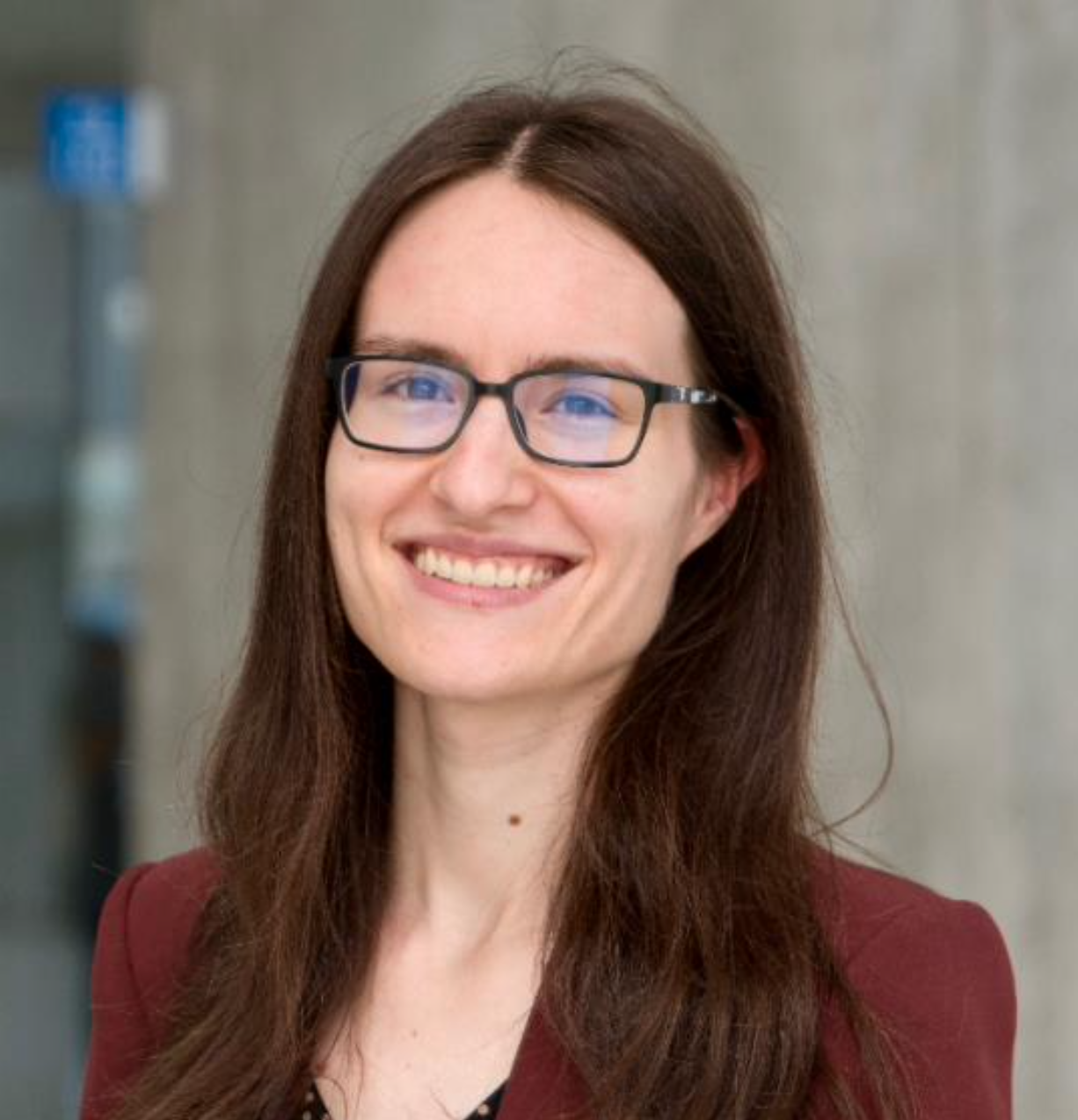 Audrey Laventure has been an associate professor in the Department of Chemistry at the University of Montreal since June 2025. She began her career in August 2020 and has held the Canada Research Chair in Functional Polymer Materials since June 2021. She has been responsible for one of the research areas at the Courtois Institute since 2023 and is co-responsible for Cluster 6 – Molecules and Materials at IVADO. She earned her PhD in chemistry from the University of Montreal in 2017 and completed a postdoctoral fellowship at the University of Calgary (2017–2020) on printed solar cells. A specialist in polymer materials, 3D printing, and organic electronics, she has obtained more than 20 research grants and several FRQNT and NSERC projects. She plays an active role in evaluating research projects, sits on several scientific committees, and contributes to the popularization and training of the next generation of scientists.