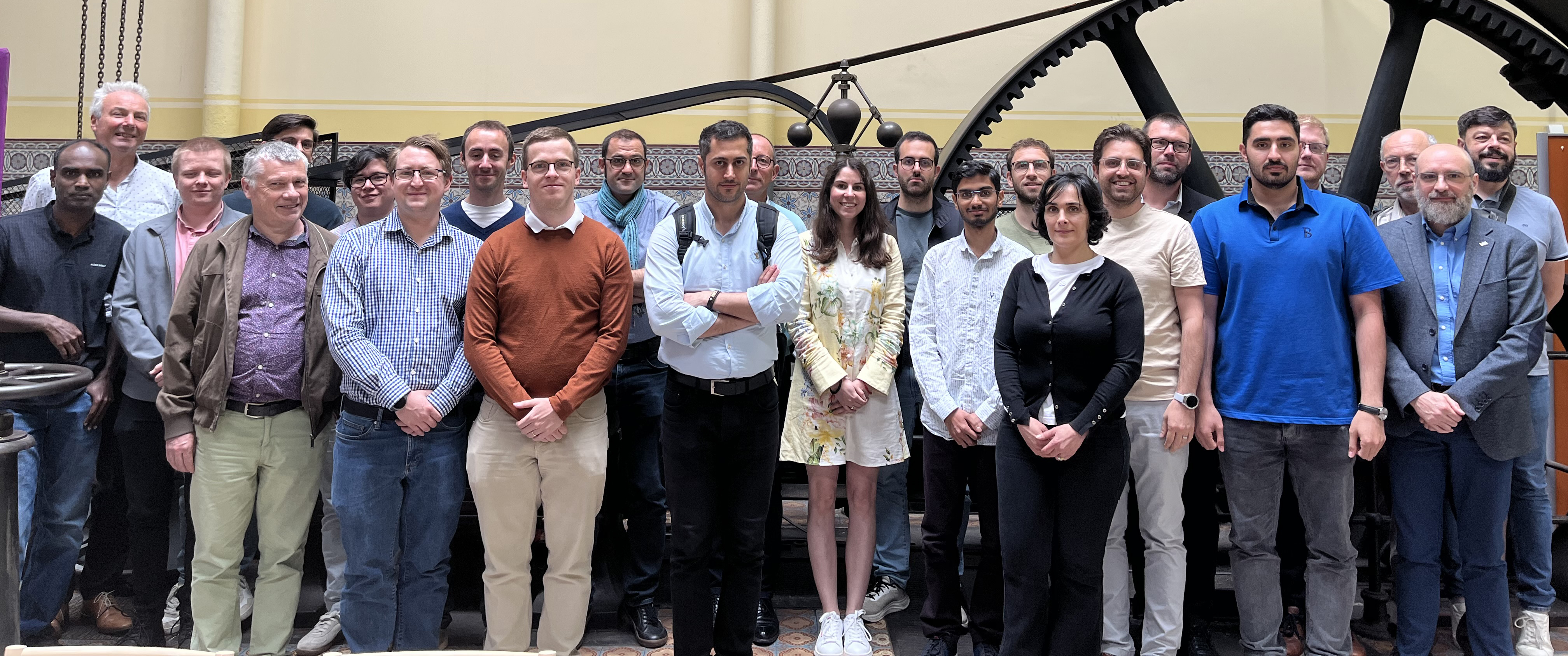
On June 1 and 2, the partners of the European PROSECCO project (DC PROtection, SECurity, Control and Optimisation) met in Lille for the consortium’s General Assembly.
Over the course of two days, the teams reviewed the scientific progress made since the project’s launch and prepared the next stages of development, particularly with regard to the experimental demonstrators
PROSECCO Project: A General Assembly Marking a New Milestone—Preparing the Demonstrators
What is the PROSECCO project?
Launched in July 2024 as part of the European Horizon Europe program, the PROSECCO project aims to address the new challenges posed by the evolution of European power grids. Its goal is to study the interactions between alternating current (AC) grids—which are widely used today—and direct current (DC) grids, whose deployment is expanding to support the energy transition and the integration of renewable energy sources.
The project aims to develop new solutions for protection, security, control, and optimization to ensure the stability and reliability of these future hybrid grids. Within the consortium, the L2EP teams are contributing in particular to the study of control methods and the analysis of the potential impacts of DC grid faults on AC grids.
Two days of discussions at the Arts et Métiers campus Arts et Métiers Lille
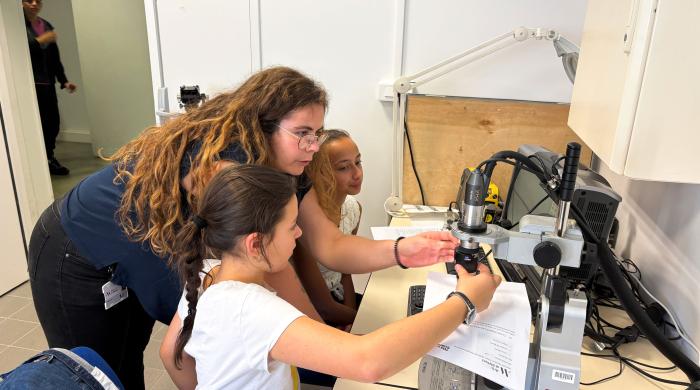
During this General Assembly, the partners were welcomed to the Arts et Métiers campus Arts et Métiers Lille. In particular, they had the opportunity to explore the research facilities being used for the project through a tour of the school, the L2EP laboratory, and its various experimental platforms.
These opportunities for discussion also helped strengthen the ties between the consortium's partners.
A New Phase: The Development of Prototypes
After several months devoted to developing models and theoretical approaches, the project is now entering a new phase: the preparation of demonstrators.
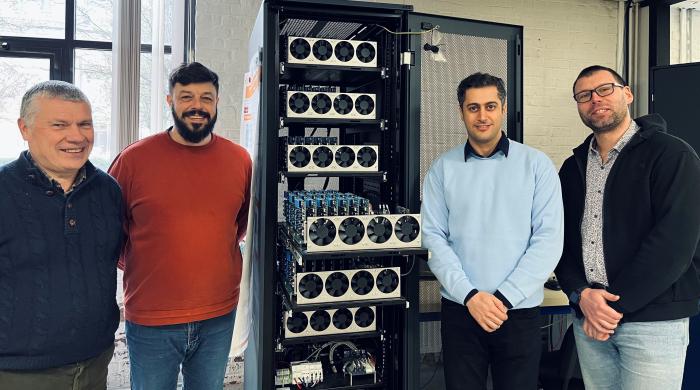
The discussions focused on the implementation of the two demonstrators planned as part of the project, with the goal of preparing for their development and validation. This development marks an important milestone, as the work undertaken to date is now beginning to translate into concrete experimental applications.
A close collaboration between L2EP and TU Delft
One of the two demonstrators will be developed in collaboration with Delft University of Technology (TU Delft) in the Netherlands.
In this context, the L2EP teams have focused in particular on simulation models and a control method that will be integrated into the demonstrator.
This research will help bridge the gap between theoretical results and practical applications and deepen our understanding of the interactions between direct-current and alternating-current power grids, a central theme of the PROSECCO project.
Presentation of Progress to the Advisory Board
During this General Assembly, an official session was also held with the project’s Advisory Board.
This meeting allowed the teams to take stock of the main results and progress made since the launch of PROSECCO.
A complementary consortium supporting the energy transition
Beyond the technical advances, this General Assembly once again highlighted the richness of the collaborations within the consortium.
As Frédéric Colas and François Gruson point out, “the consortium is highly complementary and very enriching for the laboratory.” This dynamic is a real asset for tackling the challenges associated with future power grids and supporting the European energy transition.
Funded under the Horizon Europe program, the PROSECCO project is continuing its work on issues related to the protection, control, and optimization of direct-current and alternating-current power grids, and has now entered a new phase: the development of demonstration systems.