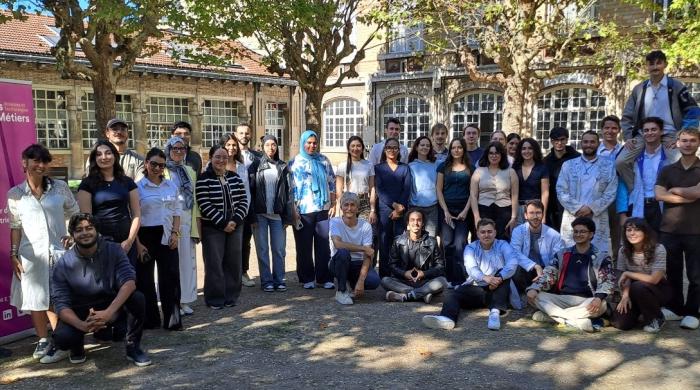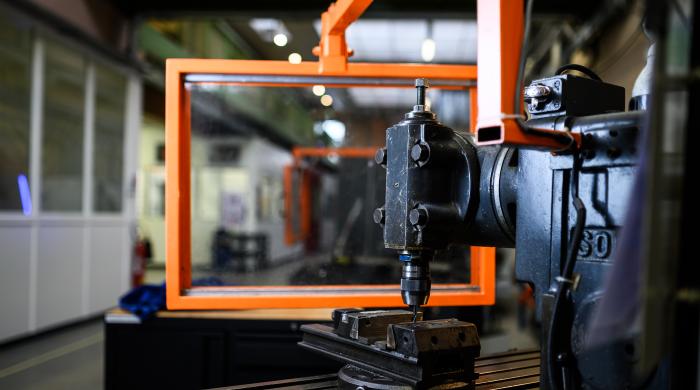
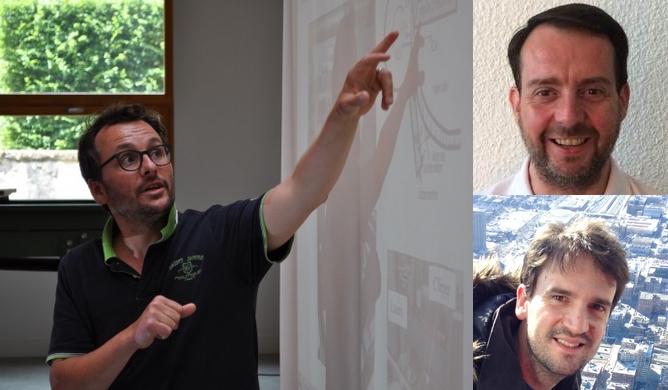
TheARTS Carnot Institute Partnership Research Awards, comprising 23 laboratories, were presented to three researchers for their work on issues related to the industry of the future.
The aim of these awards is to reward and encourage research engineers, researchers, and teacher-researchers to develop contractual research with companies. Winners receive €25,000 to help co-finance a project or develop a demonstrator.
Each winner will also receive support from a business manager to help them develop new contractual research activities.
The official awards ceremony will take place in June 2021 during the Institut Carnot ARTS seminar.
Louis Denaud-LaBoMaP
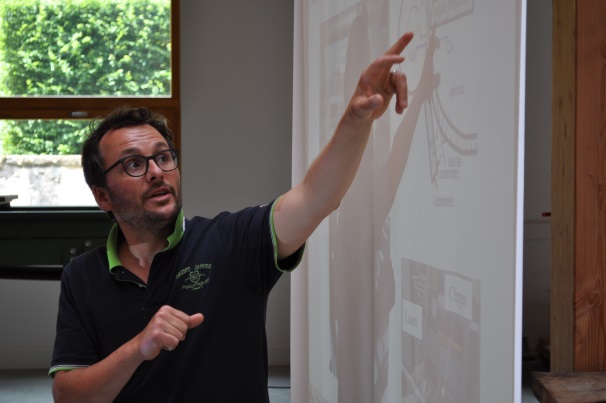
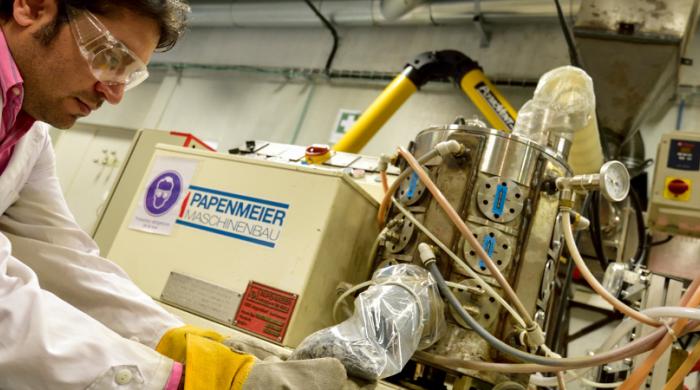
Louis Denaud was recognized for his project with Brugère, part of the Les Manufactures Février group, which involved helping the company improve its manufacturing processes by implementing a traceability system for logs on the production line (more information).
The research partnership
- Creation of a public-private joint laboratory certified by the Bourgogne Franche Comté region: BOPLI (BOurgogne PLacage Innovation).
- Extension of the LaBoMaP unwinding line and integration of a sensor for measuring wood grain slope in real time.
- Direct contract with AMVALOR for the development and installation of an online demonstrator for measuring veneer waviness and staff training.
- Signing of a thesis under a direct contract.
Publications:
- 5 scientific articles, 7 national scientific communications, and 2 international scientific communications,
- 5 technical publications and participation in 3 public communication campaigns,
- Hiring of an engineer on a permanent contract by AMVALOR and an engineer on a permanent contract by Brugère.
Vincent Delos - I2M laboratory

Vincent Delos (I2M) was recognized for his original geometric tolerance method. This method has been used to develop open-source software and is widely used both internally at I2M and externally.
Research partnership
- Implementation of research work on Safran Helicopter Engine and Safran Aircraft Engine turbomotors and the CENBG spectrometer.
- IT development of the politopix polyhedral calculation library (open source C++, downloaded more than 1,200 times), which serves as the core of the free PolitoCAT software.
- Funding from SATT Aquitaine for the development of software by three developers from Open Cascade in Nizhny Novgorod (Russia), with a new thesis.
- ANR ATOPAD project (2020-2023), in partnership with the LURPA laboratory (ENS-Paris Saclay), on the consideration of shape defects coupled with the rigidity of parts.
Publications :
- 7 publications and 10 conferences with proceedings,
- Two CIFRE theses with Safran Helicopter Engine,
- A "best paper" from the American Society of Mechanical Engineers in 2016,
- Participation in the 5th Sino-French Workshop on Digital Factory and Smart Manufacturing at Beihang University (Beijing) in November 2019.
Xavier Bonnet -IBHGC

Xavier Bonnet was recognized for his work on assistive devices and disability compensation for locomotion (external prostheses, orthoses, exoskeletons) as part of the "Sport, Mobility, Disability" team at the Georges Charpak Institute of Human Biomechanics (IBHGC) on the Paris campus.
Due to their weight and the complexity of their handling, prosthetic devices are difficult to use, particularly for negotiating slopes, inclines, and stairs.
As part of an ANR project coordinated by Arts et Métiers Hélène Pillet from IBHGC) between 2011 and 2014, Xavier Bonnet conducted research to increase the safety and comfort of these devices. This project brought together various partners: CERAH (Center for Studies and Research on Equipment for People with Disabilities), IRR (Regional Rehabilitation Institute of Nancy), and Proteor (a company specializing in disability compensation devices).
He helped develop a system that provides good synchronization between the knee and ankle and weighs three kilograms.
This prosthesis was selected as part of France's "34 plans for reindustrialization" and received support from the French Defense Procurement Agency (DGA) in the form of DGA RAPID funding.
These financial contributions have enabled research into improving the performance of the prosthesis to continue.
An initial version of this prosthesis, which received the Ministry of Defense's "defense innovation" award in 2018, is currently undergoing clinical evaluation.
All of this work provided an opportunity to forge direct partnerships with manufacturers in the sector, including Proteor, Decathlon, and Hexowheel, as well as partnerships with clinical teams specializing in their use: Percy Military Teaching Hospital, CERAH, and the Nancy Regional Rehabilitation Institute.
This innovation has also been featured in numerous news reports and press articles: France 3 (more information), La Croix (more information), Les Echos (more information), BFM (more information), etc.
The research partnership
- Several direct partnerships with manufacturers in the sector: Proteor, Decathlon, and Hexowheel.
- Partnerships with clinical teams specializing in their use: Percy Military Teaching Hospital, CERAH, Nancy Regional Rehabilitation Institute,
- Four projects under collaborative research contracts.
Publications associated with the partnership
- 27 articles in international journals,
- 5 patents issued and published,
- 6 awards/prizes.