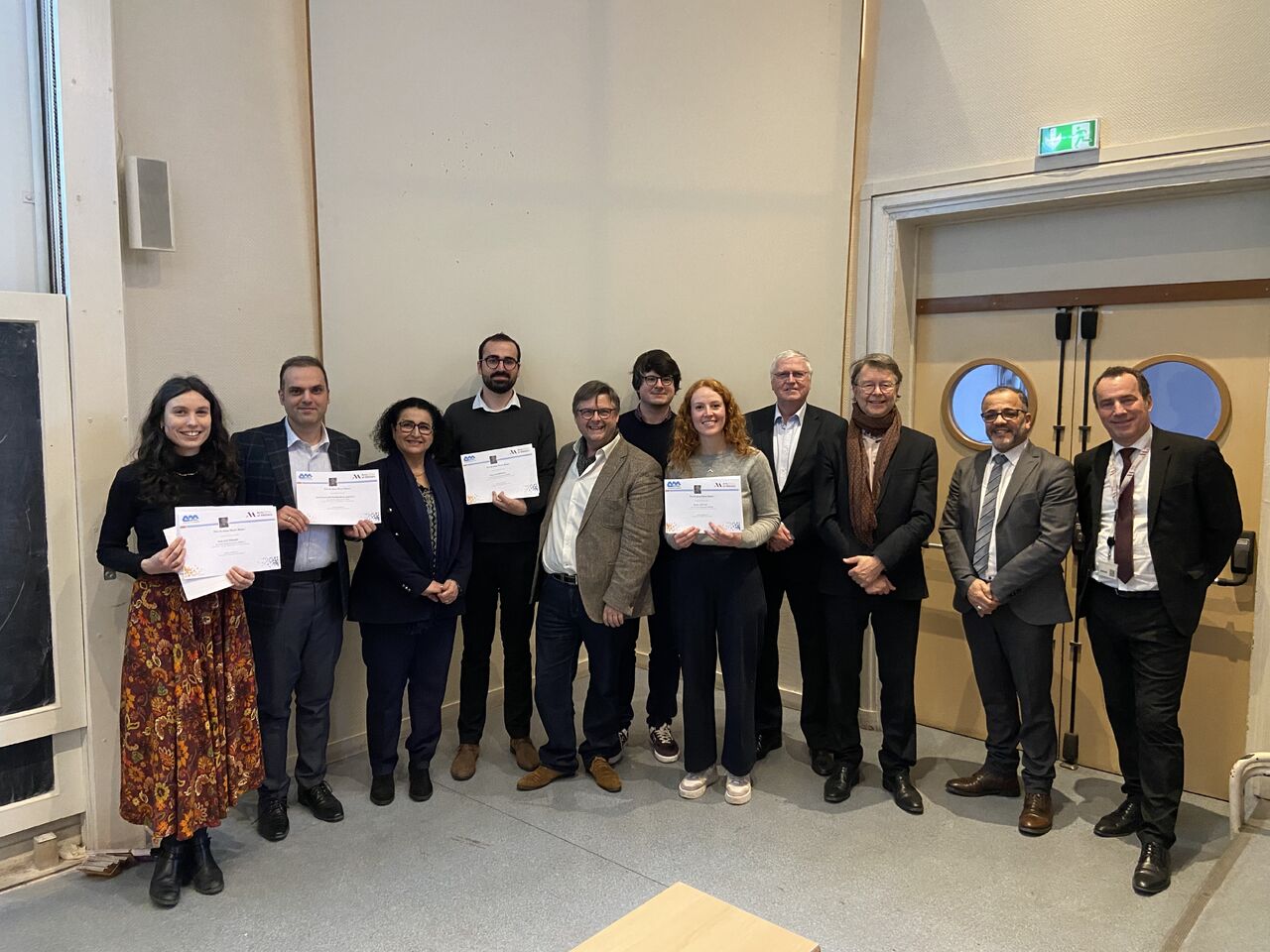
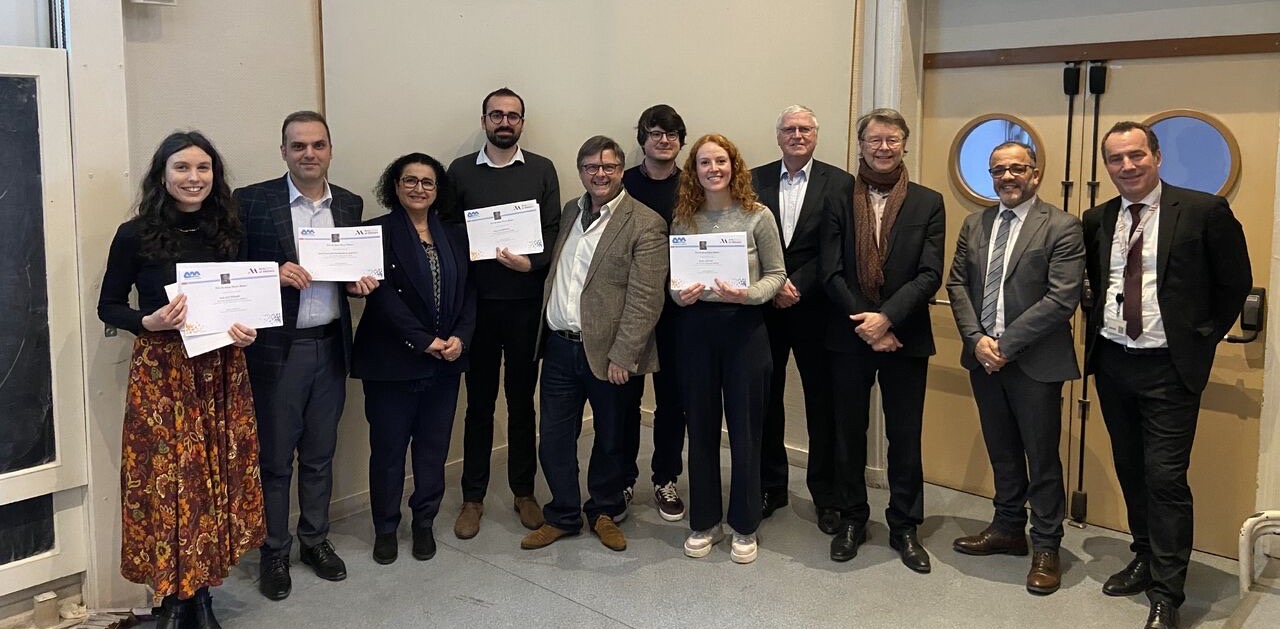
Discover the award-winning talents on February 11, 2025, on the Paris campus, for their innovative work and scientific contributions in key areas of applied research!
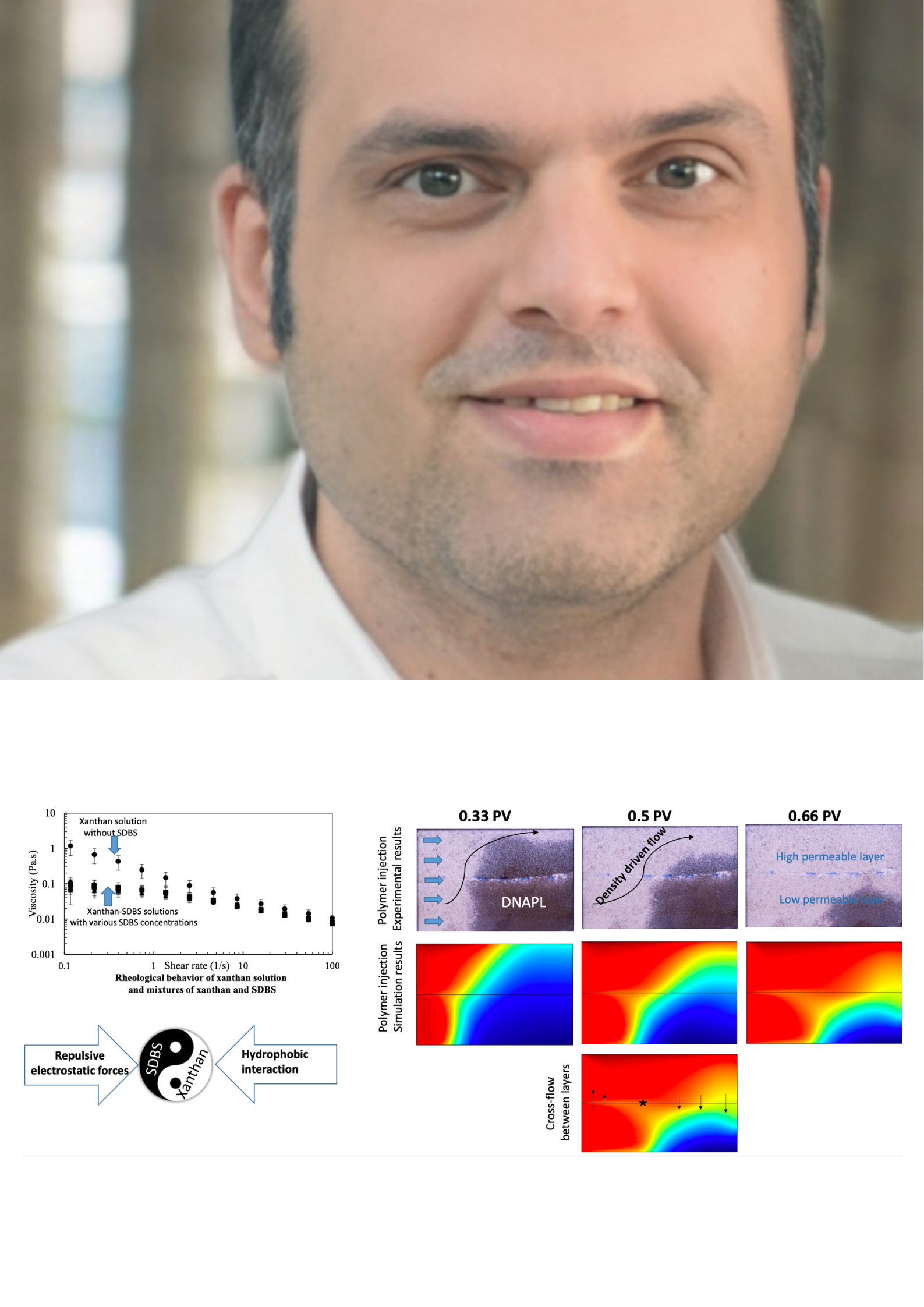 Amir Alamooti: innovation at the service of the environment
A specialist in reservoir engineering, Amir Alamooti turned to applied environmental research during his PhD at Arts et Métiers, at the I2M laboratory. His work focused on an innovative method of soil decontamination using polymer injections. "In France, there are more than 9,000 polluted sites, and we need sustainable and effective solutions to treat them,"he explains. One of the major challenges was adapting this technology on a large scale, taking into account the severity and heterogeneity of the terrain."A method may work in the laboratory but fail in the field, so we need to anticipate these variables,"he emphasizes.
His approach is based on multi-scale experimentation coupled with numerical modeling, ranging from laboratory tests to full-scale tests on contaminated sites. Through his work, he has been able to identify the key parameters influencing the effectiveness of the decontamination process, such as the rheological behavior of polymers, soil properties, and chemical interactions with pollutants. This methodology has not only led to the filing of a patent, but also paves the way for new applications in the remediation of hydrocarbons and other industrial contaminants. "We need to develop sustainable and cost-effective solutions that minimize the presence of pollutants, " insists Amir Alamooti.
Now a postdoctoral researcher at the Bureau de Recherches Géologiques et Minières (BRGM), he continues to explore the industrial applications of his discoveries. For him, the Bézier Prize "is recognition of the impact of applied research and an essential lever for his career, opening up numerous opportunities."
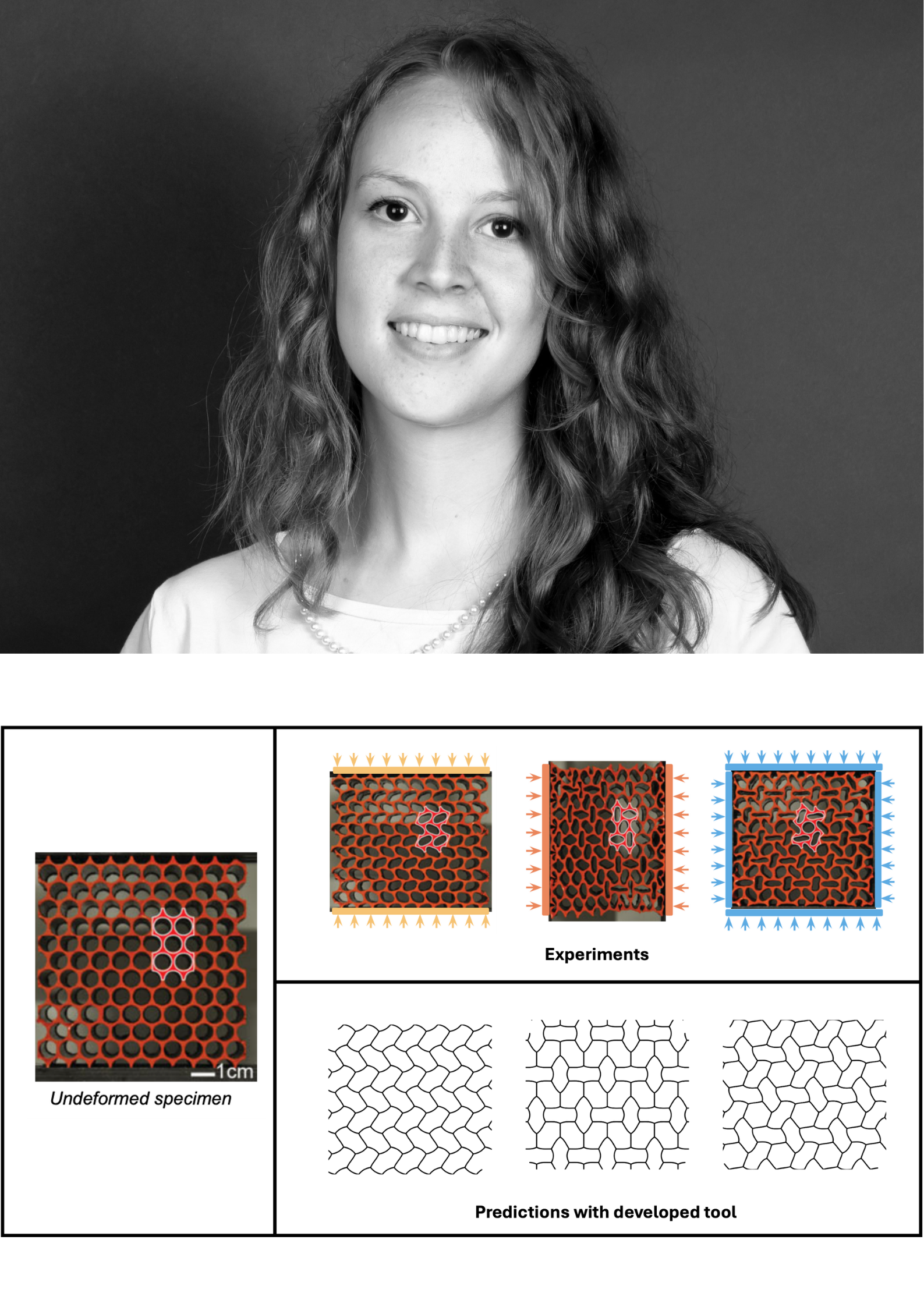 Rachel Azulay: pushing the boundaries of engineered materials
Rachel Azulay, who holds a doctorate in materials mechanics, specializes in the digital design of engineered materials with optimized mechanical properties."These lightweight, strong structures have many applications, from aeronautics to automotive,"she explains. Her approach relies on the use of mathematics and group theory to model complex patterns that improve material performance.
Her work at the PIMM laboratory focused on identifying the most effective symmetries and geometric arrangements for maximizing the mechanical properties of materials."By exploiting certain configurations, we can obtain materials that are both ultra-lightweight and extremely robust,"she explains. The challenge is to combine mechanical performance with optimized manufacturing processes. In collaboration with industrial partners, she has tested her concepts on prototypes of honeycomb structures designed to dissipate energy and reduce component weight.
Today, she puts her skills to work for the start-up TETMET, which industrializes these innovations for the transportation and construction sectors."The Bézier Prize is an invaluable recognition. It rewards years of work and proves that research can have a concrete impact,"she concludes, motivated by the prospects opened up by her discoveries in materials engineering.
 Victor Champaney: revolutionizing digital simulation
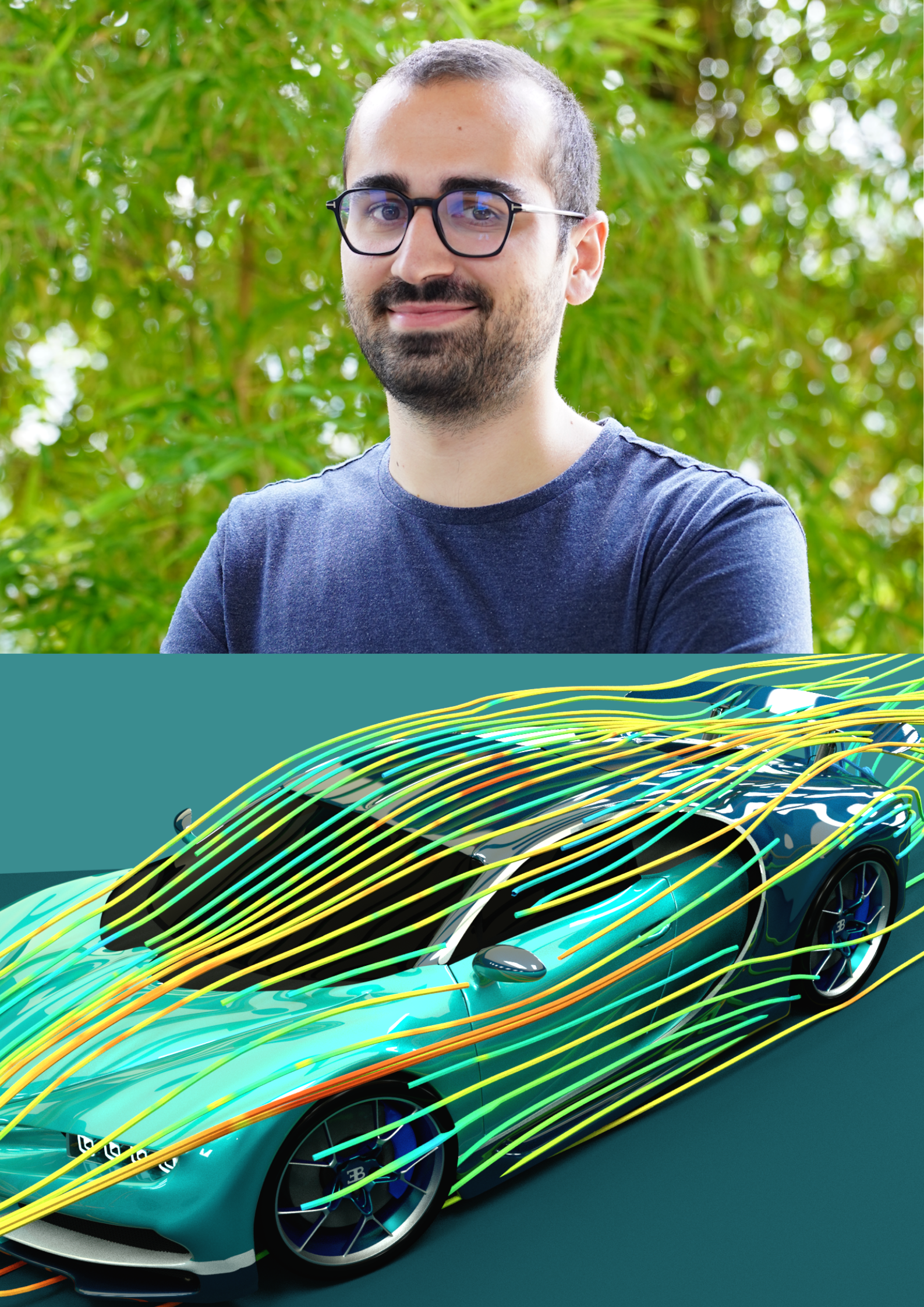
Passionate about modeling and digital simulation, Victor Champaney conducted his thesis at PIMM on accelerating simulation calculations through model reduction and artificial intelligence."Today's supercomputers consume enormous amounts of resources, so we need faster and less expensive methods,"he explains. His approach aims to optimize industrial design by enabling thousands of configurations to be tested virtually in a short amount of time, particularly in the automotive and aerospace industries.
His research has led to the development of model reduction algorithms that maintain the accuracy of simulations while reducing their computing time by several orders of magnitude. He has also incorporated machine learning techniques to improve the reliability of predictions from numerical simulations."We sought to combine the advantages of high-performance computing with the adaptability of artificial intelligence models,"he explains. His work is now being applied in the development of digital twins for the optimization of vehicles and complex structures.
Building on this expertise, he co-founded the start-up Duoverse, which aims to democratize these technologies for industry."The Bézier Prize brings additional legitimacy to our work and shows that these innovations have real industrial potential,"he says, convinced that his research will contribute to improving the design and sustainability of technical systems.
 Aude Louessard: designing accessible prosthetics using 3D printing
Aude Louessard holds a PhD in biomechanics and devoted her thesis to designing a prosthetic foot suitable for sports, using additive manufacturing."Currently, sports prostheses are expensive and not reimbursed. My goal was to offer a tailor-made and affordable solution,"she explains. In collaboration with IBHGC in Paris and I2M in Bordeaux, she explored the impact of materials and printing processes on the biomechanical performance of the prosthesis."3D printing allows for unprecedented customization and reduces manufacturing costs,"she says.
Her project drew on advanced biomechanical analyses and simulator tests to evaluate the performance of prostheses in real-life conditions. By studying the dynamics of movement and the interactions between the prosthesis and the ground, she identified the most suitable materials and designs for each type of sport."Each discipline requires a specific structure to ensure an optimal balance between flexibility, resistance, and energy return,"she explains. Her work resulted in a functional prototype for surfing, demonstrating the feasibility of her approach and opening the door to other sports disciplines.
Now a research engineer at the EPF engineering school, she is developing collaborations with academic and industrial institutions to continue her work. For her, the Bézier Prize represents "recognition of her work, scientific validation, and a source of motivation to continue innovating."
The Bézier Prize: Excellence in Research at Arts et Métiers
Established in 2005 through an agreement between the institution and the Arts et Métiers Foundation, this prize pays tribute to Pierre Bézier, an Arts et Métiers engineer Arts et Métiers French mathematician, pioneer of parametric curves and surfaces, whose work revolutionized computer-aided design. This prestigious thesis award, organized under the auspices of the Arts et Métiers Foundation Arts et Métiers the best doctoral theses defended at the institution: " This award promotes excellence and highlights research work with a strong societal impact, building a bridge between science, technology, and society," explains Fodil Meraghni, director of the doctoral school.
During a thesis defense, a unanimous jury may nominate a candidate for the Bézier Prize. An initial selection is made, retaining approximately 25% of the hundred or so theses defended each year. Next, a jury co-chaired by Ivan Iordanoff, Deputy Director of Research and Innovation, and Fodil Meraghni, and composed of representatives from the Arts et Métiers Foundation, recognized figures from industry, and internal and external scientists, examines the applications in depth.
Applications must be submitted in the form of a detailed dossier, including the thesis manuscript, defense reports, a summary of the socio-economic impact, and a list of publications. The jury will select the winners based on several criteria:
- The societalimpact of research,
- The innovative nature of the thesis,
- Major technological advances,
- Competitiveness of labor in industrial settings,
- The originality and novelty of the subject matter,
- The promotion and dissemination of results,
- The potential economic benefits,
- The quality of writing and the scientific approach.
Between three and four winners are selected, each receiving Arts et Métiers check for €1,500 from the Arts et Métiers Foundation and a diploma certifying their distinction: " This award is a real opportunity for young researchers , " emphasizes Fodil Meraghni. " Not only does it recognize academic excellence, but it is also an important asset for their careers, helping them to enter the job market and raising the profile of their work. "