Using underground energy to regulate building temperatures is the challenge taken up by Geosophy, a startup that got its start in theArts et Métiers incubator.
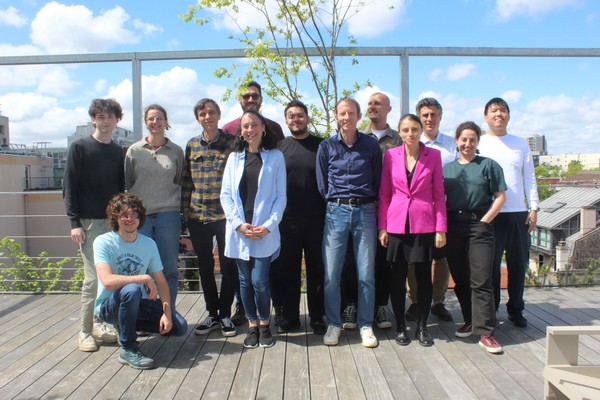
Geosophy's technology is developed by a team of ten permanent engineers, including hydrogeologists, physicists, and developers.
Launched in 2018, Geosophy makes it easier for the construction industry to access an extremely advantageous but still underutilized technology: geothermal energy. This energy solution uses water circulating in the shallow subsoil to heat buildings in winter and cool them in summer. "I always use animals as an example,"explains Alice Chougnet, co-founder and president of Geosophy."Many of them dig burrows in the ground because they instinctively know that in winter it will be warmer there than outside. We use this same thermal inertia." This technology reduces carbon emissions tenfold compared to a traditional gas solution and could be used across nearly 90% of France to cover 50% of the country's needs.
A formative experience at the Arts et Métiers incubator
Geosophy benefited from a three-year stint in theArts et Métiers incubator, from 2019 to 2022, followed by a new collaboration in 2023. "I come from the oil industry, and I wanted to reuse my knowledge of the subsurface in this project. However, I lacked expertise in the thermal aspects of buildings," explains Alice Chougnet. The DynFluid and LIFSE laboratories were able to help her overcome this technological hurdle by supporting her in the development and improvement of tools that adapt geothermal energy to each situation.
This wasn't the only benefit the young company gained from its time atArts et Métiers incubatorArts et Métiers it also met its patent attorney, was put in touch with potential investors, and found premises. "Having a space to welcome our first employees, interns, and service providers was absolutely key," says Alice Chougnet. This environment should have allowed Geosophy to benefit from an ecosystem of entrepreneurs... if the COVID crisis hadn't happened. "It was a difficult period, and many of the companies that were with us at the beginning didn't make it," she regrets.
Unwavering resilience
The 2020 pandemic is not the only crisis Geosophy has had to face. In 2022, the real estate crisis began, also affecting the renovation sector in which the company had specialized. Despite everything, Alice Chougnet is optimistic:"We survived the Covid crisis and, with the real estate crisis, we managed to rethink our strategy in light of changes in our market environment. This has made us stronger and more resilient. We can look to the future with confidence: the path is never linear, but we have the ability to bounce back, and that's what matters."
Geospohy's resilience has, in fact, brought it two new types of customers outside its initial field of activity: on the one hand, Action Logement, an investor in social housing; on the other, E.Leclerc, interested in the potential of geothermal energy for the energy independence of large retailers. And the company does not intend to stop there."We cannot write the future without energy, or without renewable energy,"says Alice Chougnet. "So we will continue to work with customers who share our vision."