

An engineer's salary is one of the primary factors in choosing a science-related degree program. However, it varies greatly depending on the engineer's profile, industry, and region. This article provides useful insights into engineers' compensation in France, from graduation through the end of their careers.
What is the average salary for an engineer in France?
The average salary is the sum of all salaries divided by the number of employees. It is therefore skewed upward by the highest salaries. It provides a general idea of the range, but it does not describe the situation of each individual engineer.
The most comprehensive data on the profession comes from the annual survey conducted by Ingénieurs et Scientifiques de France.APEC also publishes studies on executive salaries. Always compare multiple sources, as calculation methods vary.
What is the median salary for an engineer in France?
The median salary divides engineers into two equal groups: half earn less, and half earn more. It is less affected by very high salaries than the average. For an engineer, the median salary is therefore often a more accurate reflection of their actual experience.
The median salary is generally lower than the average salary in occupations where there are a few very high-paying positions. This is the case for executive positions and certain finance-related professions. For the most up-to-date figures, refer to the IESF survey.
Gross, net, and monthly pay: What do these terms mean?
The figures published are often gross annual salaries, before social security contributions are deducted. The net salary—the amount that actually reaches the employee’s account—is therefore lower. To calculate the monthly salary, divide the gross annual salary by 12, or by 13 if the company pays a thirteenth month’s salary.
It is also important to check whether bonuses are included. Variable pay, profit-sharing, and incentive pay can significantly affect annual compensation.
How much does an entry-level engineer earn?
An entry-level engineer typically begins their career with a permanent contract, with a gross annual salary that depends mainly on their field of specialization and location. Schools publish surveys on graduate employment that provide a clear picture of this. Those from the Conférence des grandes écoles are one example.
Engineering Statistics for 2025 Arts et Métiers
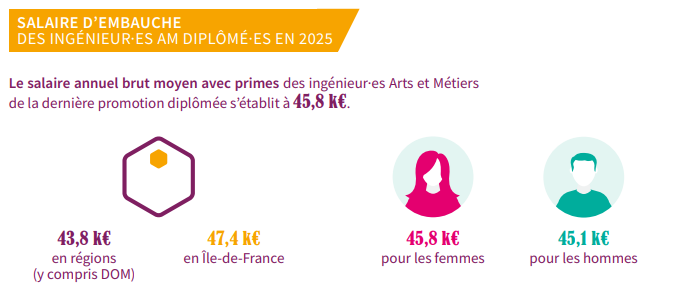
For the most recent graduating class of the school Arts et Métiers, the average gross annual salary, including bonuses, is 45.8 k€. These figures are from 2025 and apply only to engineers Arts et Métiers, not to all engineers. It is important to note that female engineers earn more upon graduation than male engineers.
Quick integration
The job market remains strong for recent graduates. According to the school’s 2025 data, 77% of recent graduates Arts et Métiers who are currently employed found their first job in less than two months. Furthermore, 60% of them secured a job before graduation.
What is an engineer's salary based on their experience?
Salary growth is rapid early in one's career. It then slows down, unless there is a change in position or an increase in responsibilities. After a few years, level of experience becomes just as important as one's degree.
Length of Service | Profile usual | Progress wage |
Less than 3 years | Engineer Junior | Strong, with the first bonuses |
3 to 5 years | Engineer Experienced | Supported, often related to a first job change |
5 to 10 years | Contact Person TechnicalAdvisor or manager of project | Marked by the responsibilities |
10 to 15 years | Engineer Senior or manager | More slower, with a share variable plus significant |
More than 15 years | Expert or executive executive | Very variable depending on the function |
Junior Engineer: The First Few Years
A junior engineer gains more independence within two or three years. Every project successfully completed enhances their market value. Pay raises often come from changing jobs.
Senior Engineer and End of Career
After 10 years of experience, two paths open up. The expert track emphasizes rare technical expertise. The managerial track leads to department head or executive positions, which are, on average, better paid.
How does salary vary by specialty?
Specialization has a significant impact on compensation. Jobs in high-demand fields, where candidates are scarce, pay better. Demand from companies therefore plays a direct role.
- IT and Artificial Intelligence: High Demand, Many Job Openings
- Cybersecurity: Rare Skills, Highly Sought-After Expertise
- Manufacturing and Production: Numerous positions in the manufacturing sector, with opportunities for advancement into management
- Civil Engineering and Public Works: Market Related to Major Infrastructure Projects
- Energy and Aviation: Technical Sectors, Need for Specialized Skills
Focus - Information Technology, Cybersecurity, and Artificial Intelligence
There is strong demand for computer engineers. Cybersecurity and artificial intelligence often offer the most attractive salaries in the digital sector. Companies are struggling to recruit these professionals.
Focus - Manufacturing, Civil Engineering, and Energy
In industry, an engineer can pursue training in industrial and production engineering and aim for a management position at a facility. Civil engineering is tied to public and private construction projects. The energy sector—particularly nuclear and renewable energy—is hiring heavily, with programs such as the specialized master’s degree in nuclear safety.
Apprenticeships: A Pathway to Employment
Nearly one-quarter of Arts et Métiers engineers were trained through apprenticeships, the “ Grande Ecole Engineering Programme ” program, or specialized engineering programs. The lasting ties forged with the company enable apprentices to find employment more quickly: 83% of active apprentices landed their first job in less than two months.
This accelerated path to employment comes with no reduction in salary or job quality: 97% hold managerial positions, their average gross annual salary (including bonuses) is 45.9 k€, and their job satisfaction rating is 4.1 out of 5.
What is the impact of geographic location?
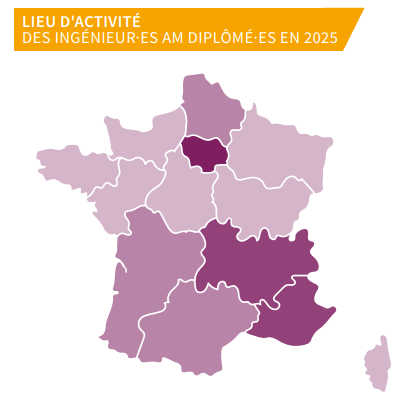 Geographic location affects salary. The Île-de-France region is home to a high concentration of corporate headquarters and executive positions. Salaries there are often higher, but so is the cost of living.
However, the 2025 data from Arts et Métiers on engineers paint a slightly different picture. In the Île-de-France region, the average gross salary for these graduates is €45.4k, compared to €43.8k in other regions. The gap remains modest, while the average abroad is €59.8k.
Industrial hubs such as Lyon, Toulouse, and Bordeaux offer great opportunities, with lower housing costs.
Competitiveness clusters help shape innovation and attract employers. Studying abroad accelerates career advancement, for example through an academic exchange program during one's studies.
How does company size affect compensation?
The size of the company affects the salary structure. Large companies offer clear pay scales, bonuses, and benefits. Small and medium-sized businesses offer more responsibilities sooner.
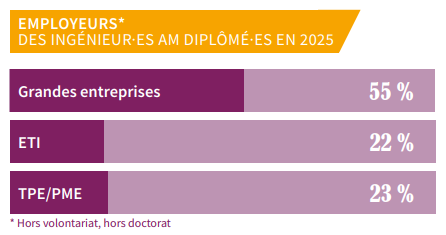
Partnerships between schools and companies allow students to explore these work environments before being hired. The internship
remains an excellent way to compare options.
How can an engineer increase their salary over the course of their career?
Salary growth depends on several factors. Engineers who advance the fastest combine them.
- Changing jobs: A lateral move after a few years often leads to the biggest pay raise.
- Taking on responsibilities —such as managing a team or leading a project—affects your pay.
- Getting an education: An additional degree opens the door to more specialized positions.
- Changing industries: Switching to a more lucrative field leads to a higher salary.
Continuing education plays a key role. A specialized master’s degree allows you to change fields, while continuing education helps maintain employability. The recognition of prior learning allows you to build on your professional experience without having to return to school full-time.
What skills can help you get a raise?
Rare technical skills and management skills drive up compensation. Engineers who can bridge the gap between technology and economic issues are in the highest demand.
- Digital Transformation: Mastering data tools and automation, as in the INGENUM Specialized Master's program.
- Risk Management: Anticipating Industrial Threats, for example through the Master's in Risk Management.
- Industrial Performance: Optimizing Processes—the Focus of the MPI Specialized Master's Program.
- Robotics: a cutting-edge field at the heart of the master's program in collaborative robotics.
- Innovation and Entrepreneurship: A program in innovation and entrepreneurship fosters a sense of initiative.
English, project management, and communication round out this foundation. A doctoral degree also opens the door to research and high-level expertise, with the doctorate serving as a path to excellence.
Engineer Salaries: What You Need to Know
An engineer's salary depends on their specialty, industry, region, company size, and experience. Recent engineering graduates fromArts et Métiers earn an average of 45.8 k€ gross and find employment very quickly, but this figure does not apply to all engineers. The best strategy is still to develop in-demand skills and negotiate using solid arguments.
Are you interested in pursuing an engineering career that opens up these opportunities? Find out how to join Arts et Métiers and choose the program that fits your goals.