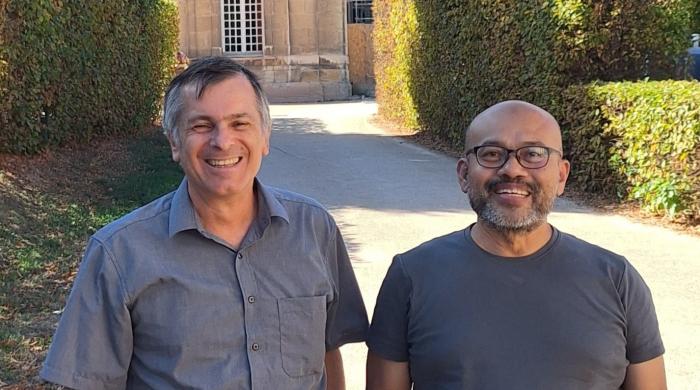
During his visit to Arts et Métiers, René Mayer, a professor at Polytechnique Montréal, reflects on his career, his collaboration with Fabien Viprey, and the benefits of international exchanges for research.
What led you to accept this invitation to Arts et Métiers, and how did your collaboration at LaBoMaP come about?
I accepted this invitation because it is part of a scientific collaboration we have been developing for several years. I met Fabien Viprey when I served as an external reviewer for his doctoral dissertation. Although our approaches differed, we were already working toward a common goal: the measurement and precision of machine tools.
Since 2022, we have also established an exchange program that allows students fromArts et Métiers to come to Polytechnique Montréal to work on projects, take courses, or prepare for further studies. These exchanges are a key driver for developing joint projects and encouraging young researchers to broaden their international horizons.
How do you feel after spending a month in France?
This wasn’t my first time in France, as I’ve been there several times before for thesis defenses and scientific collaborations. This visit, however, gave me a better understanding of how research is conducted at Arts et Métiers and allowed me to interact more with colleagues involved in various projects.
However, I noticed that access to technical resources could sometimes be more complicated than in my usual environment; perhaps there are fewer technicians available to support professors and students. Despite this, I found the interactions to be very rewarding.
In your opinion, what are the benefits of international collaboration? And what about your experience with Arts et Métiers
For me, international collaboration is, above all, a way to produce richer and more ambitious research. Each partner contributes their expertise, resources, and perspective on the issues. It is often this complementarity that allows us to achieve more than any one partner could on their own.
Working with colleagues from other countries also provides a fresh perspective. Sometimes we feel as though we’ve explored every possible angle on a topic, and then a partner suggests a different approach that opens up new possibilities. This mutual enrichment is one of the great benefits of international collaboration.
My experience with Arts et Métiers has been very positive. I also appreciate the opportunities offered to students to spend time in Montreal, which is an excellent gateway to research.
What inspired you to pursue a career in metrology and to move into research?
I originally focused on robotics during my engineering studies. It was during my studies that I discovered metrology, and more specifically, the measurement of robot precision. I had the opportunity to work on optical systems designed to measure their movements, which allowed me to develop skills in electronics, optics, and programming.
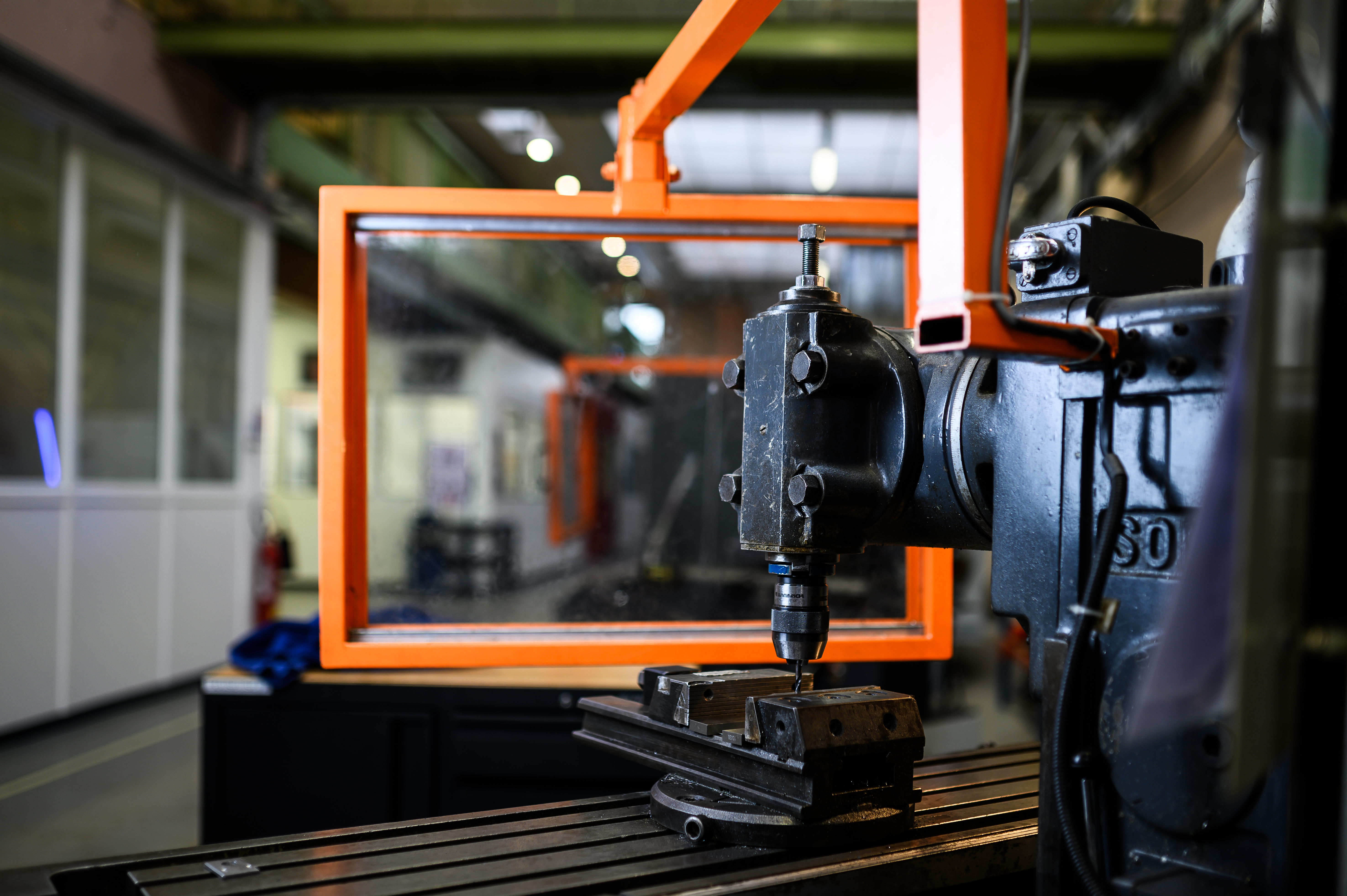
Later, when I returned to Canada, I gradually shifted my research focus to machine tools, a field of particular importance to Montreal’s aerospace industry. I then set out to develop simple, robust, and inexpensive methods for evaluating and improving the accuracy of these machines. This pragmatic approach has become a guiding principle in my scientific career.
When did you decide to become a researcher?
Actually, I hadn’t originally planned to become a researcher. When I finished my engineering degree, the economic climate was tough and job opportunities were limited. So I applied for a scholarship to pursue a master’s degree, mainly to gain an additional area of specialization.
My interest in research developed gradually. After completing my master’s degree, I went on to pursue a Ph.D. and received funding that allowed me to continue on this path. My career path, therefore, was not the result of a decision made early on, but rather a series of opportunities and discoveries that naturally led me toward research.
I didn’t initially aspire to become a professor either. However, over time, I realized that this profession offered a great deal of freedom to develop projects, collaborate with industry, and explore new scientific ideas. It’s this autonomy that I still appreciate today.
What advice would you give to students interested in a career in research?
My main piece of advice would be to start by getting hands-on experience with research. Many students don’t really know what research is. The best way to find out is to participate in a project—even a small one—with a faculty researcher. I recommend individual projects over group projects.
I also recommend taking advantage of opportunities for international exchange when they arise. Discovering another laboratory, another scientific culture, or a different way of working is an extremely valuable learning experience.
About
René Mayer is a full professor at Polytechnique Montréal with expertise in machine tool metrology, with a particular interest in autonomous measurement methods, error modeling, and software-based error compensation.