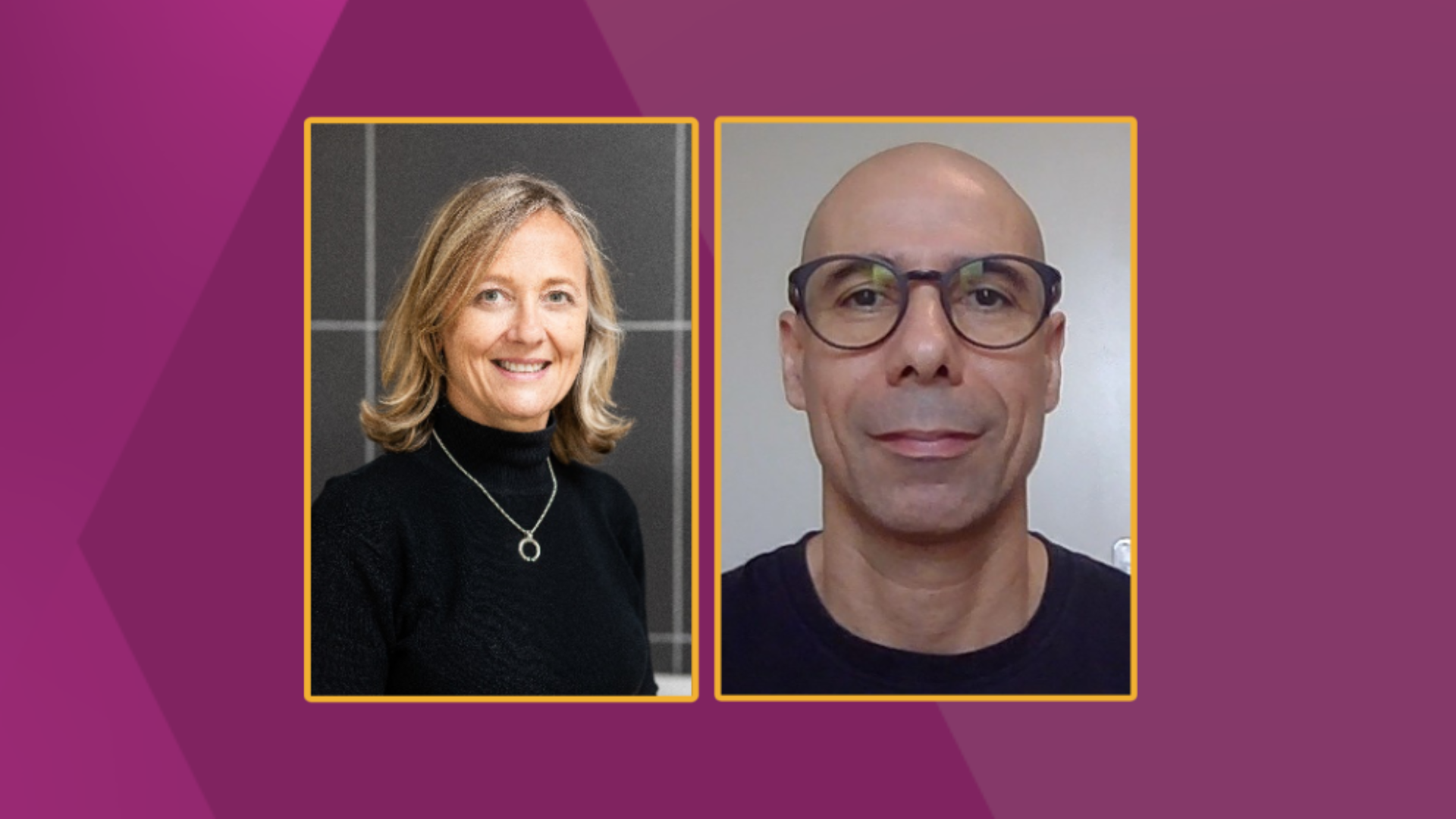
Arts et Métiers recently Arts et Métiers two visiting professors to its laboratories: Erick Franklin, an associate professor at the University of Campinas (Brazil), and Nicole Demarquette, a professor at the École de technologie supérieure in Montreal (Canada).
International collaborations help build relationships and expand one's network, paving the way for new projects and fruitful exchanges.
Every year, Arts et Métiers visiting professors from partner universities around the world. These visits, which last from a few weeks to several months, allow faculty members to develop new scientific collaborations, share their expertise with the School’s teams, and foster joint projects—whether in the form of publications, international funding, or exchange opportunities for doctoral students.
In recent months, two researchers have joined theArts et Métiers laboratoriesArts et Métiers Erick Franklin, an associate professor at the University of Campinas (Brazil), hosted by Jorge Peixinho, and Nicole Demarquette, a professor at the École de technologie supérieure in Montreal (Canada), invited by Cyrille Sollogoub. Both share the same perspective on these exchanges: they serve as a catalyst for research and a powerful driver of international cooperation.
Partnerships Built Over Time
For Erick Franklin, a specialist in fluid mechanics and granular media, this invitation is part of a long-standing collaboration with Jorge Peixinho. “When the opportunity arose, I accepted immediately. I was already familiar with Arts et Métiers had had very positive experiences during my previous visits,” he explains. Their partnership, which began in 2015, has already led to several Franco-Brazilian projects. This latest visit allowed them to continue experimental tests on granular shear, finalize a scientific article, and prepare a new ANR-FAPESP project.
Nicole Demarquette, too, came to strengthen an existing collaboration. While on sabbatical, she wanted to use this time to further her work with Cyrille Sollogoub on polymers and multilayer materials. “Our discussions at conferences quickly revealed that we share common scientific interests. This exchange now allows us to develop new projects together , ” she notes.
Research that is enriched by international exchanges
Beyond scientific projects, the two researchers emphasize what these mobility opportunities bring to research teams.
For Erick Franklin, international collaborations are, above all, a way “to forge connections and expand one’s network,” while also benefiting from complementary expertise. In particular, he citesArts et Métiers expertiseArts et Métiers conducting complex rheological tests, as well as its capabilities in additive manufacturing, which open up new experimental possibilities.
Nicole Demarquette shares this vision. According to her, “international collaboration allows us to combine expertise, develop more ambitious projects, and open up opportunities for funding and mobility, particularly for doctoral students.” During her visit, she also met with several research teams at the School and identified new avenues for cooperation, particularly regarding dual-degree doctoral programs.
Both also mention the warm welcome they received. Erick Franklin sums up his experience in a few words: “ My experience at Arts et Métiers been very positive, both on a personal and professional level.” Nicole Demarquette, for her part, describes “ a stimulating environment ” that fosters scientific exchange and the emergence of new ideas.
Curiosity as a guiding thread
Although their fields of research differ, their career paths share one thing in common: scientific curiosity.
After several years as an aerospace engineer, Erick Franklin decided to return to school to better understand the physical phenomena he encountered in his field. “It was while working in the industry that I felt the need to understand these phenomena in depth. My passion for research grew over time , ” he says.
Nicole Demarquette describes a similar journey. Drawn from an early age to applied mathematics, fluid mechanics, and materials science, she explains that her career path “developed gradually, driven by a strong intellectual curiosity and a desire to explore these concepts in greater depth.”
For students considering a career in science, their message is clear. As Erick Franklin puts it, “You have to choose a subject that fascinates you and be willing to explore the unknown.” Nicole Demarquette, for her part, points out that “research is a passion rather than just a job” and stresses the importance of nurturing that curiosity from an early age.
Through these hosting programs, Arts et Métiers to expand its international network and strengthen scientific collaborations with leading academic partners. These exchanges foster the development of new projects, enrich the work of the laboratories, and help create a research environment that is increasingly open to the world.
About
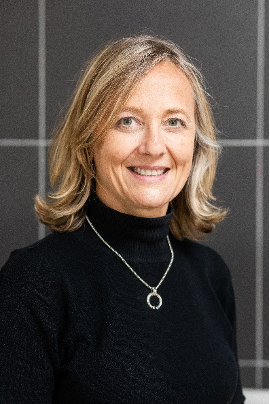
Nicole Demarquette is a professor at the École de technologie supérieure in Montreal. She specializes in polymer rheology, a discipline at the intersection of physics, mechanical engineering, and chemical engineering, focused on the flow of complex materials and fluids. She earned an engineering degree in Grenoble, followed by a DEA (Master’s degree), then a master’s degree and a Ph.D. from McGill University in Montreal. Afterward, she worked for more than fifteen years as a professor at the University of São Paulo in Brazil before returning to Canada to join the École de technologie supérieure in Montreal.
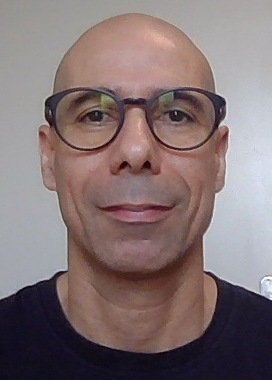
Professor Erick de Moraes Franklin holds a degree in mechanical engineering from the University of Campinas (UNICAMP) in Brazil. After working as an engineer at EMBRAER, he pursued a Master of Science mechanical engineering at UNICAMP, followed by a second Master of Science a Ph.D. in fluid dynamics at Paul Sabatier University – Toulouse III in France. His dissertation focused on the dynamics of dunes in shear flows. He subsequently held positions as a researcher and instructor at UNICAMP and the Federal University of Itajuba (UNIFEI). Since 2022, he has been an associate professor at UNICAMP’s School of Mechanical Engineering. A recognized specialist in fluid mechanics and granular media, he received the ABCM-EMBRAER Award for supervising the best doctoral dissertation in mechanical engineering in 2020.