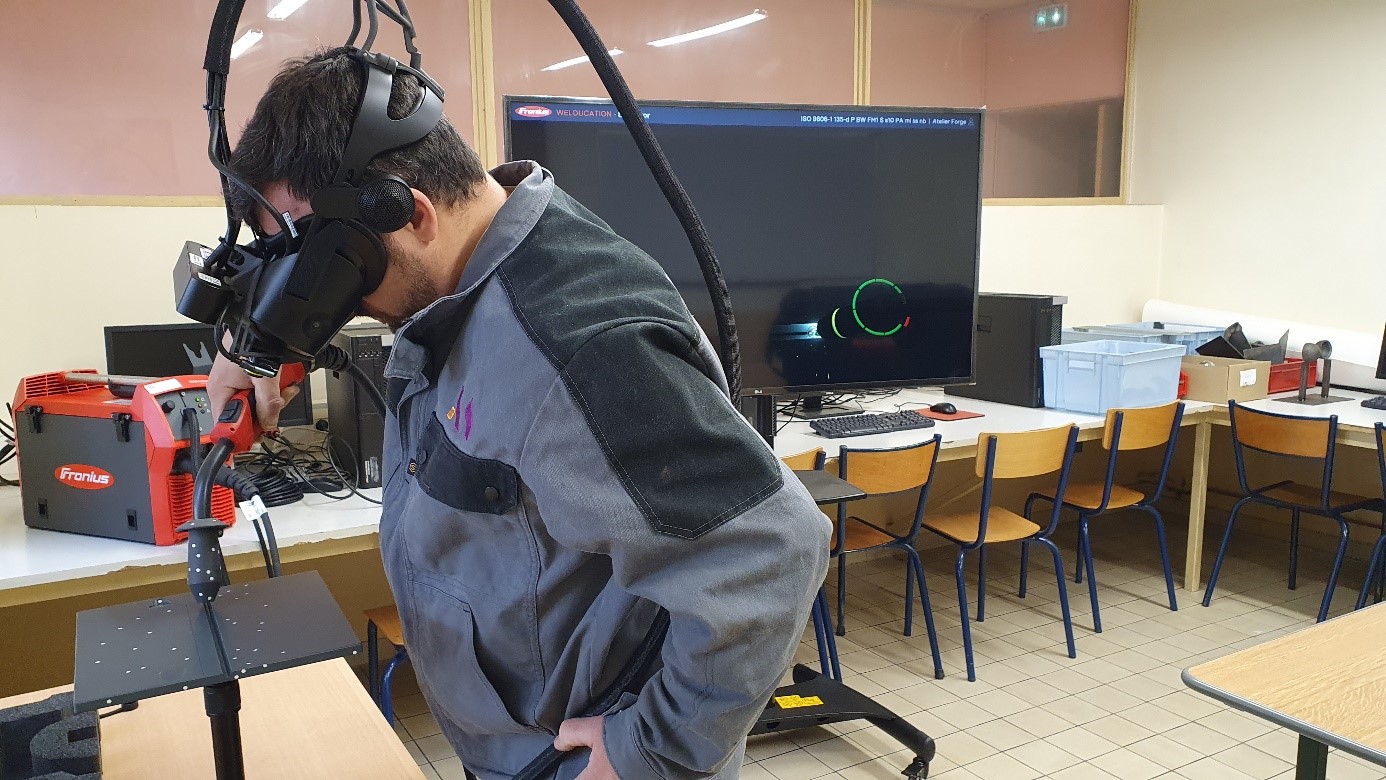
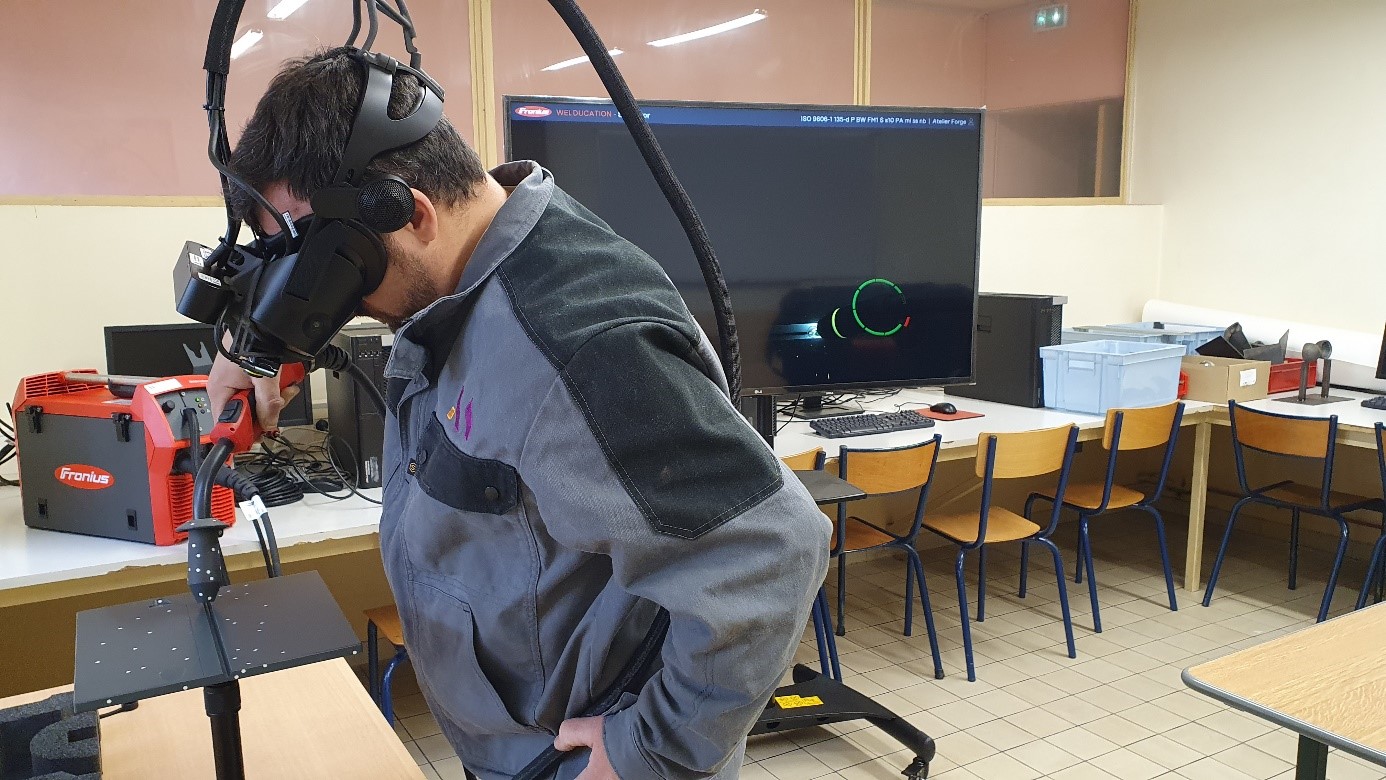
The ELF in Cluny has acquired a new welding simulator with funding from the Arts & Métiers Foundation andsponsorship from Comège, a company headed by Thibaut Egeley (Cl,200). This demonstrator aims to introduce students to welding techniques and help them perfect their skills. The simulator is easily transportable, safe, and does not use any raw materials.
Promoting careers in metallurgy
The goal of the welding simulator is to promote the welding profession among young people, who still hold many misconceptions about careers in the metalworking industry—even though the growth of Industry 4.0 is helping to improve the industry’s image. The aim is to use innovative technologies to make these in-demand careers more attractive. In fact, many welders need to be trained to meet the needs of industrial sectors, such as the lifting equipment industry or the nuclear sector.
It is thus fully aligned with the ELF initiatives, which aim to introduce students Arts et Métiers and young people visiting the campus (middle schoolers, high schoolers, and BUT students) to the various topics related to manufacturing technologies and Industry 4.0.
It complements, without replacing, real training, which allows participants to confront physical phenomena (electrode bonding, UV rays, heat, smoke, etc.) and adopt responsible and safe behavior (wearing PPE).
Its acquisition was funded by the Arts & Métiers Foundation and a donation from Comege.
Immerse yourself in Virtual Reality
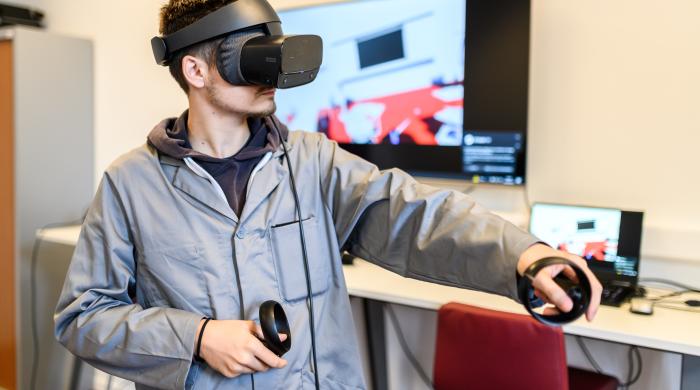
The simulator allows users to learn about welding in a completely safe environment. It is easily portable, safe to use, and requires no raw materials. Learners have access to physical props (welding test pieces, torches, welding machines, etc.) over which virtual models are superimposed using augmented reality. The entire experience is viewed through a virtual reality headset. The goal is to immerse the learner in a world that provides the most realistic sensory experience possible, both visually and auditorily. To ensure the most effective immersion possible, equipment from FRONIUS—one of the world’s leading manufacturers of welding equipment—was selected.
From the very first sessions, the simulator helps students grasp the full complexity of welding. Students thus acquire techniques—such as optimizing the choice of joining methods—to become managers with in-depth knowledge of this process.
Positive User Feedback
The simulator accurately reflects reality, particularly regarding the precision required for the technical procedure and the need for extensive training to perform a proper weld. Commissioned in early February 2025 and showcased during the Open House (JPO), it is currently used for welding lab sessions in the first year of the General Engineering Program ( Grande Ecole Engineering Programme , PGE). One of the first observations made by students, after using the simulator and practicing in real life, is a marked improvement in their welding path after just 30 minutes of using the device.
Another observation, which also applies to staff at the Cluny campus, is a reduction in apprehension about welding. This fear, which is one of the main obstacles to learning about the process, is overcome by prior simulation, in complete safety.
Some students have already started using the simulator, notably the team in charge of designing and building the venue for the 2025 Grand Gala.