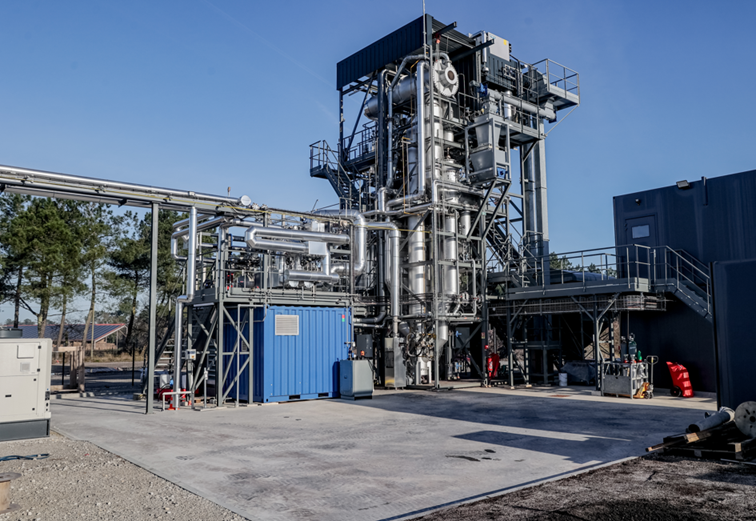
Green hydrogen is an energy carrier that has been chosen at national and European level to meet the government's decarbonization targets for a responsible and sustainable industry. It is in this context that Thomas Guerbé, an apprentice engineer at the Arts et Métiers campus Arts et Métiers Bordeaux-Talence, is completing his apprenticeship at CAP INGELEC on the CapPyroH2 project. This project, supported by ADEME, aims to develop an innovative process for producing green hydrogen using a novel technology: multi-stage pyro-gasification of biomass.
An Arts et Métiers student Arts et Métiers to a more responsible industry
Entering the workforce while continuing his studies was the choice made by Thomas Guerbé, a first-year apprentice in the Specialized Engineering Program in Industrial Engineering and Production at the Arts et Métiers campus Arts et Métiers Bordeaux-Talence, who opted for a work-study program. With a DUT in Physical Measurements, he wanted to quickly enter the industrial sector, particularly in the field of thermal fluid energy. Working alongside Jérôme Claverie (his industry mentor) and Erika Fourcassies (director of the hydrogen project), his main responsibility is the implementation and oversight of maintenance for the CapPyroH2 industrial demonstrator.
During his first few months at CAP INGELEC, Thomas is involved in several projects. Under the supervision of his industry mentor, he handles first-level maintenance and manages communications with suppliers to ensure the demonstrator equipment operates smoothly. He also works on site operations, particularly monitoring thresholds and controls. He is also involved in developing safety procedures by identifying risks and hazards and implementing preventive actions and emergency measures. Finally, Thomas participates in the commissioning of the demonstrator, supervises the network’s IT architecture, and drafts operating procedures, thereby ensuring an optimal and secure work environment.
“This experience at Cap Ingelec is a real opportunity for me to advance quickly in a field I’m passionate about. I’m working alongside professionals and gaining valuable technical expertise at just 20 years old, ” says Thomas.
In fact, this program, offered at the Arts et Métiers campus Arts et Métiers Bordeaux-Talence, will allow him to take courses related to production and maintenance in sensitive environments, specifically in the fields of hydrogen and nuclear energy. This is a real asset that will complement and strengthen Thomas’s skills as an engineering apprentice.
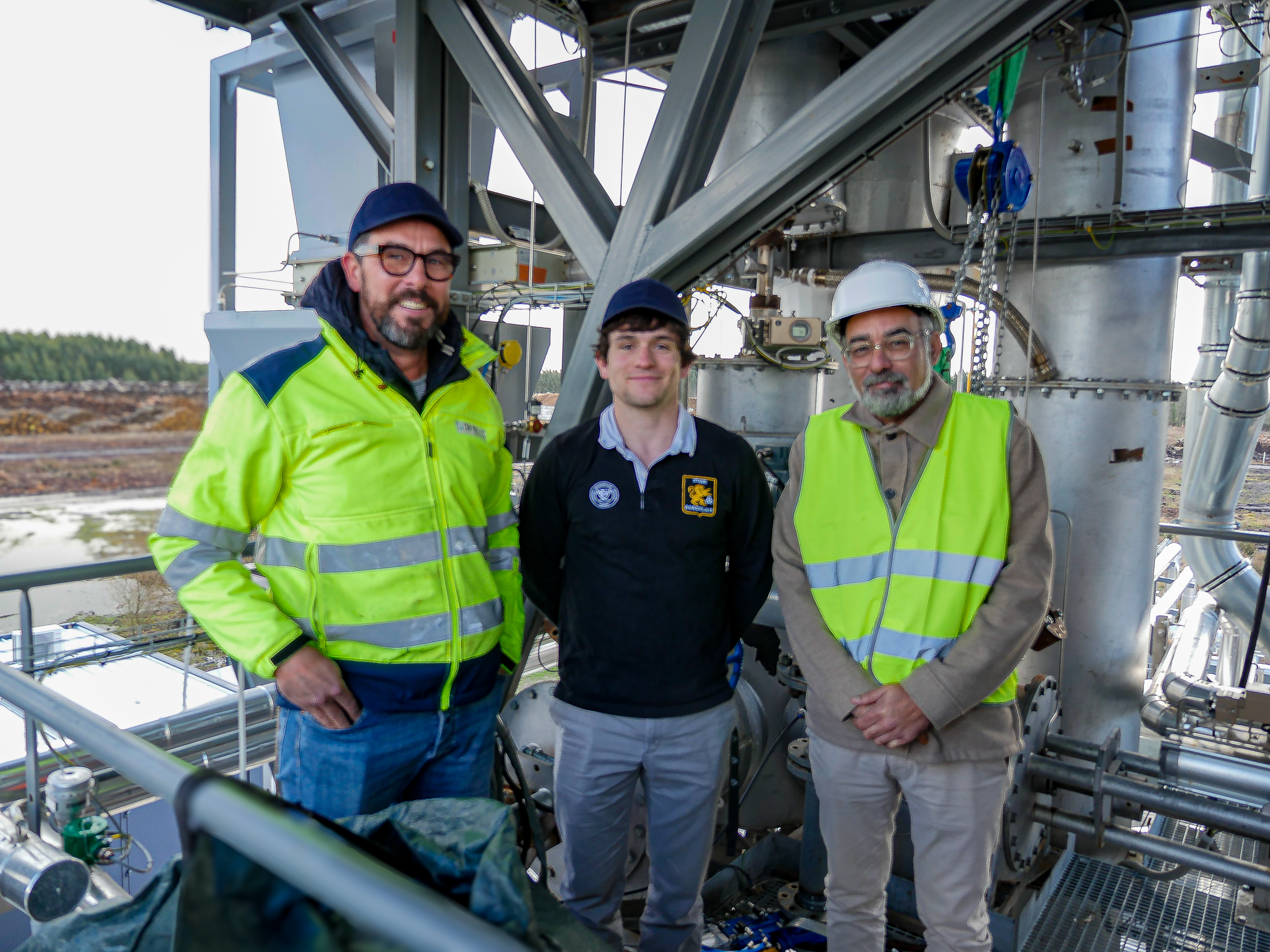
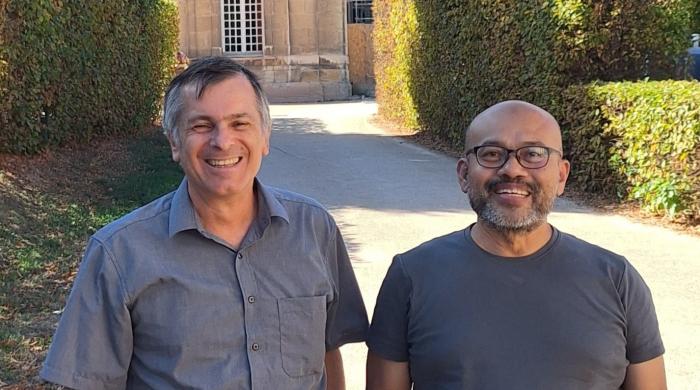
From left to right: J. Claverie (CAP INGELEC), T. Guerbé (PIS GIP ENSAM apprentice), A. Ben Abdelwahed (EC ENSAM, I2M laboratory)
A synergy between education, industrial projects, and scientific research for sustainable innovation
The launch of this project has generated tangible momentum in terms of developing training programs on campus.
“We have introduced the ‘Production and Maintenance in Sensitive Environments’ track as part of the Specialized Engineering Program, which was commended by the Commission des Titres d’Ingénieur (CTI) during the last audit and validated by France Compétences. New courses are now being offered on the environmental impacts of biomass and H2 for third-year students Grande Ecole Engineering Programme (PGE) and Master of Science ITED Master of Science (Environmental Process Engineering and Materials for Sustainable Development track). “We will also offer a thematic week in the second year of the PGE program, as well as PJT and PJE projects for our students on this topic, utilizing the experimental and digital resources developed at the I2M* laboratory,” explains Amine Ben Abdelwahed Arts et Métiers a professor Arts et Métiers researcher at I2M in energy Arts et Métiers and the project’s scientific director.
This development in training is closely linked to the research activities conducted as part of this project within theI2M.
“As a partner in this project led by Cap Ingelec, we are studying the impact of heating conditions on the production of pyrolysis gases and on the quality of the charcoal. The goal is to achieve the highest possible process efficiency. Our approach is multi-scale, combining experimentation, modeling, and simulation. For example, at the wood pellet scale, Joanna D’Antoni, a second-year PhD student, is working on characterizing pyrolysis gases through thermogravimetric analysis and gas chromatography. “For the water-shift (gasification) part, Shaolin Liu (postdoc) is working on a larger scale to characterize the charcoal produced in the first phase of pyrolysis, ” adds Amine Ben Abdelwahed.
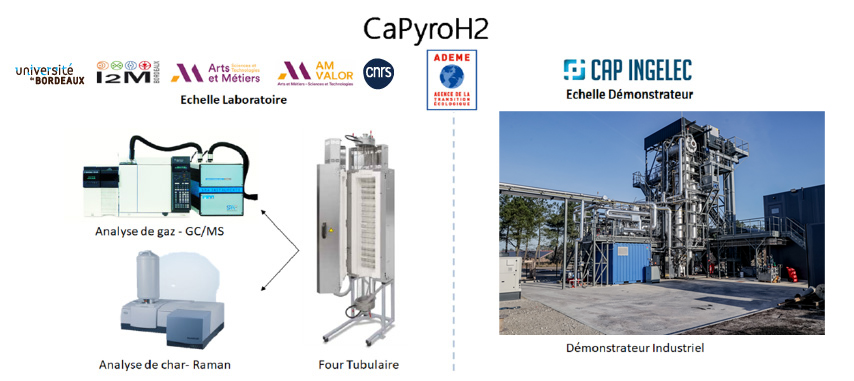
The research for this project, led by Amine Ben Abdelwahed (ENSAM) and Jean Lachaud (University of Bordeaux), also involves female engineers from the I2M laboratory, such as Cécile Gaborieau and Audrey Duphil, both of whom are scientists at the CNRS.
CapPyroH2: An Ambitious Project for Green Hydrogen
More specifically, the CapPyroH2 project is based on an advanced technological process that combines pyrolysis and gasification to produce hydrogen from byproducts associated with forestry and the wood industry. This method, which draws on local expertise, enables the production of green hydrogen by utilizing wood waste while achieving carbon neutrality.
“This process offers a clear environmental benefit in terms of reducing the carbon footprint compared to the conventional combustion process, where 1 kg of hydrogen produces 11 kg of CO2. In addition, the biogas is produced locally, and part of it is also used to power the process itself, ” explains Amine Ben Abdelwahed .
The project has an ambitious goal: to replace fossil fuels with carbon-free fuels to meet the high demand for decarbonization in industry and transportation, as well as to address issues of energy security related to reliance on foreign gas. One potential application, for example, would be supplying hydrogen to bus fleets, enabling a city to achieve energy self-sufficiency for its public transportation system.
“Our goal will be to be able to utilize not only biomass but also other solid recovered fuels (SRF), ” adds Jérôme Claverie.
To commercialize this unique expertise in green gas production using the multi-stage pyro-gasification process, Jean Paul Cales, founder of CAP INGELEC, and Matthieu Cales, CEO of CAP INGELEC, have decided to transfer this business unit to a newly created entity called NOVEA.
Thanks to young engineering apprentices like Thomas, as well as the dedication of engineers and researchers, NOVEA embodies innovation in the service of a greener future. This project, certified by ADEME as part of France 2030 and carried out in partnership with CAP INGELEC, AMVALOR, and I2M, represents a promising step forward in green hydrogen production. With prospects for industrial deployment, it is fully aligned with the current momentum toward decarbonization and ecological innovation.
Finally, it should be noted that the industrial demonstrator has begun operations and is producing synthesis gas in accordance with laboratory studies. The validation of theoretical principles through their application in an industrial process represents a remarkable achievement.
* Bordeaux Institute of Mechanics and Engineering (I2M / Arts et Métiers, University of Bordeaux, CNRS, Bordeaux INP, INRAE)