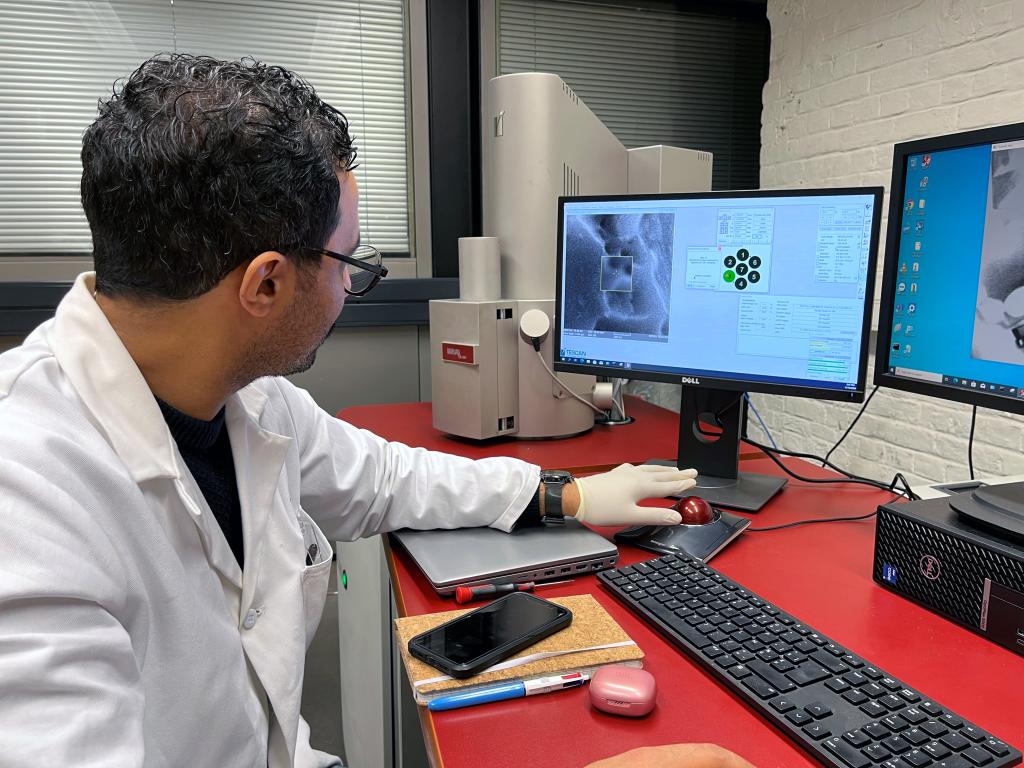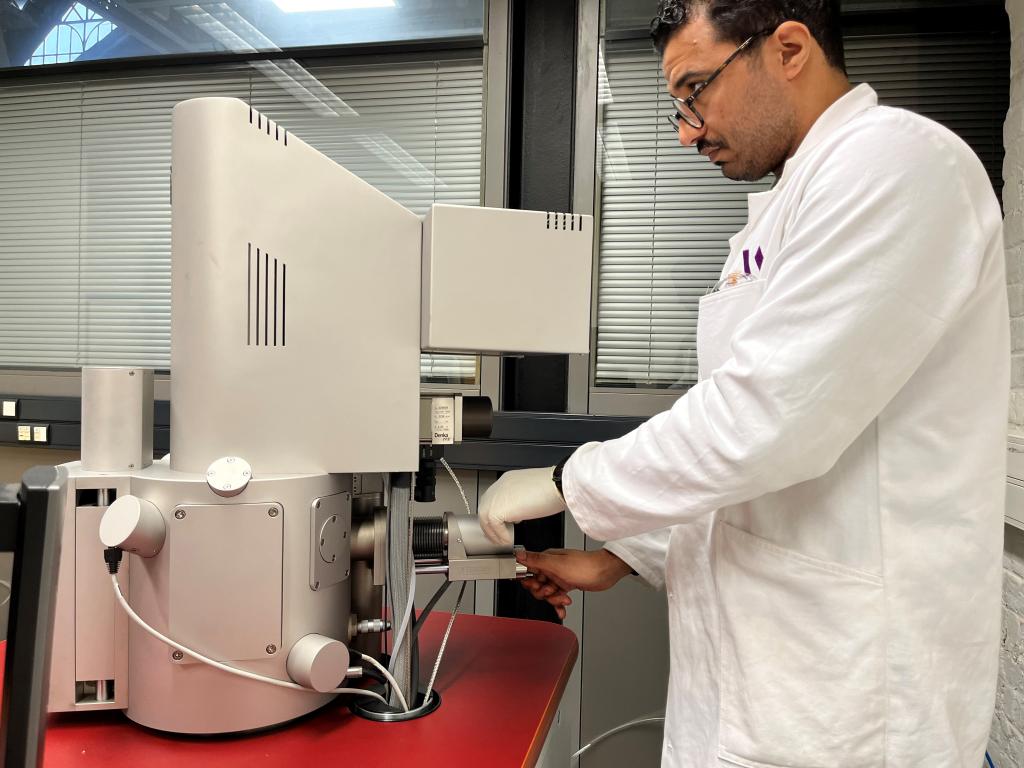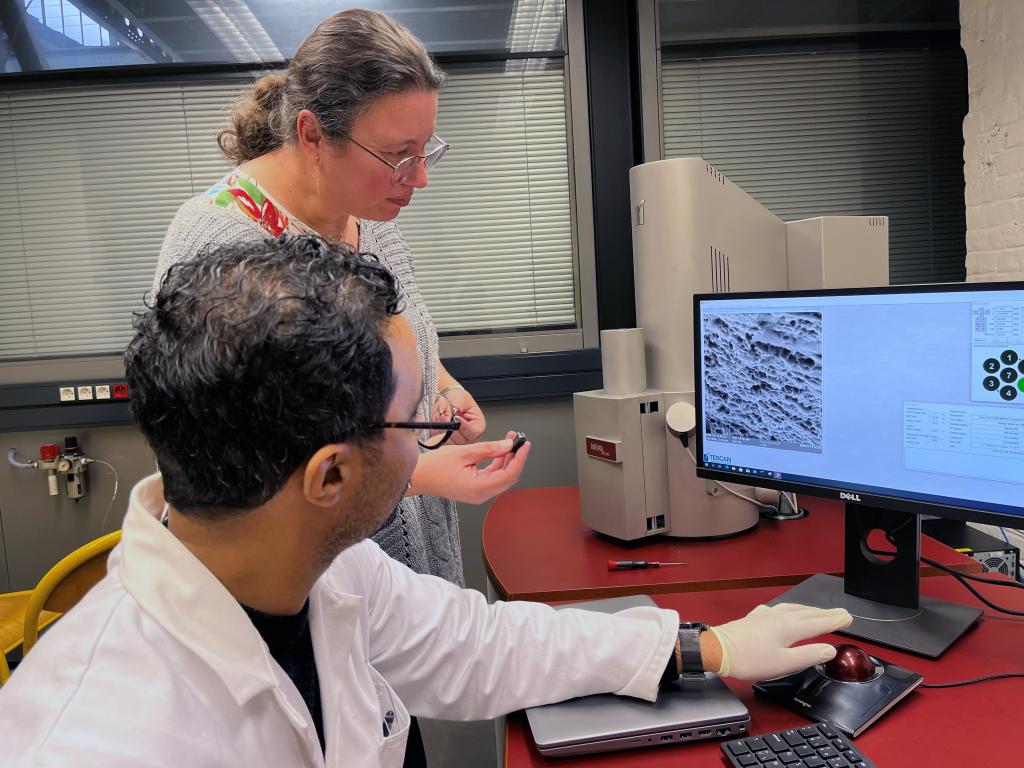
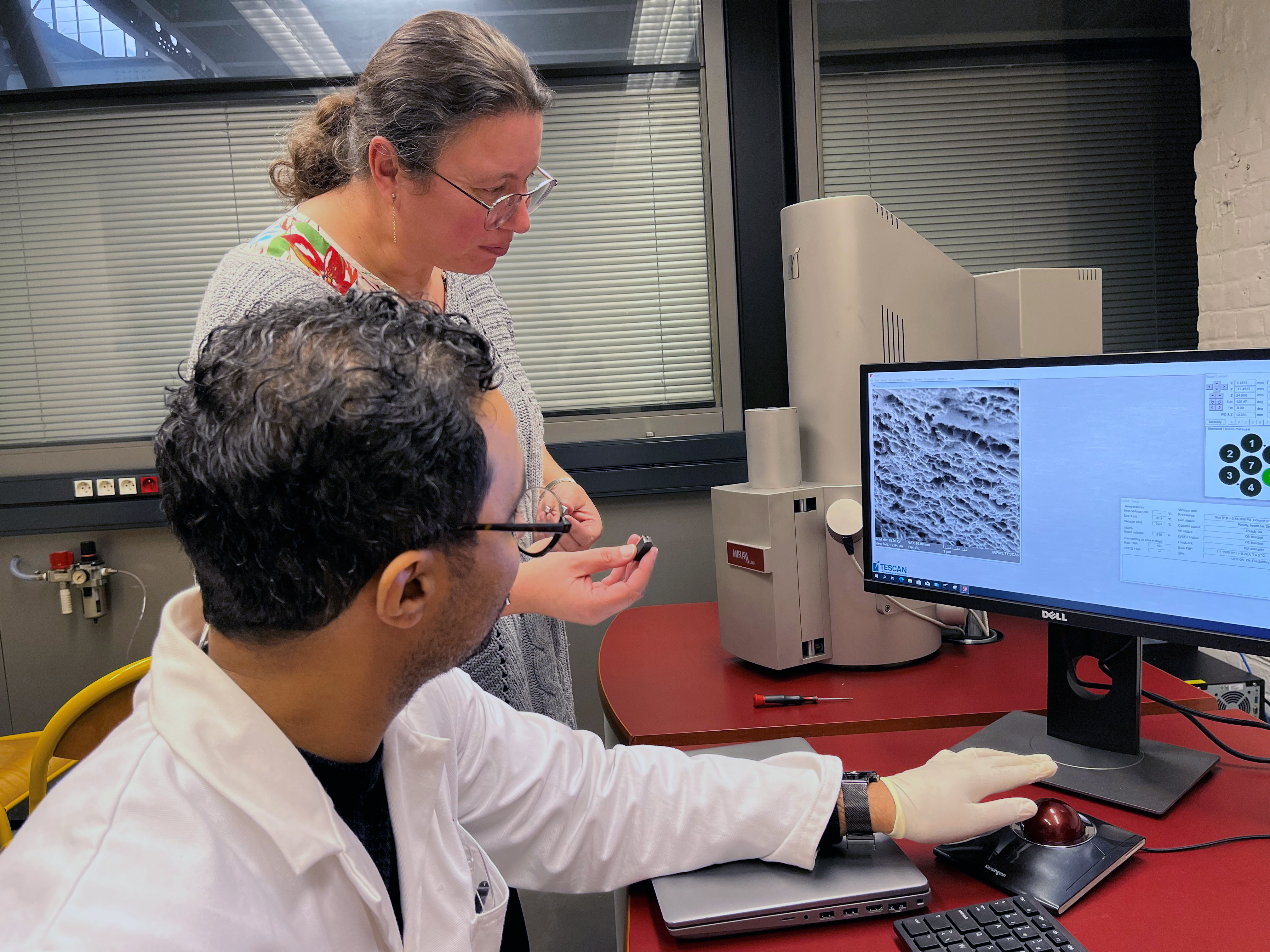
In December 2024, the Mechanics, Surfaces, Materials and Processes (MSMP) laboratory at the Arts et Métiers campus Arts et Métiers Lille acquired a scanning electron microscope (SEM).
This acquisition is the result of a project launched in July as part of the Evolutive Learning Factories program Evolutive Learning Factories the Arts et Métiers campus Arts et Métiers Lille. All of the device's functions were installed at the end of December 2024.
The scanning electron microscope, an essential tool for studying materials.
Cutting-edge technology that enables high-magnification imaging by exploiting electron-matter interactions.
Like optical microscopy, scanning electron microscopy is a technique for observing the surface of samples. The difference is that an optical microscope works with visible light, while SEM works with an electron beam. It can achieve magnifications of up to 100,000 times or more, compared to magnifications of around 1,000 times with an optical microscope.
Two imaging modes can thus be performed:
• Surface morphology, using the secondary electron detector
• Chemical contrast of surface phases, using the backscattered electron detector
The device is also equipped with an energy dispersive X-ray spectrometer (EDX), which was installed in December and enables chemical analysis.
Equipment obtained through a sponsorship agreement signed between Arts et Métiers Vesuvius.
Myriam Dumont, representative of the MSMP laboratory in Lille, explains , "This scanning electron microscope was donated by Vesuvius, which upgraded its own equipment and agreed to transfer the device to the MSMP laboratory on the Lille campus through a sponsorship agreement signed with Arts et Métiers."
The installation (fitting out the environment, air conditioning the room, transport and installation costs) was financed as part of the institution's Evolutive Learning Factories ELF) program.
Since December, some students have already had the opportunity to discover this new tool as part of their practical work. It will be used in particular in MATI and MATA practicals, in projects, and for the thesis work of doctoral students in the laboratory.
This project contributes to the renewal of a set of tools in the "materials characterization" workshop, improving the training conditions for students.
Myriam Dumont concludes: "This installation was made possible thanks to the support of the institution (senior management, campus, laboratories) and the mobilization of many colleagues who made this project feasible within the allotted time frame. All these players have enabled the Lille campus and the MSMP laboratory to acquire an essential piece of equipment for the study of materials. Thank you all for your involvement in this project. Please do not hesitate to contact us if you would like to visit or use the microscope."