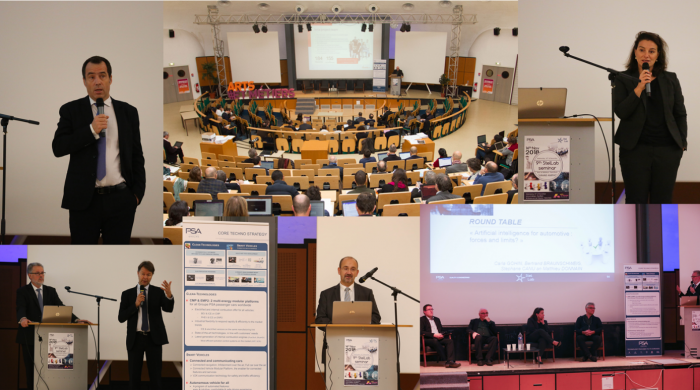
Since 2013, Arts et Métiers inthe PSA Group’s Open Lab Materials and Processes. While this partnership—which is central to the institution—is focused on research, it also contributes to student education by providing approximately six topics each year (projects, Master of Science in Master of Science internships, theses, and internships). These projects are directly linked to PSA’s priorities and its transition toward Industry 4.0.
A second-year digital simulation project that contributes to a patent application
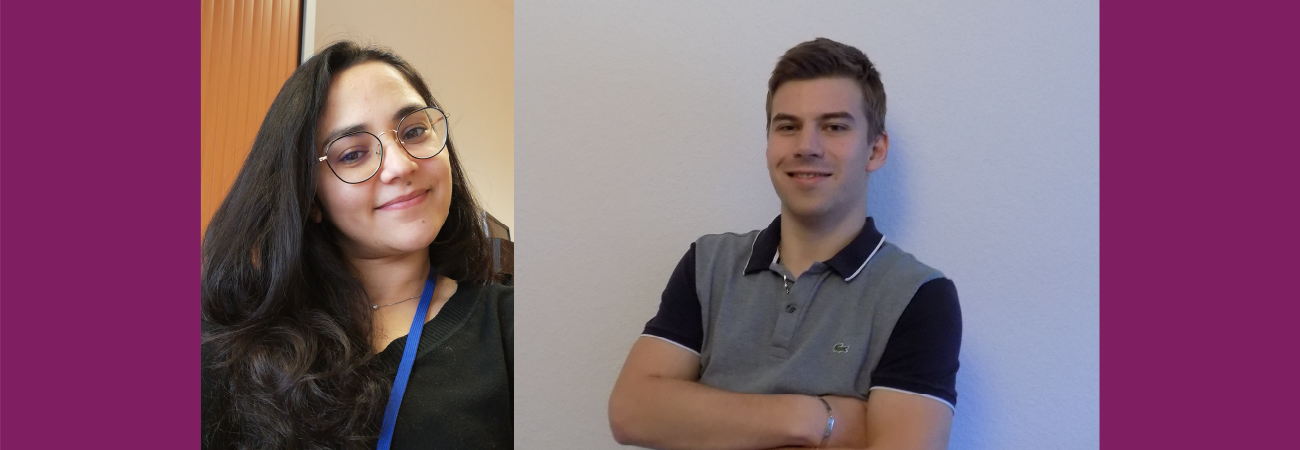
A third-year student in the Franco-German dual degree program, Matthew Sleight spent last year working on modeling and improving a shape memory alloy actuator for PSA's new generation of wheel rims.
" All the rims have an aerodynamic profile that helps cool the brake pads to prevent them from wearing out too quickly and releasing polluting particles, " explains Matthew. "The goal here is to add an actuator that opens and closes the fins at the right moments to ensure that the brakes are always at the optimal temperature. "
The actuator in question had already been the subject of projects that had validated a working prototype. Matthew's task was to optimize this model: " Modeling, behavior simulation, digital optimization—my work was very much focused on digital technology, which I'm passionate about! I managed to obtain a functional profile model that meets PSA's objectives and is going to be patented! "
An Master of Science internship leading to a CIFRE thesis
Nada Miqoi is currently in the final year of her CIFRE thesis with PSA. She began her project during her Master of Science internship Master of Science “Given my engineering background at ENSAM Meknès, which emphasizes a more experimental approach to engineering, I was immediately drawn to the project proposal with PSA, which is heavily focused on experimentation. Since my Master of Science internship, my work has focused on impact analysis and damage detection using non-destructive testing on composite materials.”
To comply with environmental standards, car manufacturers are seeking to make cars lighter by using composite materials while maintaining the mechanical properties of the replaced components. However, an impact, such as a stone hitting a door, is not necessarily visible to the naked eye, but its consequences (damage, vibrations, propagation of fatigue, etc.) can be critical to its integrity. Nada is working to define the criticality of damage and its detection by non-destructive testing methods.
The nature of her work means that she is based at the Arts et Métiers campus Arts et Métiers Metz in her laboratory, but she remains part of PSA: " I am part of the company. I am invited to and attend events organized by PSA for its doctoral students, and I participate in monthly group meetings and individual progress meetings."
Projects made possible thanks to the strong ties of this structuring partnership
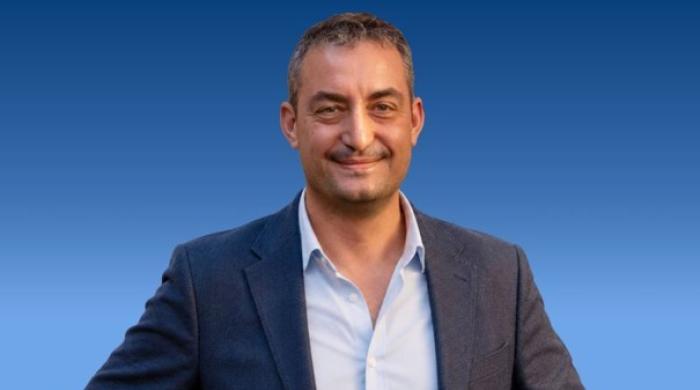
"It is thanks to structural partnerships such as this one that students can work on projects of this scale with manufacturers," explains Prof. Fodil Meraghni, Arts et Métiers coordinator for Arts et Métiers Openlab with PSA .
When asked about carrying out their projects as part of a structured partnership, Matthew and Nada agree on the advantages. For Matthew, it's a potential opportunity: " It's not a project you can just forget about; you can build on it. I had an internship planned for last summer, and even though circumstances prevented me from doing it, I might be able to consider doing a thesis with them. It's also rewarding to know that my work will have contributed to a patent application!"
Nada appreciates the practical aspect of her subject: " When you work on a project with PSA, you know that there are people behind it who are waiting for usable projects. It's a great opportunity. And why not go all the way to the implementation phase of what I'm developing if I have the opportunity! "