Jade Villeneuve is preparing to represent French excellence in additive manufacturing at the WorldSkills national finals in Marseille.
WorldSkills: an Arts et Métiers engineer Arts et Métiers the making
At just 23 years old, Jade Villeneuve, an apprentice engineer in her final year at the Arts et Métiers campus Arts et Métiers Bordeaux-Talence, in partnership with the UIMM Nouvelle-Aquitaine / CFAI Aquitaine cluster, is preparing to take on a major challenge: representing her region, and perhaps tomorrow her country, at the WorldSkills national final in Marseille. Specializing in additive manufacturing, she combines technical rigor, personal commitment, and high-level mental preparation to excel in this elite competition.
How did you find out about the WorldSkills competition? Ifound out about the competition through my teachers and my company. I saw it as a great opportunity to progress, step outside my comfort zone, and develop additional skills outside of my training.
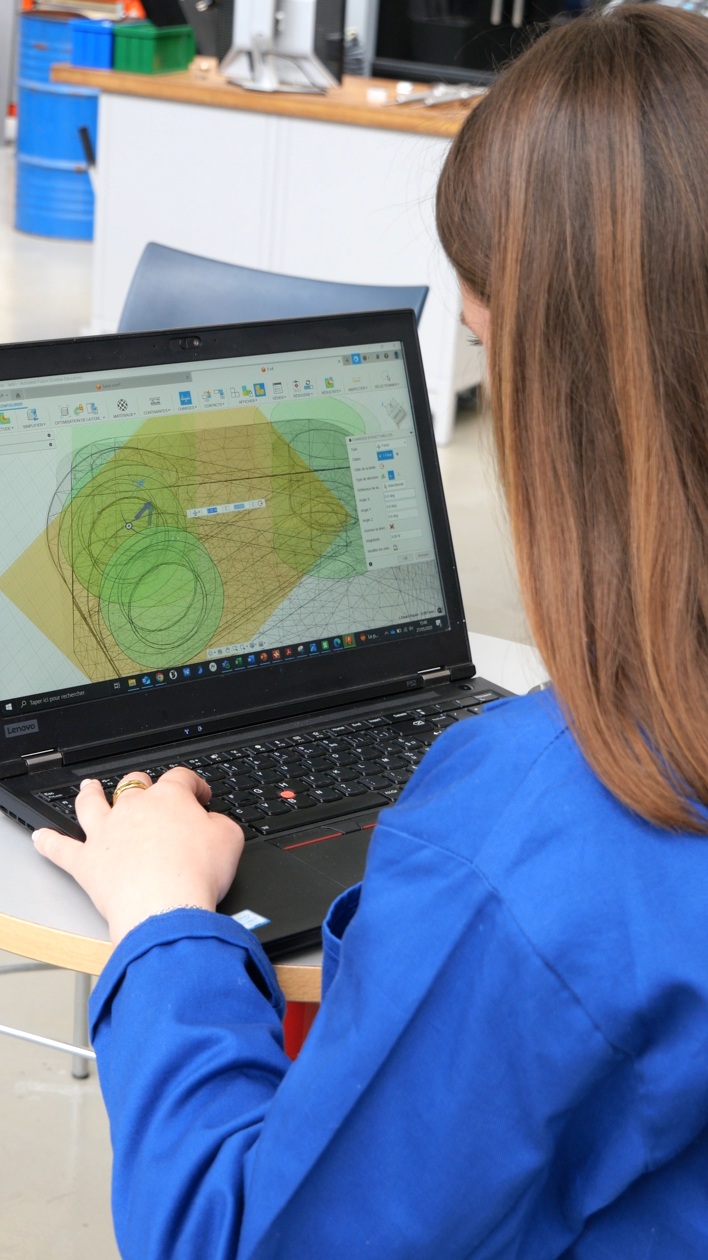
The selection process took place over three days and included various technical modules: reverse engineering, design, topological optimization, manufacturing optimization, etc.
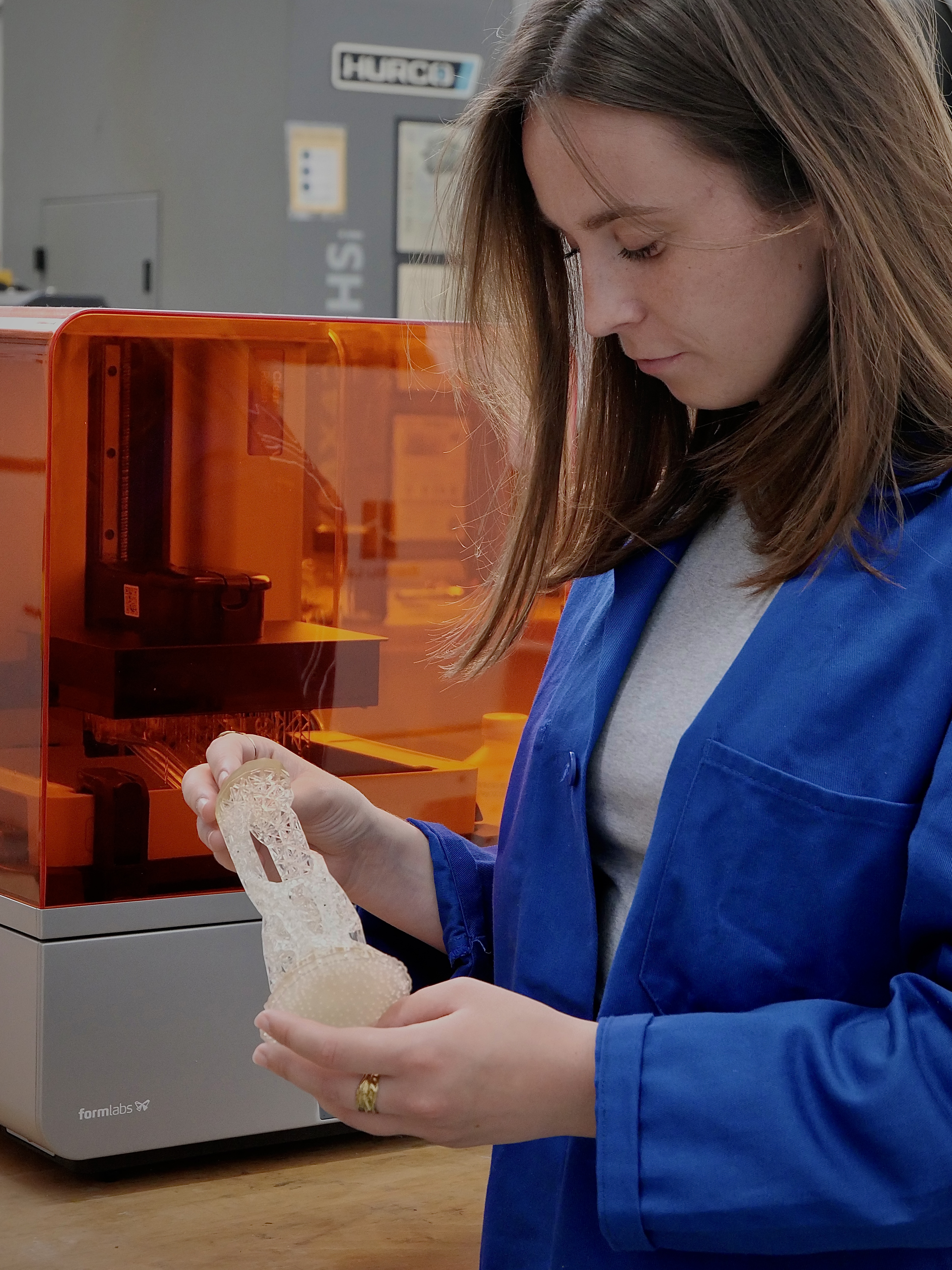
We were also evaluated on two main processes: FFF (fused filament fabrication) and SLA (stereolithography). The juries assessed both the technical quality of the work, the manufacturing choices, and the post-processing carried out, as well as soft skills through reasoned discussions.
1. interpersonal skills
How are you preparing for the national finals in Marseille?
The preparation is very comprehensive. First, we have regional weekends bringing together all the competitors from Nouvelle-Aquitaine, where we receive support from mental and physical preparation professionals.
They teach us how to manage stress, fatigue, concentration, and the highs and lows of competition. The goal is to adopt a rigorous daily training routine and structure our schedule while maintaining our physical and mental health.
We also have technical training sessions with other competitors in the discipline. In additive manufacturing, we are supervised by Tiphaine Baur (national expert) and Julien Bajolet (international expert), who train us on the tools and machines we will encounter in competition.
What are the biggest challenges you face in this preparation?
The biggest challenge is time management. Being in the final year of a work-study engineering program already involves a very busy schedule, with professional responsibilities, writing a thesis, preparing for the defense... Adding training and WorldSkills preparation requires discipline, planning, and a lot of personal investment.
Who are the people or organizations helping you in this adventure?
I am fortunate to have a great support network. My coach Théo Fouino, an expert in 3D printing, provides me with technical support throughout the preparation process, as do Cécile Delarue and Enrico Panettieri. The CFAI Nouvelle-Aquitaine and the Arts et Métiers campus Arts et Métiers Bordeaux-Talence allow me to use their equipment for training.
What is the next step for WorldSkills?
The next step is our final weekend of mental and physical preparation in June. Then it will be the national finals in October in Marseille, a moment I am eagerly awaiting.
What are your career plans?
I want to continue working in additive manufacturing, which I discovered in my final year of high school. I was captivated by the design freedom it offers, its ability to produce customized parts quickly, and its potential to meet very specific needs. That's what motivated me to specialize in this field.
My internship abroad, in a research laboratory in Auckland (New Zealand) specializing in this field, reinforced my desire to pursue a career in R&D.
I am planning an international career, perhaps initially through VIE (Volontariat international), always with the desire to contribute to innovation and the evolution of manufacturing processes.
Jade, can you introduce yourself in a few words: your background, your current studies at Arts et Métiers what led you to additive manufacturing?
I obtained a high school diploma in science with a specialization in engineering at the Lycée François Rabelais in Vendée, where I was able to carry out a project that had a big impact on me: a robot to assist visually impaired athletes, which won us the solidarity prize in the national engineering competition.
After a year of preparatory classes in PTSI (physical sciences, technology, and engineering), I went on to study for a technical university diploma (DUT) in Mechanical and Production Engineering at the University of Poitiers, before joining the work-study engineering program at the Arts et Métiers campus Arts et Métiers Bordeaux-Talence.
I am currently in my third year specializing in Advanced Manufacturing Processes, working part-time at NAMMA, a start-up specializing in hybrid manufacturing (combining machining and 3D printing in the same machine), where I am conducting a research project on this topic.
I was drawn to the freedom of design it offers, its ability to produce custom-made pieces quickly, and its potential to meet very specific needs. That's what motivated me to specialize in this field.
For those who are not familiar with additive manufacturing, can you explain in a few words what it is? Is it a technology of the future in industry?
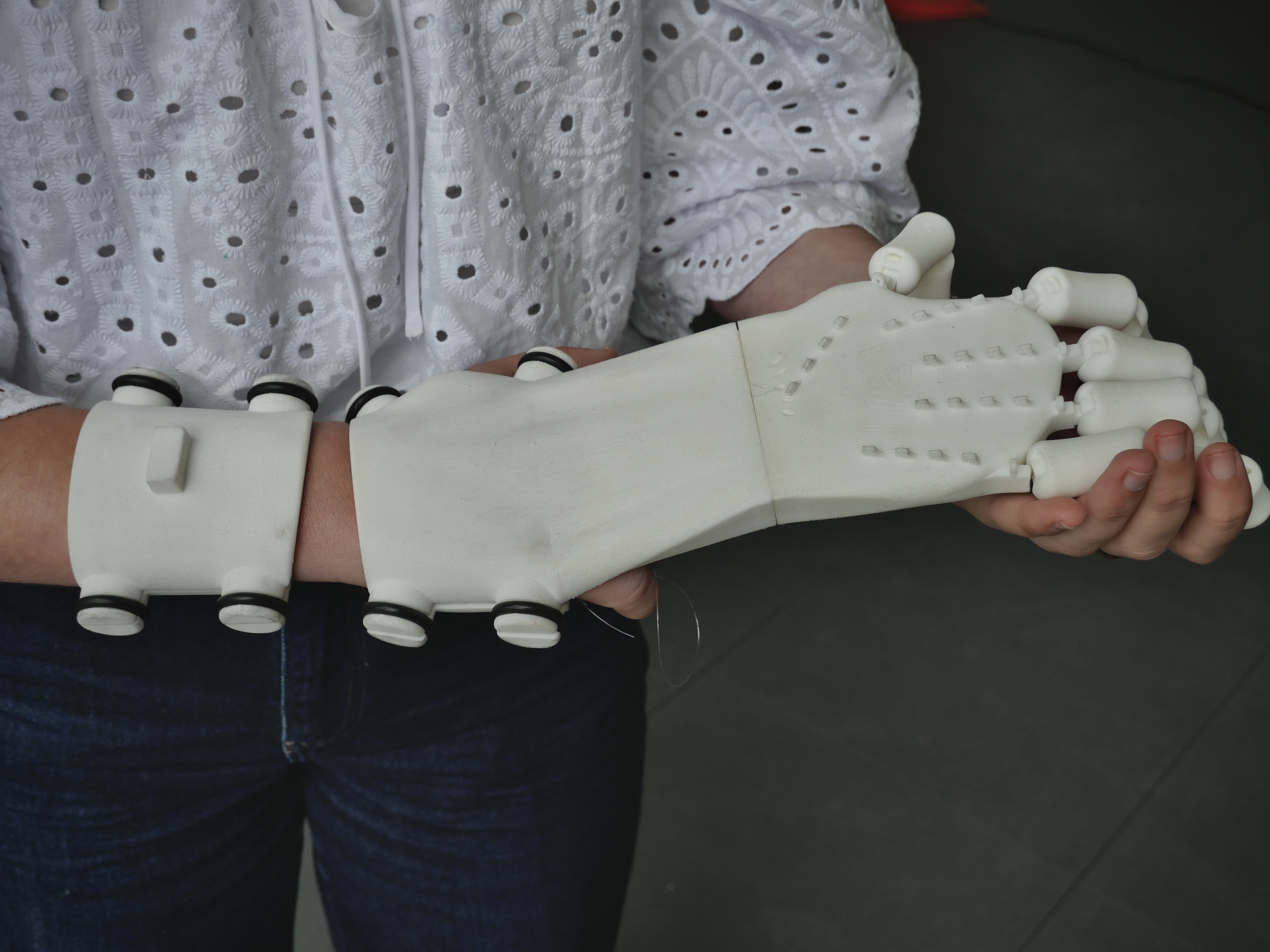
Today, there is a wide variety of additive technologies, using very different materials and physical principles. They involve manufacturing a part by successively adding material. This is a rapidly expanding field, opening up unprecedented opportunities, particularly for complex geometries and customized production. However, despite its immense potential, additive manufacturing still has to prove itself in certain areas before it can be fully integrated into industrial production lines. It complements traditional processes rather than replacing them: it is an additional tool for addressing demanding industrial challenges.