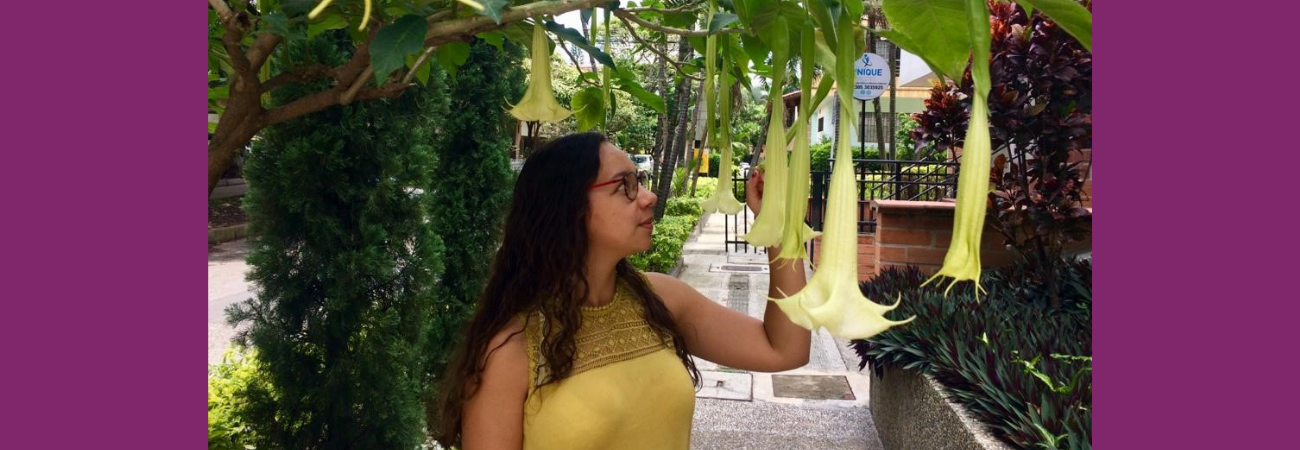
Sihem Benzerga, a recent graduate of Grande Ecole Engineering Programme, spent her third year at the National University of Colombia (UNAL) to specialize in environmental science. After six months of coursework, she completed her capstone internship at Campus Durable, an initiative led by UNAL’s administration. Her mission: to prepare for the implementation of a sustainable cafeteria system at the university. She details her findings and recommendations in her “Guide to an Ever-More Sustainable University Cafeteria.”
A guide to eating in a way that respects the environment and living things
Sihem decided to work on food because she wanted to understand a comprehensive and cross-cutting system:
Food affects many aspects of individuals' and society's lives, including culture, personality, health, the environment, globalization, and the economy.
But what exactly is sustainable food? For Sihem, it is "food that will enable everyone to enjoy good health, not only in terms of the absence of disease, but also in terms of mental and physical well-being, while respecting the limits of the environment, living organisms, and biodiversity."
During her internship at Campus Durable, Sihem conducted an assessment of the current university food system and proposed an action plan to set up a sustainable canteen.
To carry out this study and formulate proposals, Sihem sent a questionnaire to faculty members (staff, teachers, students, doctoral students) to identify their eating habits and gather their ideas for a future system. She supplemented her survey with individual interviews and observations.
She shares her findings in the "Guide to an increasingly sustainable university cafeteria."
The main conditions necessary for setting up a sustainable cafeteria
For Sihem, two elements are necessary for the long-term establishment of a more sustainable cafeteria:
- All cafeteria staff and users must be involved, committed, and proactive in the project:
To successfully carry out a sustainable development project, it is necessary to adopt a systemic approach and take all stakeholders into account. Such a project requires profound change.
- Since diet is linked to culture and personality, all mental models of individuals must be taken into account:
Asking users to change their diet really means touching on their social structures, on what they have been taught since childhood.
To achieve this, it is extremely important to raise awareness about sustainable food by educating chefs and users. Sihem also proposes organizing awareness-raising activities to promote nutritional needs and good agricultural practices, and to train staff in sustainable cooking and sustainable waste management, etc.
The guide produced by Sihem offers practical tools that are easy to use thanks to method sheets and project sheets. These sheets have been developed with the aim of being easily adaptable, easy to implement, and a source of inspiration for other sustainable transformation projects.
What now?
Sihem graduated in September 2020 and is currently looking for a job in the sustainable development consulting sector!