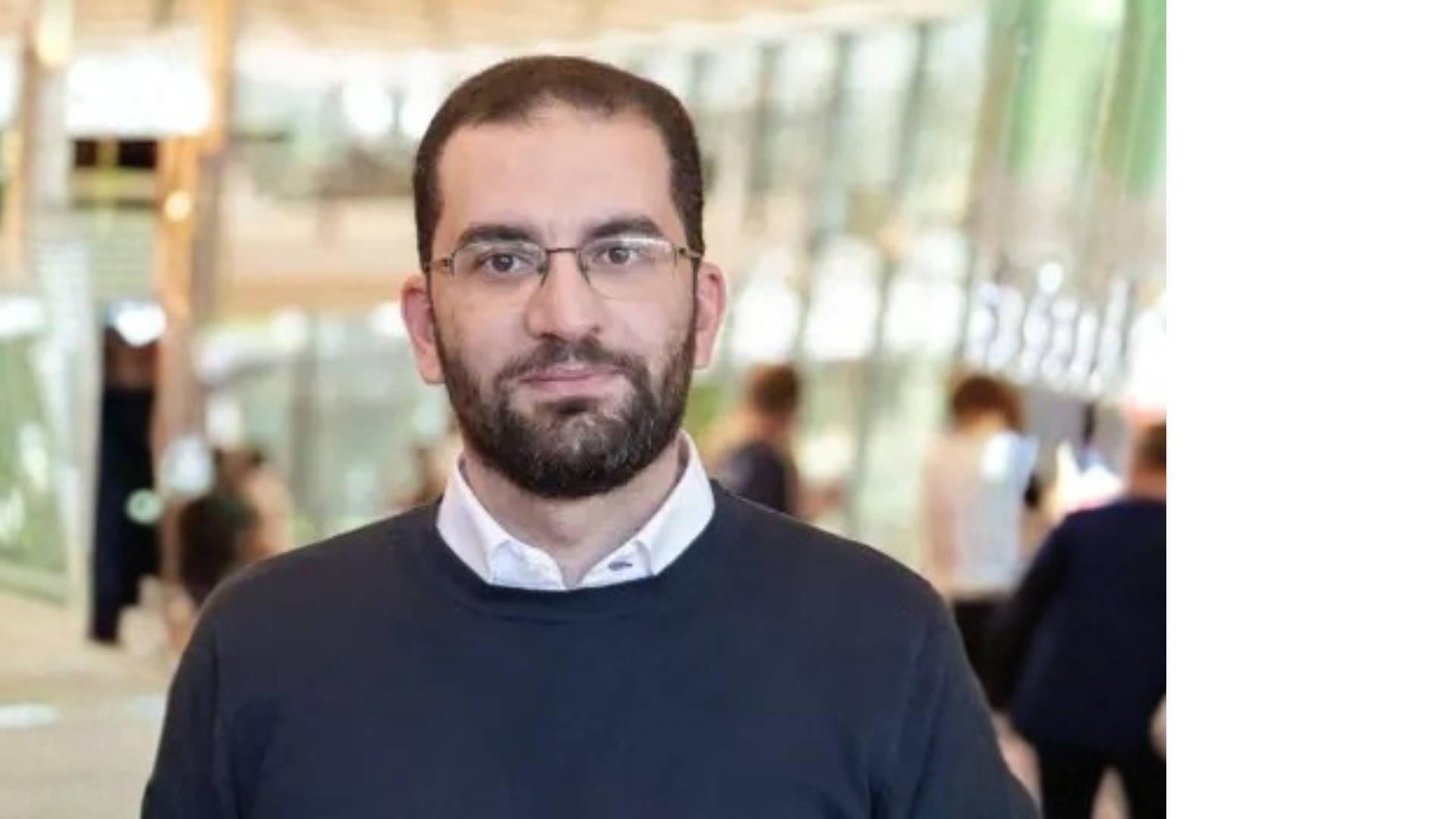
Osama Abdeljaber is a researcher at Linnaeus University in Sweden, where he works on artificial intelligence applied to wood characterization. As a visiting professor at the LaBoMaP laboratory on the Cluny campus of the Arts et Métiers , he reflects on this experience.
Original ideas and the ability to generate experimental data therefore remain important, even as the tools used to implement these ideas evolve.
What led you to accept this position as a visiting researcher at Arts et Métiers ? Can you tell us about your collaboration with Professor Guillaume Pot?
I am part of a small team at Linnaeus University whose leader has been collaborating with Guillaume Pot and his colleagues for about seven years. Thanks to this connection, I was already involved indirectly, but this visit was my first opportunity to work directly with them. The idea was to spend more time together, get to know each other better, and develop joint research projects. Our areas of expertise complement each other: the team atArts et Métiers has extensive experience in wood digitization, while my work focuses on artificial intelligence. We wanted to combine these strengths to explore how AI could detect the characteristics of wood based on digitized images.
How are you feeling one month after your arrival?
The experience was very positive. I learned a lot about wood digitization and had the opportunity to visit an oak sawmill for the first time. We worked on three specific topics, and this collaboration resulted in two papers that we were preparing to submit to scientific journals at the time of the interview. Both papers focus on predicting the orientation of wood fibers from images, without using laser sensors. We were also discussing the possibility of joining a European project consortium; this visit therefore opened up new opportunities for continuing our collaboration.
What sparked your interest in wood characterization? Was it the result of a particularly memorable course or something you read on your own?
My interest stemmed from artificial intelligence (AI) rather than wood itself. I discovered this field while studying for my Master of Science ’s degree around 2014, and I’ve been working in this field ever since. My doctoral dissertation in Qatar focused on the application of AI to the detection of structural damage, without being limited specifically to wood. When I joined Linnaeus University in Sweden, I found myself in an environment where much of the research focused on wood. So I began exploring how my expertise in AI could be applied to the characterization of wood. My current research grew out of this convergence of a longstanding interest in AI and a new research environment.
When did you decide to become a researcher?
After earning my bachelor’s degree, I worked for a year as a civil engineer. That experience made me realize that I preferred the academic world to the construction industry. I decided to return to college to pursue a Master of Science, followed by a Ph.D., and that’s how I became a researcher.
What advice would you give to students interested in a career in research, whether in your field or any other field?
AI tools are transforming the way research is conducted, and I’m not exactly sure what that means for the future of academic careers. Many tasks that we used to perform manually can now be automated. At the same time, these tools make it possible to bring original ideas to life much more quickly and with smaller teams, which can open up opportunities beyond academia, such as starting a startup. In wood research, however, experimental work and data collection remain essential. AI methods require data, and generating that data still requires personnel, equipment, and physical experiments. This was one of the most rewarding aspects of my visit to Arts et Métiers. Original ideas and the ability to generate experimental data therefore remain important, even as the tools used to implement those ideas evolve.