
After its first year of implementation, the A2ForBois project has released its 2025–2026 activity report, which reviews the actions taken and the initial results achieved
In light of the environmental, technological, and economic changes affecting the forestry and wood industry, adapting skills and enhancing the appeal of careers in this sector are major challenges. To address these challenges, the A2ForBois (Avenir Formation Forêt-Bois) project, led and coordinated by Arts et Métiers, brings together stakeholders from the fields of training, research, and the professional world around a shared goal: to support the sector’s evolution and develop the skills of tomorrow.
As the winner of France 2030’s “Skills and Careers of the Future” call for expressions of interest, A2ForBois launched in May 2025 for a five-year term. After its first year of implementation, the consortium has published its 2025–2026 activity report, which reviews the initiatives undertaken and outlines the next steps for the project.
A Collective Effort to Support the Forestry and Wood Industry
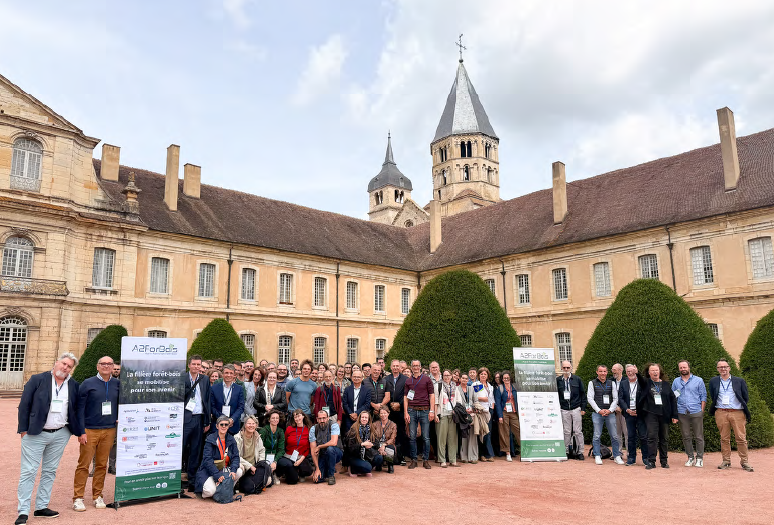 A2ForBois is supported by a consortium of 17 members and a community of more than 50 partners, bringing together complementary expertise to meet the sector’s current and future needs. Together, they are implementing 26 initiatives organized around six areas of focus, with the goals of enhancing the appeal of careers in the sector, developing skills, and promoting educational innovation.
This first year has seen significant engagement on the ground. More than 275 outreach events were held to showcase the diversity of careers and career paths in the sector, reaching more than 43,000 people. Communication efforts also contributed to this momentum, with more than 100,000 views recorded on social media.
Beyond these results, the project fosters collaboration among educational institutions, training organizations, businesses, and institutional stakeholders. This cooperation helps align training programs with professional realities and supports the sector’s evolution, particularly in light of the challenges posed by the ecological transition and digital transformation.
In Cluny, Digital Innovations Supporting Education
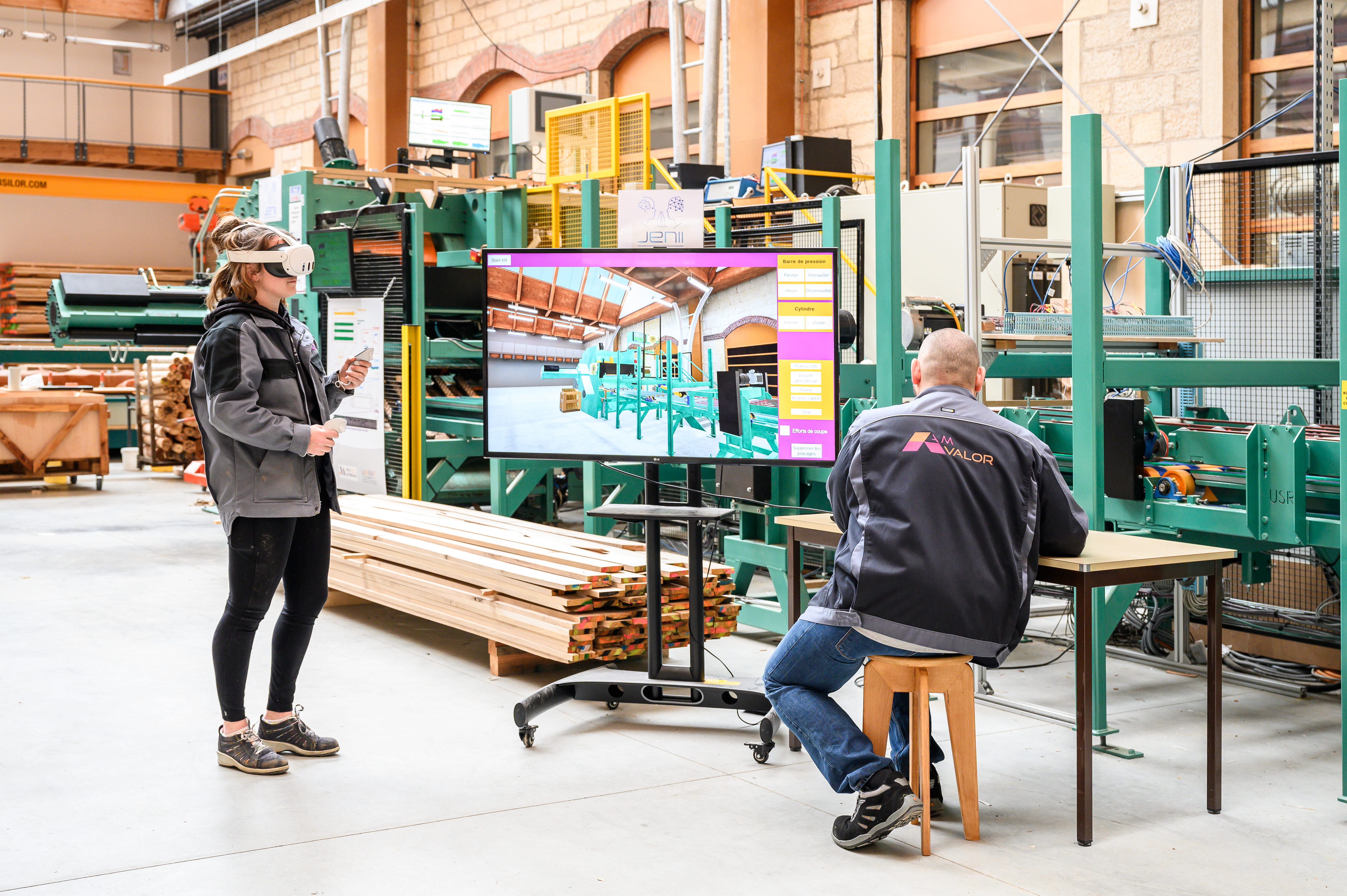 On the Cluny campus of the Arts et Métiers , several projects provide concrete examples of A2ForBois’s ambitions and the connections between research, innovation, and education.
As part of the ongoing JENII project (Digital, Immersive, and Interactive Educational Twins), the teams are continuing to develop a digital twin of the log de-rounding line. At the same time, a method for digitally reconstructing logs is being developed to visualize internal defects in the wood in three dimensions.
These developments are accompanied by research aimed at informing future course content. They help advance teaching tools and align learning with the technologies and professional practices of the field.