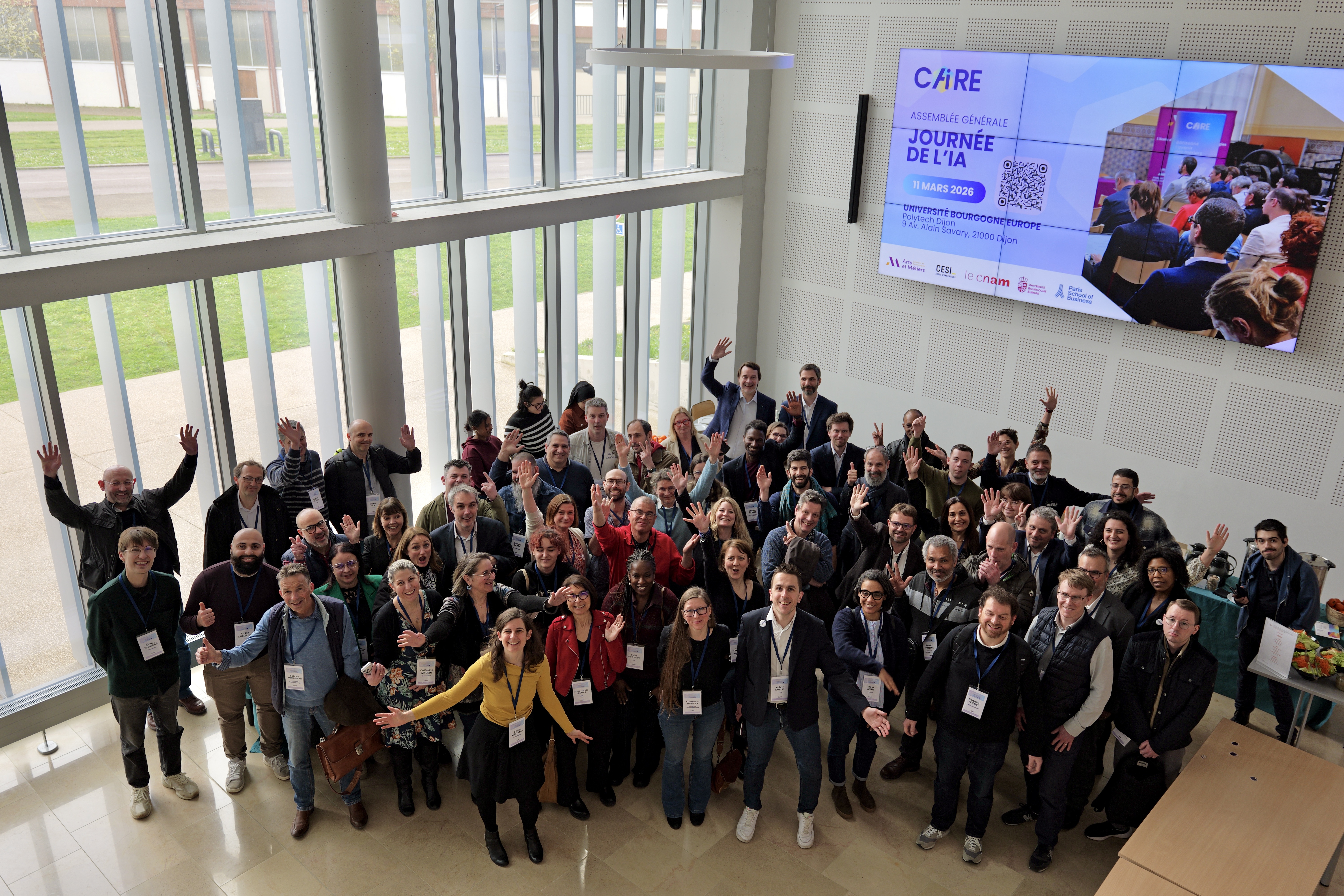
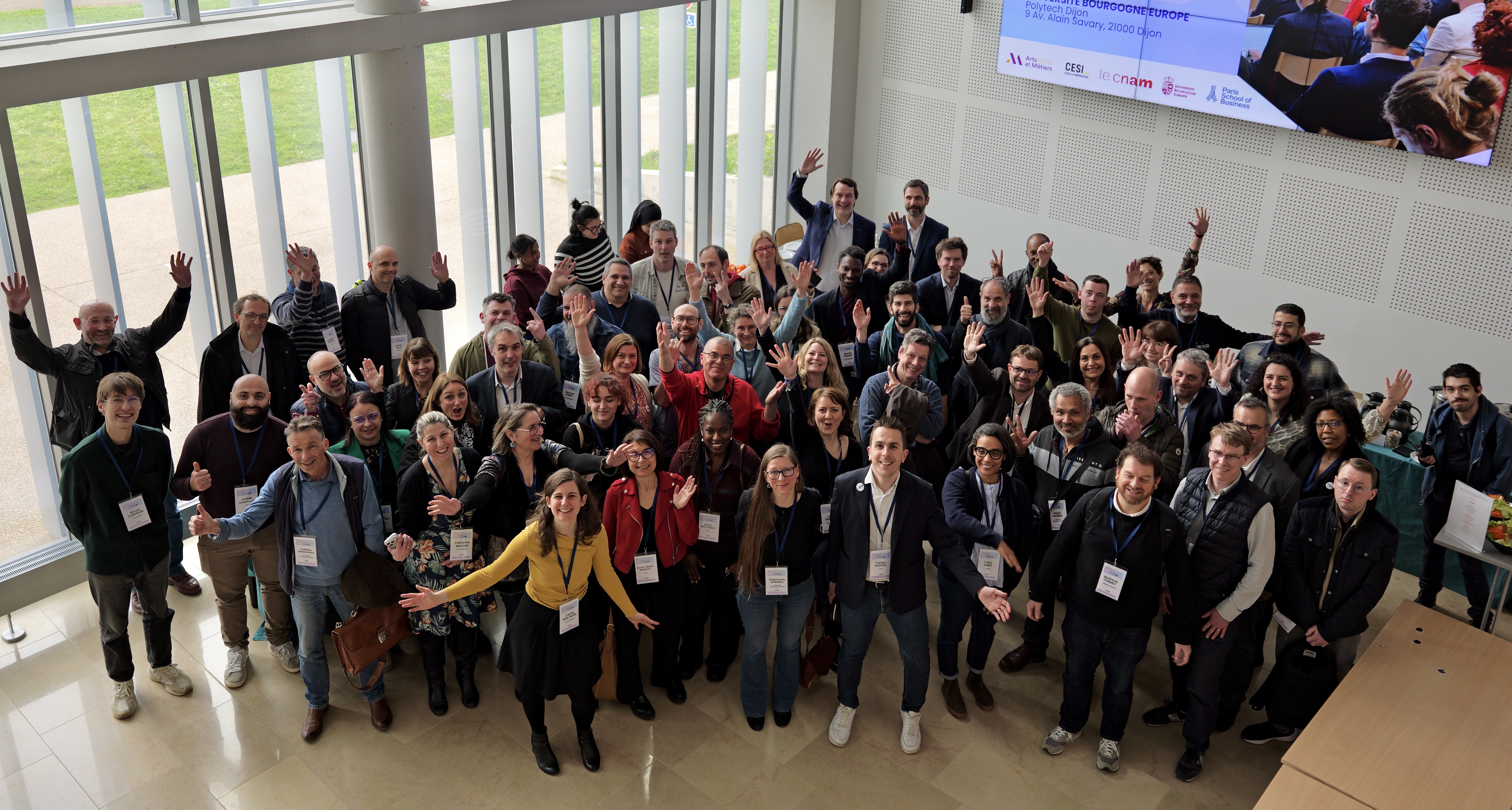
On March 11, 2026, the CAIRE project’s general meeting was held at the University of Burgundy Europe (UBE) in Dijon. Titled “AI Day,” the event featured strategic discussions in the morning and lectures in the afternoon.
“The goal was to bring together vision, regional cooperation, and practical implementation,”explains Cécile Weltman, CAIRE project manager.
The decision to hold this general assembly in Dijon reflects a commitment to highlighting the initiatives launched by the project partners. Holding the meeting at the University of Burgundy Europe highlighted an already well-structured implementation and encouraged the sharing of best practices among institutions. This key event also underscored the strong local roots of the non-academic partners, in close collaboration with Dijon Métropole, the Burgundy-Franche-Comté Region, and the Le Creusot-Montceau area.
A shared vision for the region
 The morning began with opening remarks from Bourgogne Europe University by Cédric Demonceaux, Vice President for Technology, Vocational, and Lifelong Learning Programs, followed by a presentation by Yohan Dupuis, the project director, who provided an overview of the initiatives undertaken and future prospects.
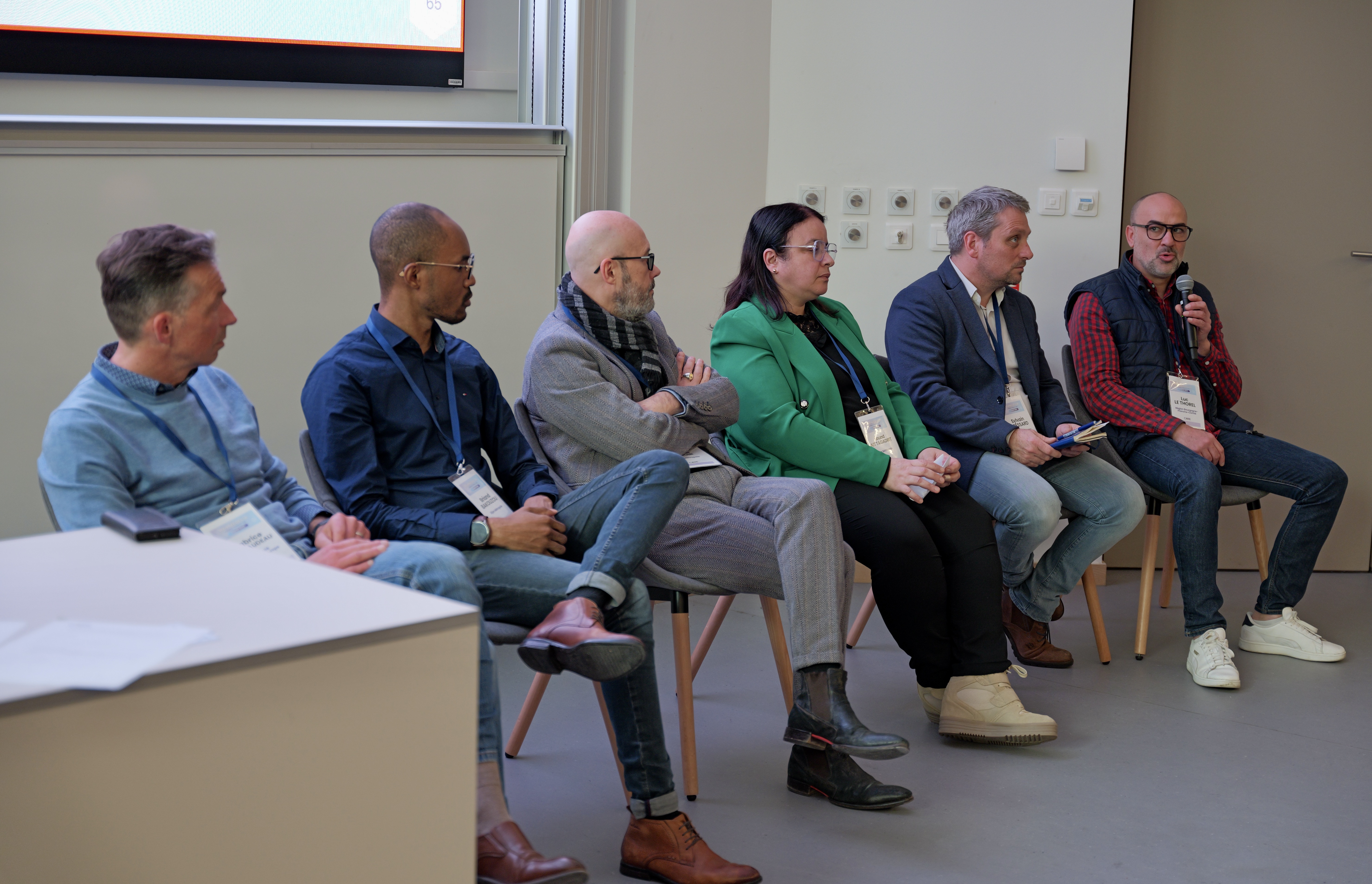
The roundtable discussion on “The Use of AI in the Bourgogne-Franche-Comté Region” highlighted concrete initiatives led by the Regional Council and Dijon Métropole. Seated around the table were data and digital officials from the Region and Dijon Métropole, a data analyst, and a digital outreach coordinator. A representative from the UBE’s AI cluster joined the panel.
The discussions highlighted the wide range of applications: management and utilization of public data, digital mediation and training, and optimization of urban policies.“The example of AI applied to crosswalks in Dijon Métropole clearly illustrates this trend by demonstrating that data analysis helps improve safety and urban planning,”adds Cécile Weltman.
AI in Practice: Which Tools for Which Uses?
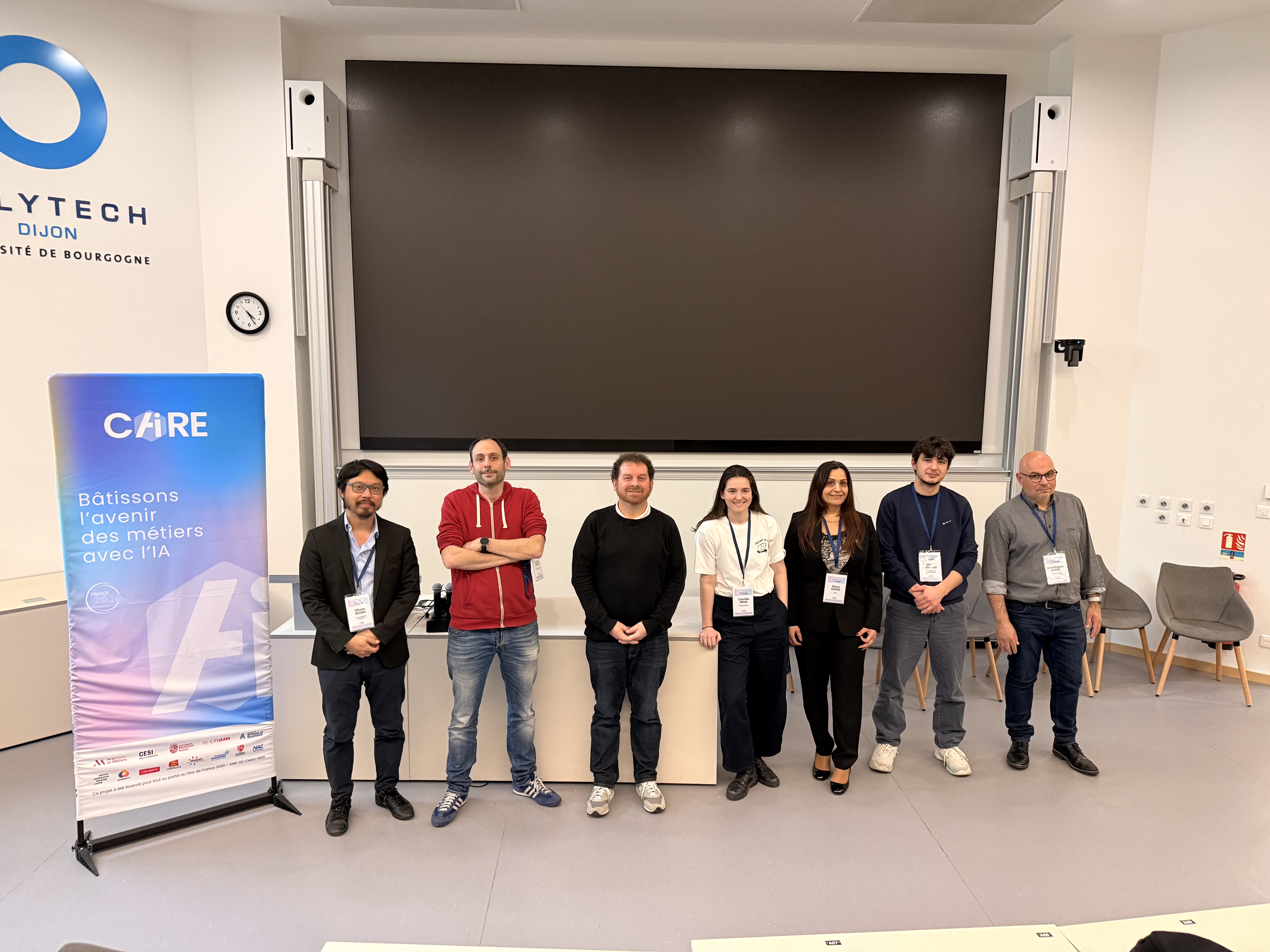 The afternoon was devoted to a series of presentations centered on a key question: “AI in practice: which tool for which purpose?”
The Vice President for Digital Affairs at the University of Rennes discussed ILaaS, a project to develop a generative AI tool tailored for higher education and research institutions, while a faculty member and researcher from CESI LINEACT explained how to specialize AI tools. A faculty researcher from the University of Burgundy Europe, meanwhile, shed light on symbolic AI and its fields of application, particularly for interoperability and decision-making.
Presentations by Compar:IA, Vittascience, Dijon Métropole, the University of Haute-Alsace (Goelan project), and the Canopé Network rounded out this overview, covering topics ranging from educational environments to software development and experimental platforms.
These feedback reports underscored a key point: the tool itself does not determine how it is used. It is the ability of professionals, teachers, staff, and students to understand, question, and master these technologies that determines their impact.