Arts et Métiers European funding for a major research project on the platformization of the manufacturing industry
The MARS project (Manufacturing Architecture for Resilience and Sustainability) tackles a crucial challenge for manufacturing SMEs: disruptions in the supply of raw materials and components.
The aim is to make these companies more resilient to economic, health, and societal crises by offering a smart manufacturing process capable of introducing radical flexibility depending on available resources, redefining raw materials, technology, throughput, manufacturing site, delivery date, proven product quality, and sustainability in real time. It aims to create a European network of interconnected and coordinated manufacturing platforms.
Global Design & Local Manufacturing
"This project was born out of an observation," explains Mohamed El Mansori, university professor and director of the Mechanics, Surfaces, Materials, and Processes LaboratoryArts et Métiers Value creation stems from the convergenceof design and manufacturing processes, and the ability to coordinate workflows to keep pace with consumer demand and customize products. This can be summarized as Global Design & Local Manufacturing. It demonstratesArts et Métiers commitmentArts et Métiers researching impactful technological and organizational innovations that are essential to environmental and societal energy transitions."
The platformization of the manufacturing industry would contribute to resilient and sustainable production on various scales: the use of local resources limits the transport of raw materials; the analysisof data collected in real time on machines should make it possible to generate relevant correction parameters and reduce the direct costs of poor quality. The development of a new industrial model in Europe also has a social impact in terms of training and job retraining. The ambition of the MARS project has secured a €5.2 million grant under the Horizon Europe* program.
Artificial intelligence and machine learning
The research work is being led by the Mechanics, Surfaces, Materials and Processes LaboratoryArts et Métiers Aix-en-Provence. The first area of focus is zero defects: predicting the quality of manufactured parts based on manufacturing process parameters, then developing an AI model capable of correcting the manufacturing process. The quality of the manufactured parts will be measured by non-contact sensors supplied by STIL Marposs. The resulting AI-based product quality and compliance model will then be improvedthrough shared learning,implemented by the MARS project partners. The second area of work aims to develop a multi-agent system for manufacturing organization and planning, with the support of Texas A&M University, a strategic partner of the Arts et Métiers campus Arts et Métiers .
A European consortium of universities and industrialists
The MARS project was born out of a meeting between Mohamed El Mansori, a lecturer and researcherArts et Métiers, and Cosimo Corleto, CEO of STIL Marposs, around joint projects in connected and resilient manufacturing. The choice of academic partners (Arts et Métiers , Texas A&M/United States, RWTH/Germany, ETH Zurich/Switzerland, and NTUA/Greece) was motivated by their equipment in full-scale manufacturing technology platforms (at the actual size of a production tool). The industrial partners are European companies that develop sensors, AI solutions, and connection and connectivity resources (STIL/France, Ubitech/Greece, ARXUM/Germany, Konica Minolta/ Czech Republic, Noosware / Netherlands, Simula / Norway) and a private technology center (AIN / Spain), owned by 120 industrial companies in Navarre, from all sectors.
The alliance between Arts et Métiers STIL Marposs is facilitated by a common language and similar environments, which simplify exchanges and equipment testing. It demonstrates the vitality of the Aix ecosystem! The technological building blocks developed in the MARS project (AI, blockchain, edge computing) make it possible to formulate a trickle-down hypothesis through the training of new specialists, encouraging the emergence of local champions in these fields," said Cosimo Corleto, CEO of STIL Marposs.
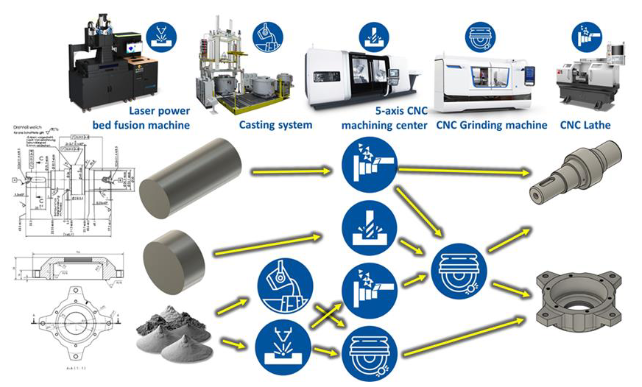
From computer-aided process planning to final elements
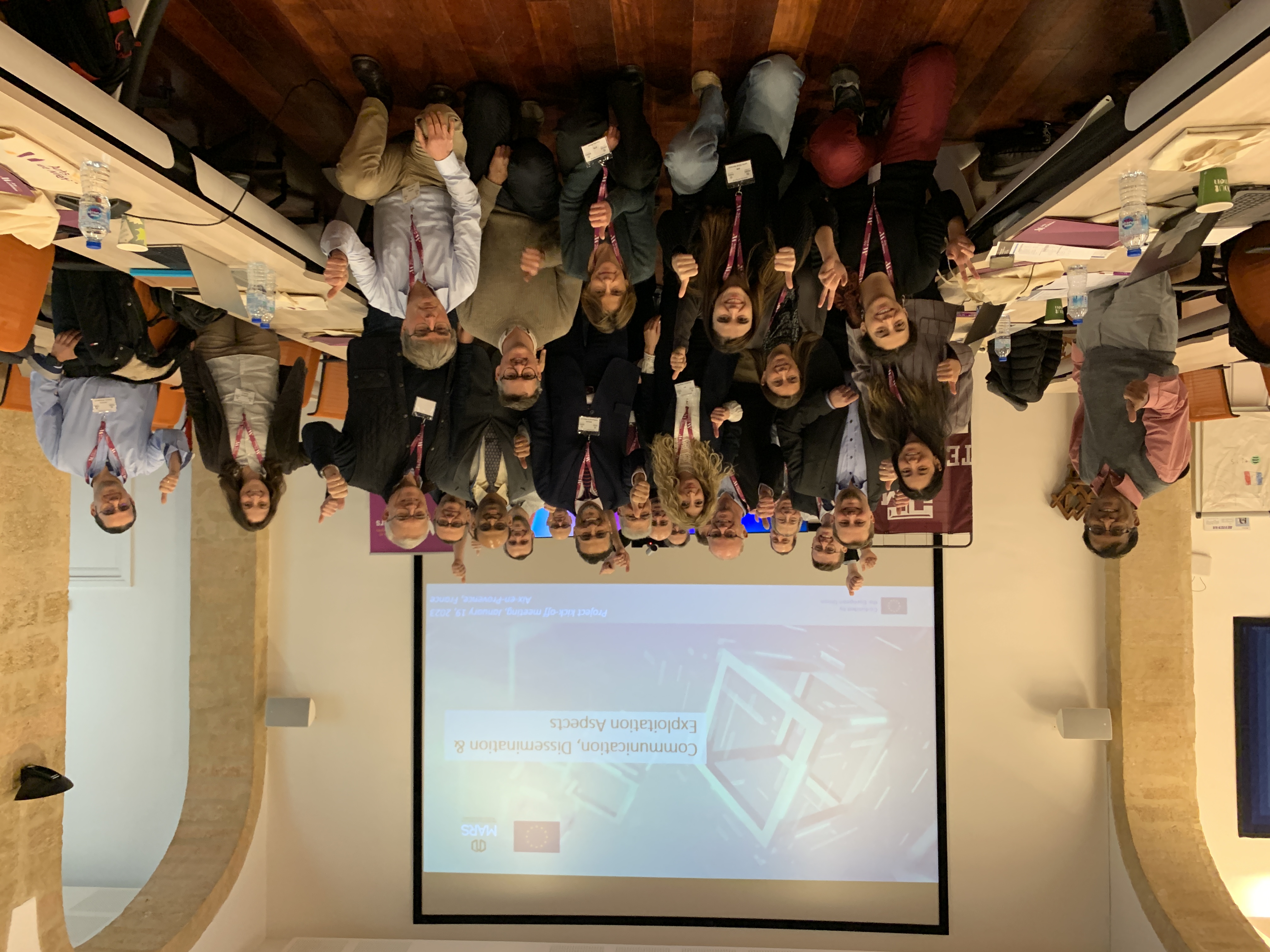
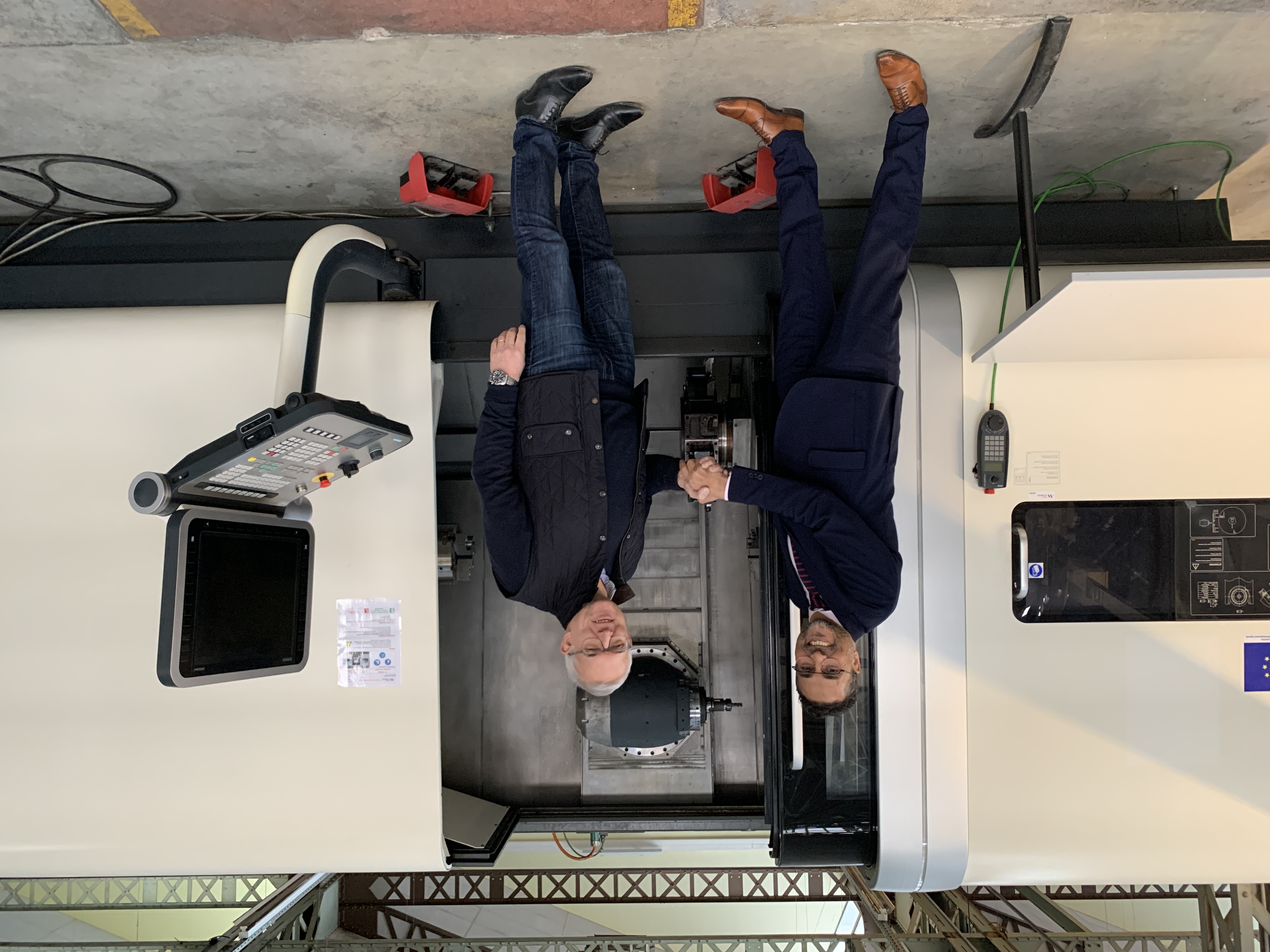
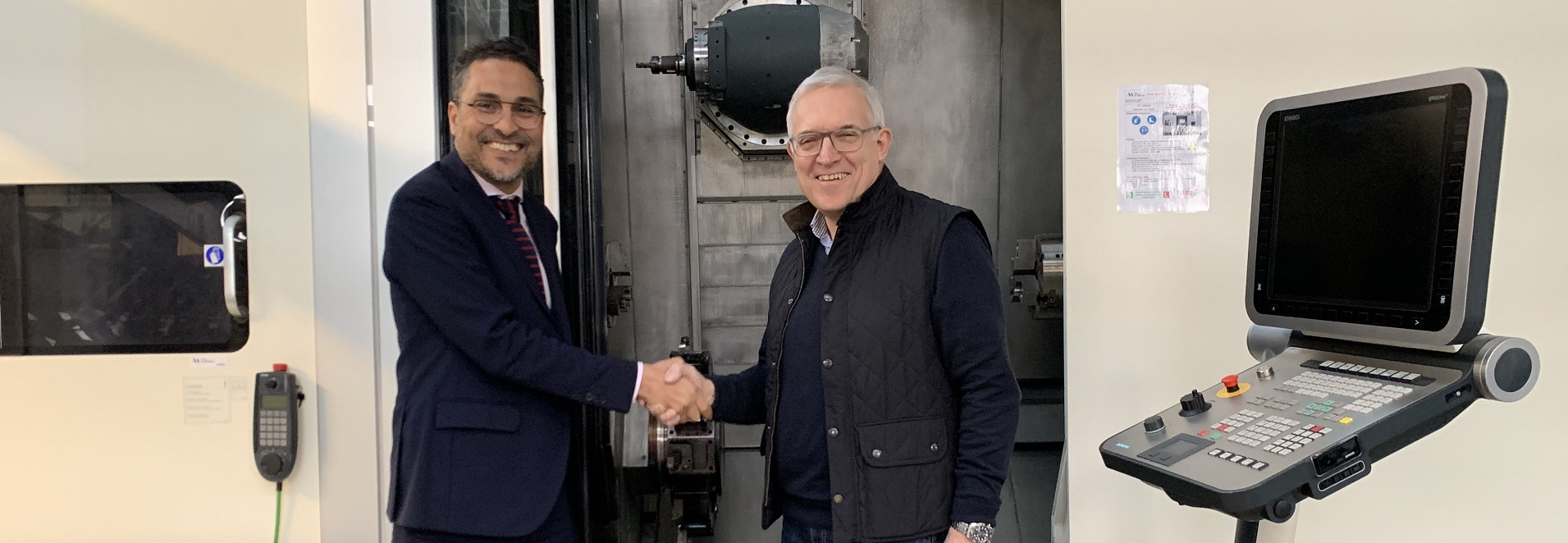
Launch of the European MARS project in Aix-en-Provence. The architects of the MARS project: Prof. Mohamed El Mansori, Director of the Mechanics, Surfaces, Materials and Processes LaboratoryArts et Métiers Cosimo Corleto, Managing Director of STIL Marposs.
* Horizon Europe is the European Union's framework program for research and innovation for the period from 2021 to 2027. It aims to:
- strengthen the scientific and technological bases of the Union;
- boost its competitiveness, including that of its industry;
- implement the Union's strategic policy priorities;
- contribute to addressing global issues, including sustainable development goals.
Horizon Europe has a budget of approximately €95.5 billion for 2021-2027 and funds three types of research: science of excellence (pillar 1); global challenges and industrial competitiveness (pillar 2); and a more innovative Europe (pillar 3).