
The concept of the "digital twin" dates back some fifteen years and is now spreading to all industrial sectors. Maurice Lepoivre, a machining teacher at the Arts et Métiers campus Arts et Métiers Lille, discusses its contribution to industrial parts machining and his teaching at Arts et Métiers.
The digital twin in machining: serving collision avoidance controls
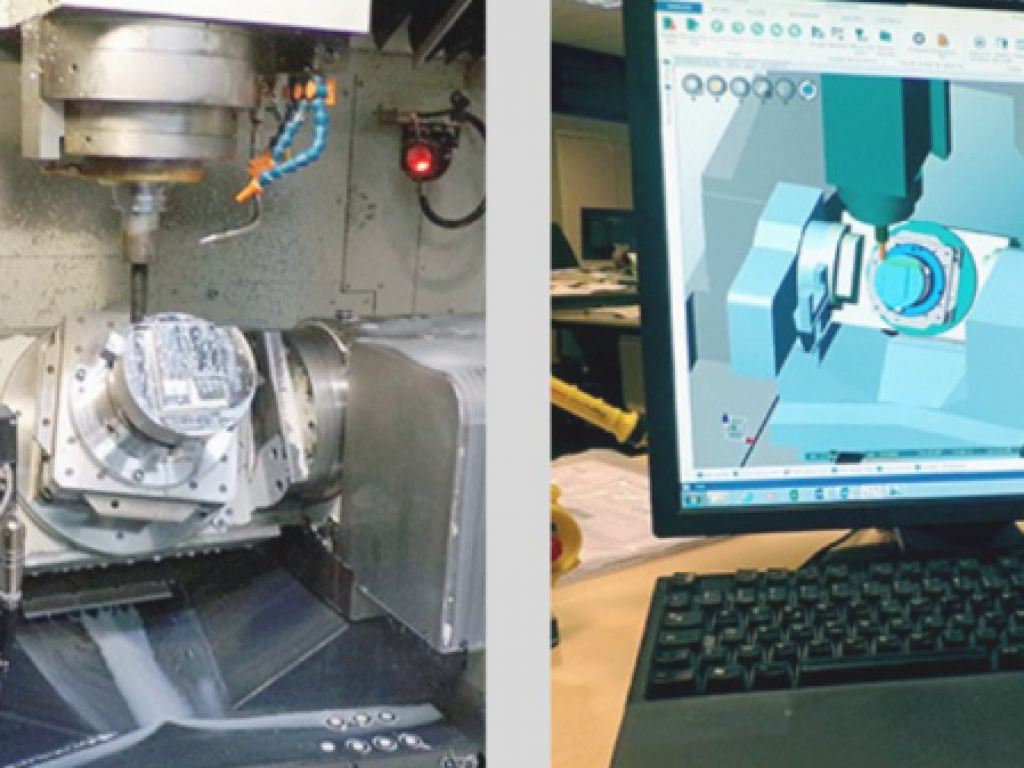
To increase productivity, machine kinematics are becoming increasingly complex. "Instead of machining a part in several stages on several machines, everything is now done on a single 5-axis machine, for example," explains Maurice Lepoivre, a machining teacher at the Arts et Métiers campus Arts et Métiers Lille. This process also improves the precision of parts for cutting-edge industries such as aeronautics and space. However, the risk of collision is greater on these machines. The arrival of digital twins has made programming in a machine context and collision detection more accessible. Operators can now check their work at the end of programming on a virtual machine identical to the one they have in the workshop.
Reserved since the 2000s for experts only, digital twins in machining are becoming more widespread. Faster and easier to use, they are now taught to Bachelor of Technology students and Arts et Métiers engineering students.
The digital twin in machining: an ally in optimizing machine power
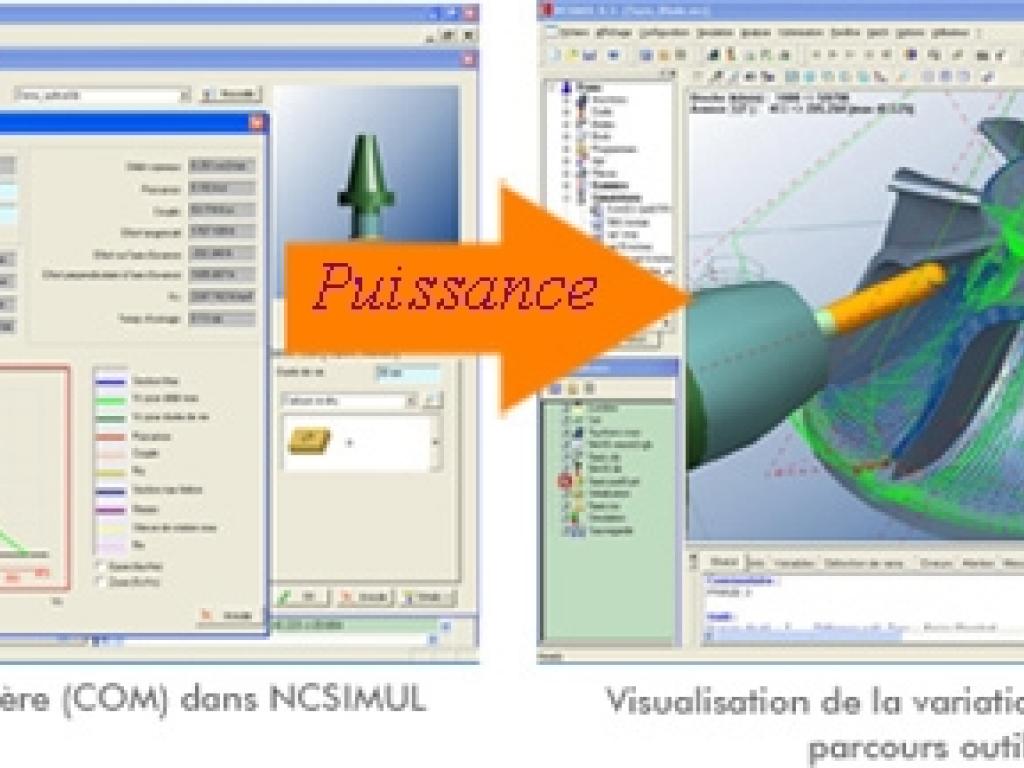
Another change in the daily lives of machinists is the use of digital twins to optimize machine power. Digital twins are capable of calculating the power required in every respect and comparing it with the actual power of the equipment. "This specific feature of digital twins in machining is particularly useful for third-year engineering students specializing in land transport, as they will have to manage the optimization of precision machining for the automotive and aeronautics industries in their future roles," explains Maurice Lepoivre.
What is a "Digital Twin"
The Gartner research center defines a digital twin as "a dynamic model of a physical object or system based on sensor data," i.e., a virtual simulation of a physical object in a computer.