The third year of the Grande École Program is a transition year between school and the professional world. This is particularly true for students who are pursuing a specialization under a professional training contract.
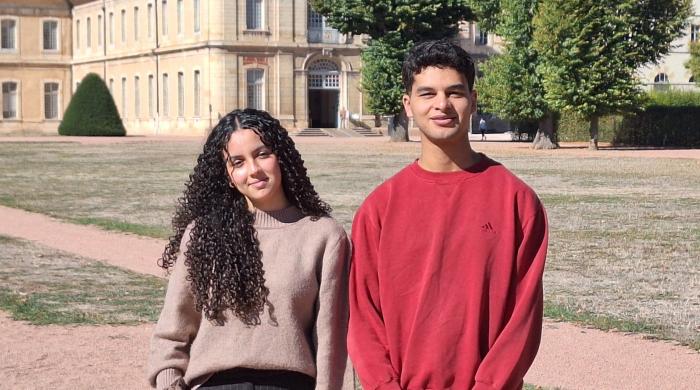
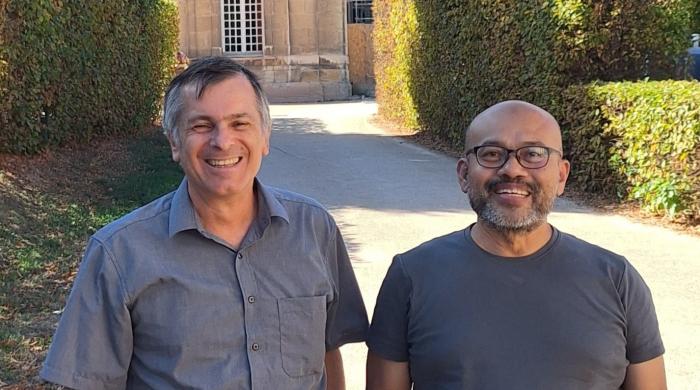
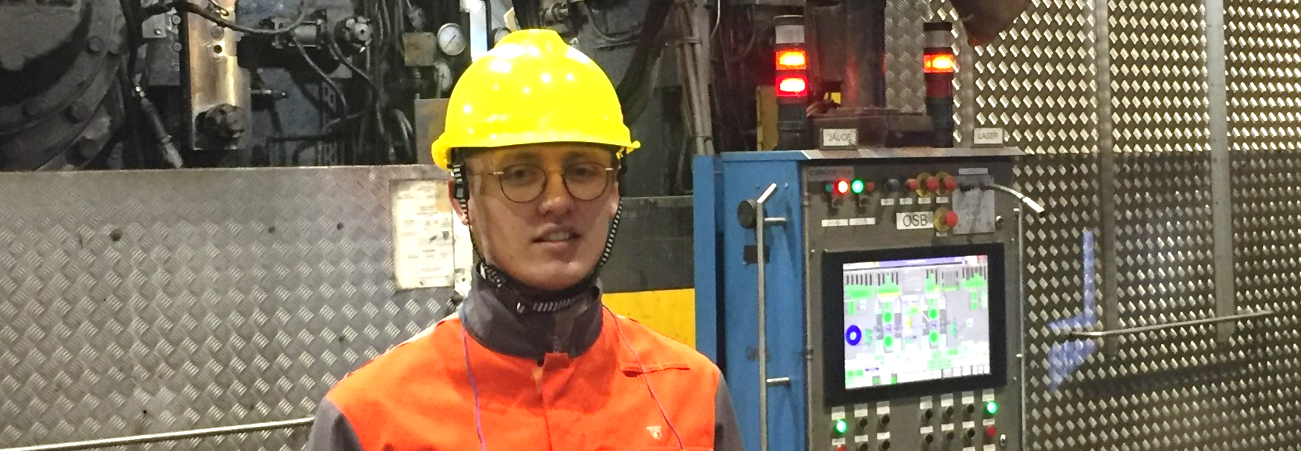
Meeting with Ludwig Zundel, a student specializing in "Management of the Factory of the Future"(MUF), accompanied by his tutors Laura Rigoni and Marc Friedrich, in the Quality & Products Industry + Packaging department at Arcelor Mittal Florange.
Why did you choose to specialize in professional training contracts?
Ludwig Zundel: After three years of preparatory classes and two years at Arts et Métiers I was very involved in student life on the Angers campus, my professional training contract has allowed me to engage in a wider range of activities while leaving school with significant added value, benefiting both the company and myself.
What's more, I'm getting paid for my entire final year of studies!
Marc Friedrich and Laura Rigoni: Arts et Métiers students Arts et Métiers an interesting profile. Their well-known talents and skills in mastering production systems complement our new product development projects perfectly.
They are high-quality students with good knowledge suited to our industrialization projects.
The courses offered in the MUF program are exactly what we are looking for, particularly those on industrial statistics, data processing, and project management. And we consider access to the CQPM "Industrial Project Manager" certification offered in this program to be a real bonus.
What are the differences between an end-of-studies internship (SFE) and a professional training contract?
LZ: The time spent in the company and how to approach it. From September to January, I alternate between the company and school in two- to three-week periods. When I begin my continuous presence in early 2020, I will already be familiar with the company, my partners, and my scope of action, and I will already have a good understanding of my Product Development Projects. A six-month SFE inevitably limits the level of results, in terms of depth and useful volume for the company.
MF and LR: We entrust high-stakes projects to our students on professional training contracts, and we consider them to be full partners in our activities. Thanks to their knowledge of their environment and the time they have spent with us, they will produce results that are essential to our industrial operations. As a result, we owe our work-study students more sustained and well-adapted support.
Quite logically, our students on professional contracts are obvious candidates to pursue their careers within our group.
Our department prioritizes welcoming junior colleagues at the start of their careers, so we pay close attention to the talents our students demonstrate in their project management, and we have complete freedom to ensure their development within our group.
What projects are Ludwig responsible for?
LZ: At Arcelor, I work on the industrialization of new steel solutions to meet end-market demand. All our activities are project-based and combine industrial testing with process and product data analysis. My work in the factory is very hands-on, involving joint preparations with the production teams. The tests are highly technological and are carried out on complex and powerful equipment: cold rolling mills, continuous and basic annealing, and metal and organic coating lines.
MF and LR: Our projects have high methodological requirements and are AFNOR certified. This framework will enable Ludwig to easily obtain his CQPM (Industrial Project Manager) certification issued by theUIMM. Our projects always involve significant process and technological activities, and this is where we expect a lot from our talented Gadzarts. The ultimate goal remains the implementation of innovative and high-performance material solutions in our markets.
How are students supervised?
At work, Marc and Laura were really careful to give me assignments that were relevant to my profile and my studies.
MF and LR: We are committed to adapting to students in order to provide them with the best possible support. With the successful completion of projects remaining the priority, there are many opportunities for technical development: standardized testing methods, production technologies and online non-destructive testing, metallurgical optimizations, industrial statistics, and our production capabilities. Similarly, we adapt to their talents and prepare our students to gradually take on increasingly important responsibilities.
We also have three or four meetings per year with academic advisors. This allows us to review the project and what is expected of the student on both sides, and to identify any potential obstacles.
In summary, what is the benefit of integrating MUF expertise?
LZ: Being entrusted with interesting and ambitious projects within the company and benefiting from project-based courses to make a smooth transition into the world of work.
MF and LR: Join a company for a year to discover career opportunities and be hired directly at the end of your studies.