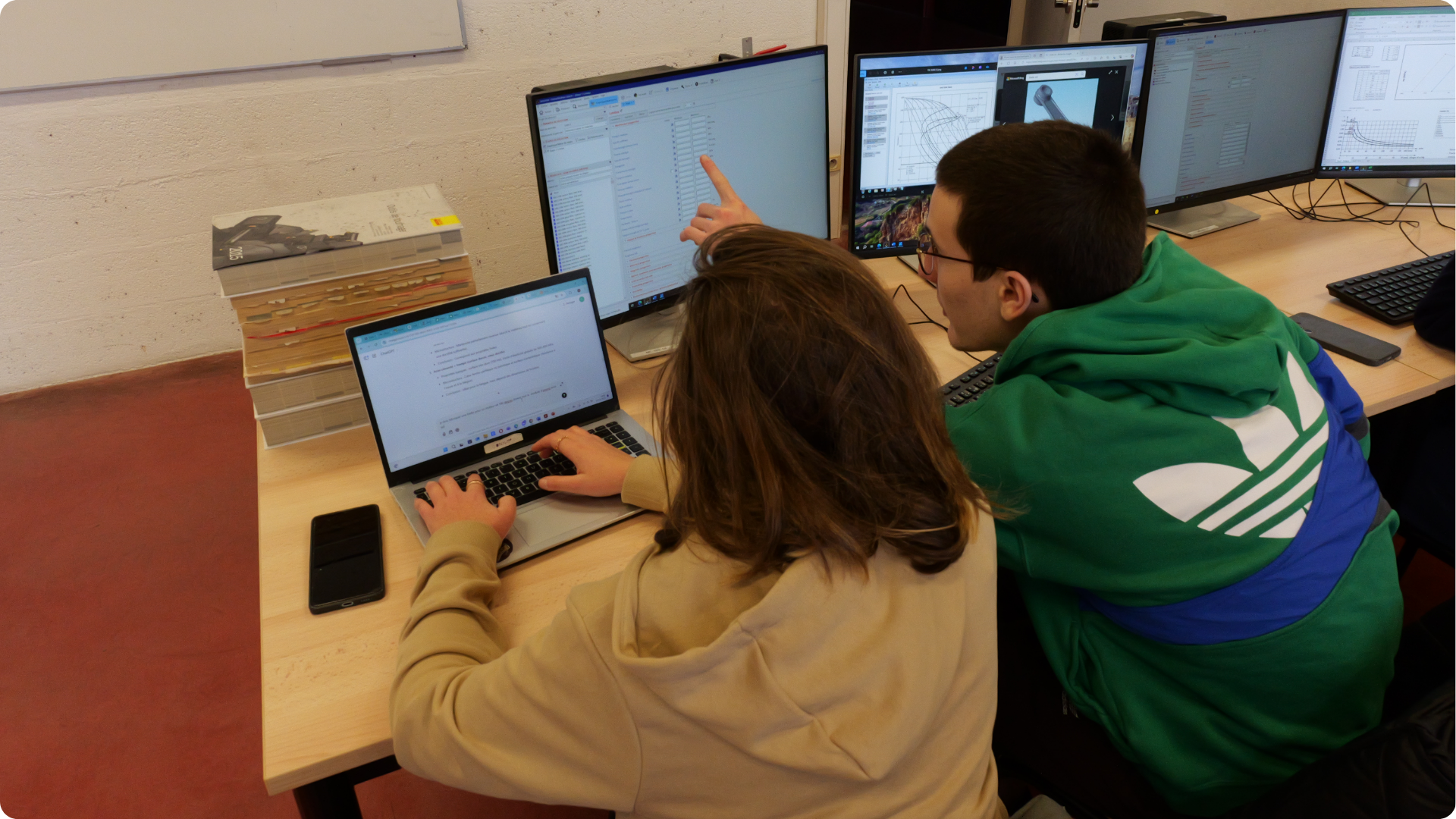
On the Metz campus, second-year students in the Grande École Program spend a semester working on the design of a connecting rod, a component of a hydrogen engine. This real-world case study allows them to apply what they have learned in the various courses in this teaching sequence.
In the "MOTEUR" project, second-year engineering students in the Grande École Program are designing a hydrogen engine connecting rod. The project consists of a series of six courses with 64 hours of face-to-face teaching and six teachers involved.
Design and sizing
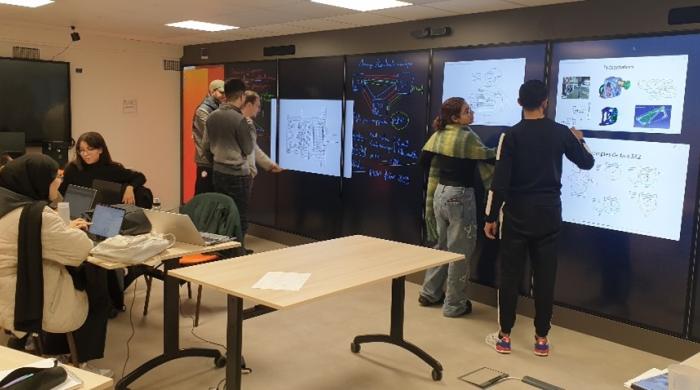
In Design classes, after learning about the architecture of an internal combustion engine, students carry out a dynamic study. They then focus on an essential component: the connecting rod, for which they define the basic shapes.
In the next stage of the design process, students use their knowledge of finite elements, adapted by the instructor, to digitally optimize the shapes.
Choice of materials and treatment
Courses on materials are regularly included in this teaching sequence. At the beginning of the sequence, students start by choosing a family of materials, such as low-alloy steels, so that they can dimension their connecting rods and implement parameters within finite element simulations.
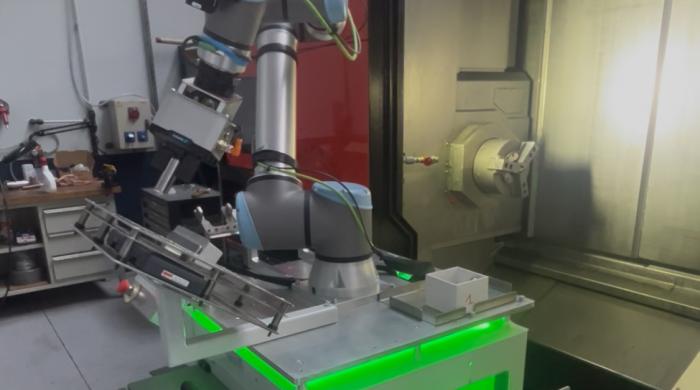
Next, we move on to the issue of surface treatments, which may be considered in order to adapt the connecting rod to its conditions of use. For this part, students acquire the knowledge they need on their own and then report on it in a video. A practical workshop session completes this subject, allowing supervising teachers to verify that the knowledge has been properly acquired.
Fatigue calculation
The penultimate sequence of this MOTEUR project addresses the service life of the part. Thanks to what they have learned in this section, students learn how to calculate the strength of their connecting rod.
Calculating the environmental impact
The latest addition to this series of courses is life cycle assessment (LCA). At the end of the semester, students learn how to apply all the knowledge they have acquired during this sequence to calculate the ecological impact of the material and its manufacturing range.
The educational program concludes with a visit to the IRT M2P industrial site, which specializes in materials, metallurgy, and processes.
An example of the competency-based approach
First used nearly seven years ago, this teaching sequence was developed by the teachers involved in order to bring a concrete and cohesive element to the various courses. This investment is in line with the current expectations of the Commission des Titres d'Ingénieur (CTI): authentic learning situations, multidisciplinarity, and assessment of skills acquisition.