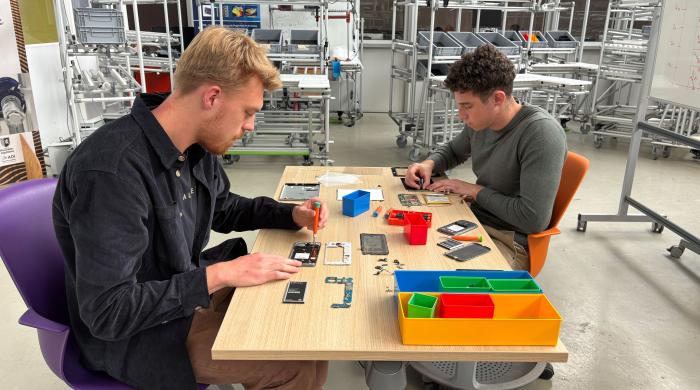
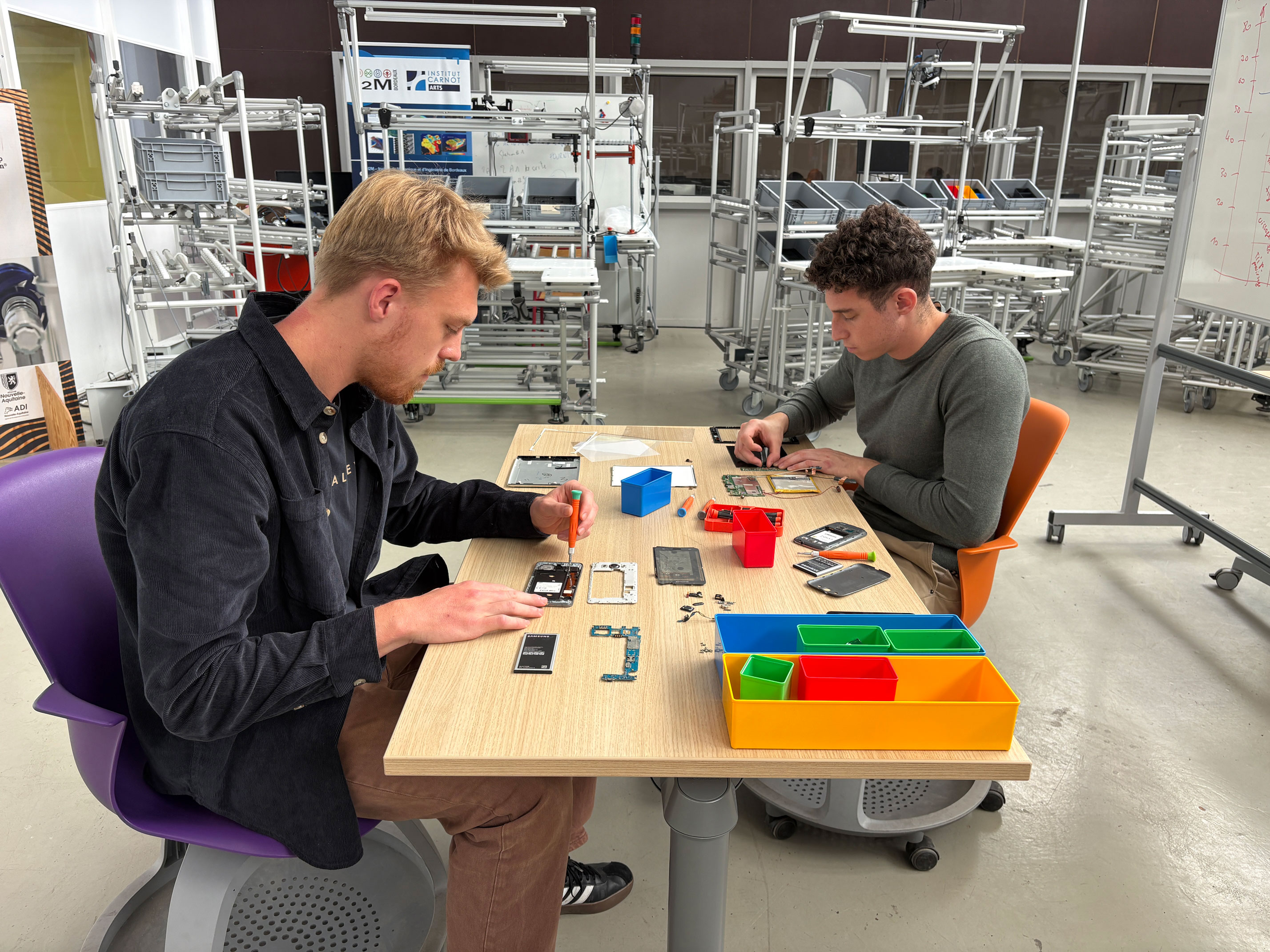
Faced with the steady increase in electronic waste and the challenges associated with recovering the critical metals it contains, Axel Jeanmotte and Cyprien Debove, students in the dual- Master of Science -research program in Environmental and Sustainable Transition Engineering (ITED), are exploring new approaches to optimize dismantling operations. Under the guidance of Nicolas Perry, they are developing a project that combines augmented reality, virtual reality, and robotics to make the recycling of microelectronic devices more efficient, more precise, and more sustainable.
Rethinking the Dismantling of Electronic Equipment
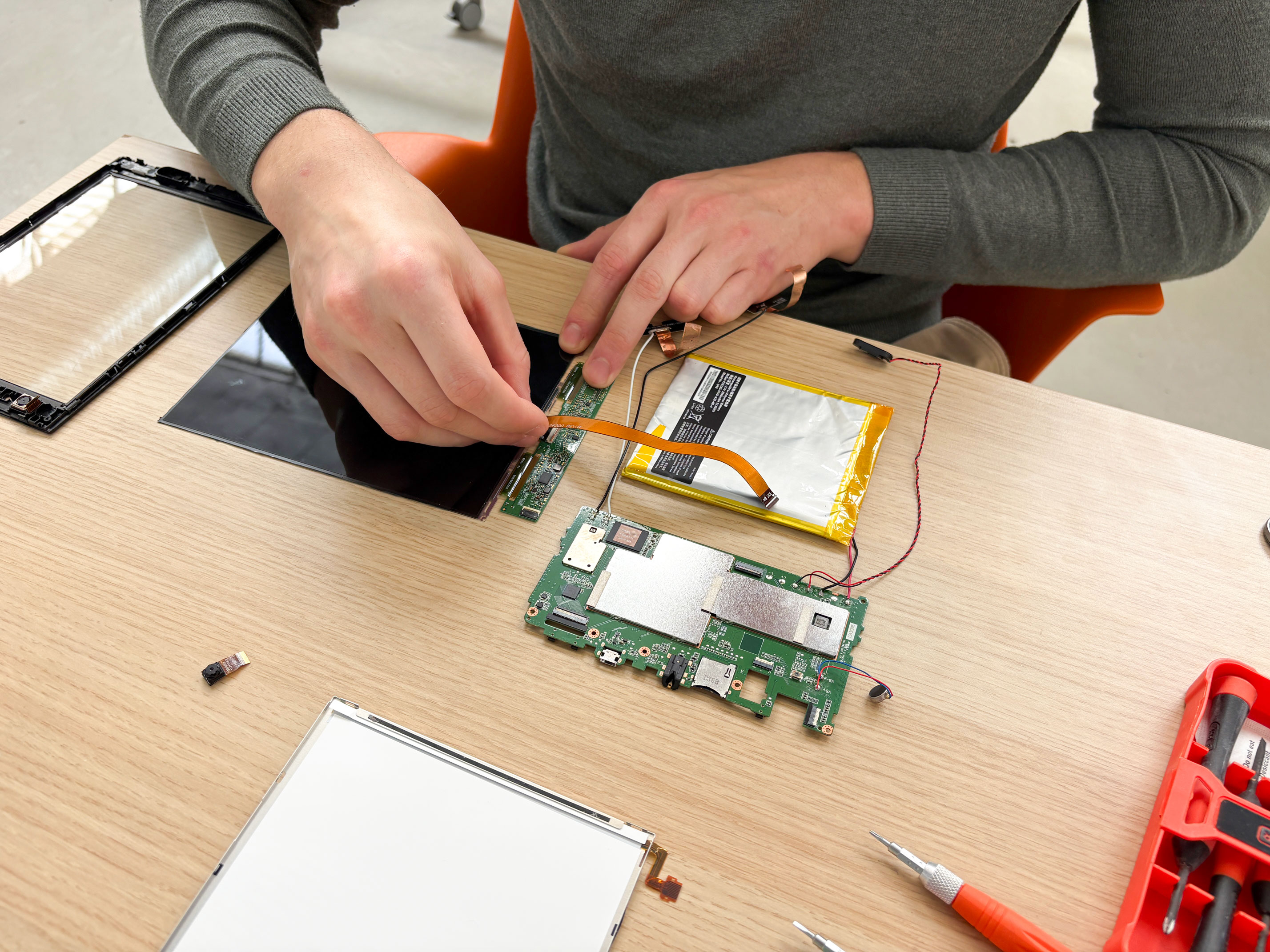
Phones, computers, batteries, and connected devices are now an integral part of our daily lives. However, their end of life raises many challenges. Designed primarily to be assembled quickly and at low cost, these products are rarely designed to be easily disassembled. Glued-in batteries , miniaturized components, and complex assemblies make recycling significantly more difficult.
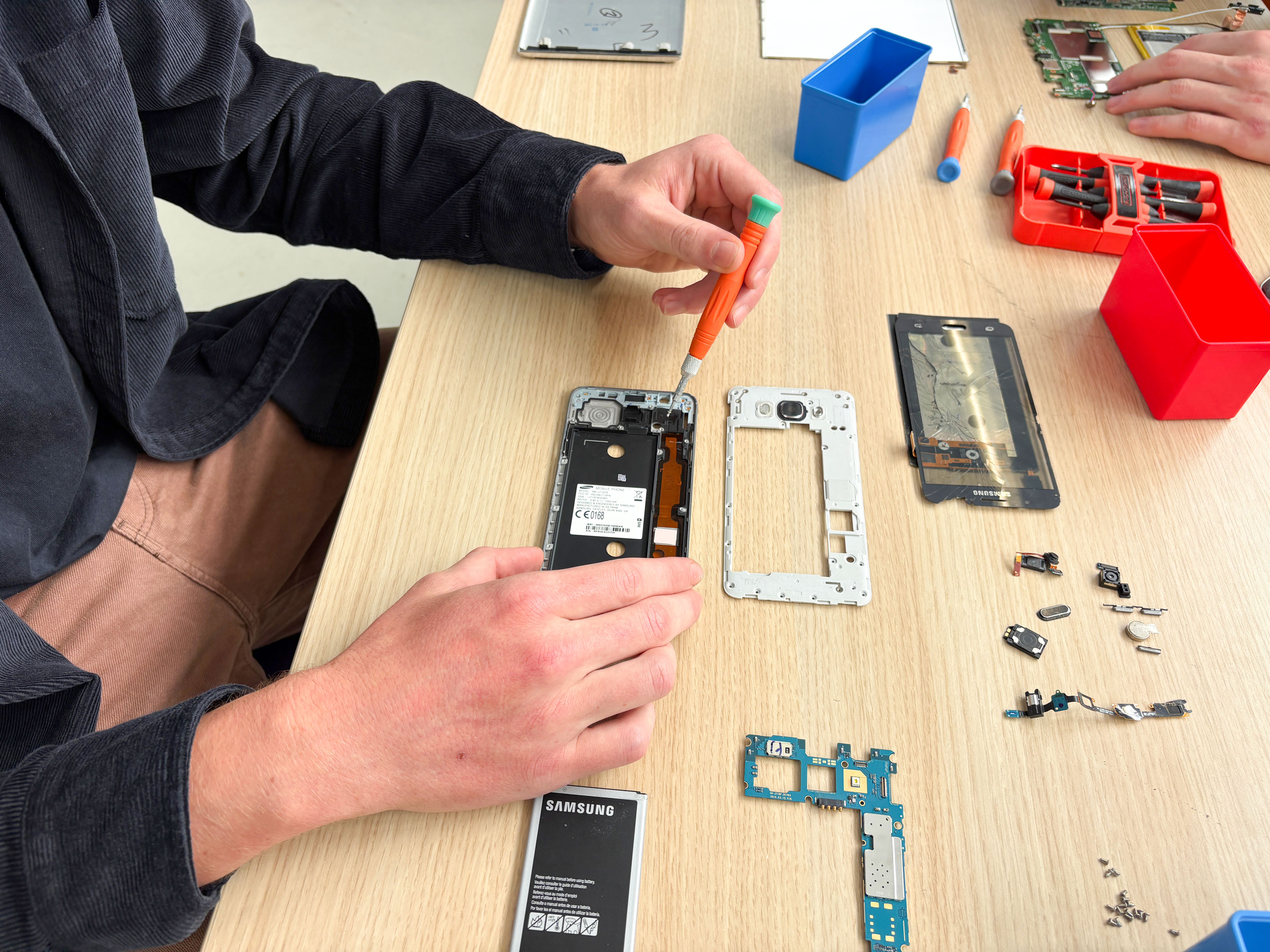
As part of their 90-hour PJE project, conducted over a six-month period, Axel Jeanmotte and Cyprien Debove explored this issue through the example of the cell phone, an object that is both accessible and rich in strategic materials. The goal is to improve dismantling processes in order to recover more components and critical metals— such as lithium, cobalt, and certain rare earth elements—which are currently underutilized in recycling streams.
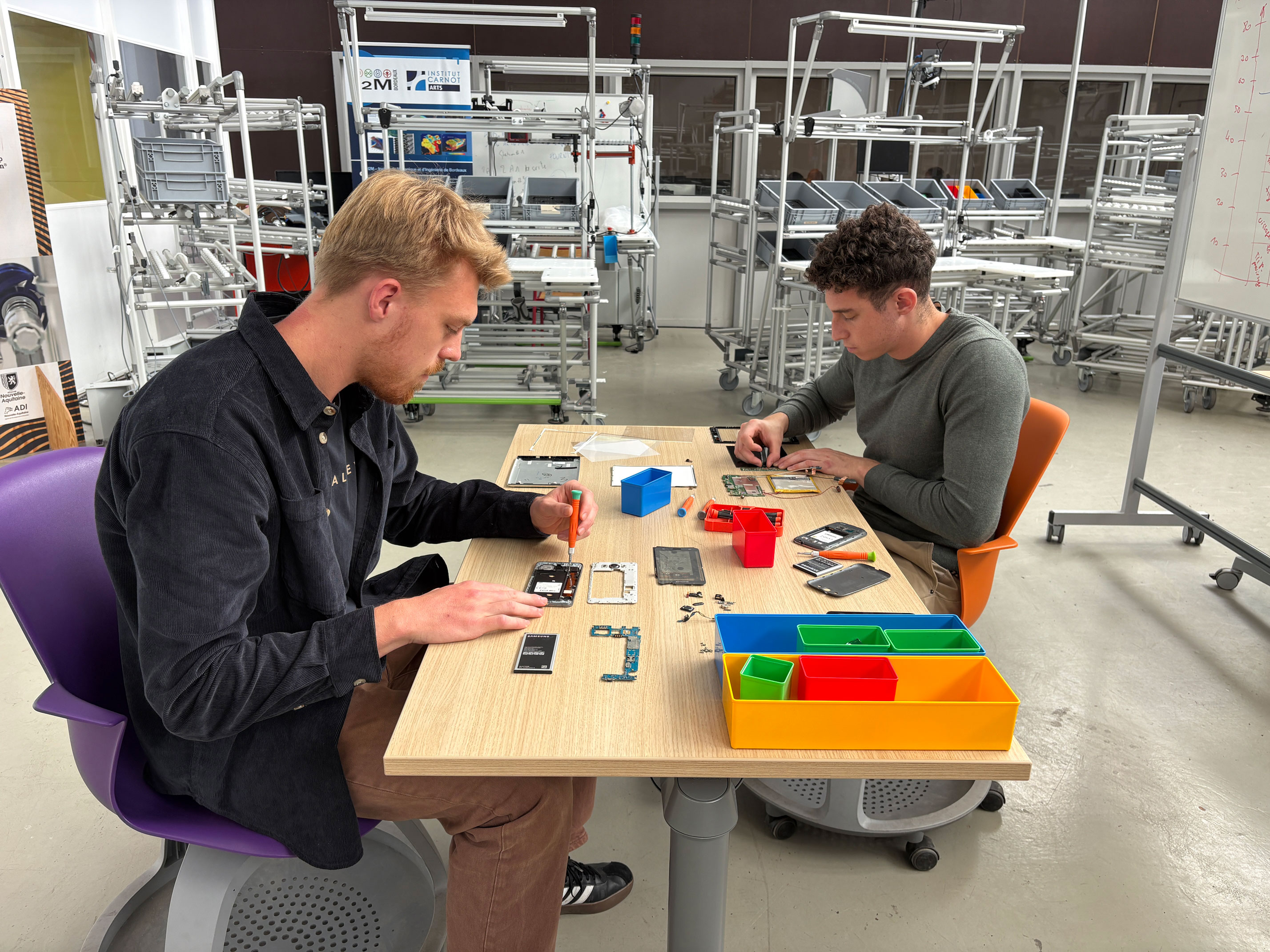
Beyond the environmental aspect, the project is fully aligned with the philosophy of the ITED program, which aims to train engineers capable of designing innovative solutions to support the ecological and industrial transitions.
“Thanks to the training provided by Master of Science, I have a much better understanding of the challenges associated with recycling, and this is an area that needs further improvement,”, says Axel Jeanmotte, a student working on the project.
Augmented Reality and Robotics in Support of the Circular Economy
To address these challenges, students are exploring how digital technologies can contribute to dismantling operations. Augmented reality could, for example, guide operators as they disassemble equipment. Using a tablet or smart glasses, the user would see the steps to follow in real time: which screws to remove, which components to extract, and what precautions to take to ensure the safety of the operation.
At the same time, robotics offers promising prospects for automating certain repetitive tasks. For example, students are designing a system capable of automatically recognizing a phone model, selecting the appropriate tool, and performing the unscrewing operations without human intervention. These innovations would reduce disassembly time, increase the amount of recovered materials, and limit the need to extract new natural resources.
In the longer term, this vision could lead to semi-autonomous disassembly lines capable of identifying each device and adapting their disassembly strategy to maximize the recovery of critical materials.
 | 
|
“ “The ultimate goal would be to move toward an augmented reality system, similar to Tony Stark—aka Iron Man—capable of analyzing electronic components in real time and guiding the user step by step through their disassembly and recycling. ” explains Cyprien Debove, a student working on the project.
As the first project of its kind within the ITED “ Master of Science ,” this initiative is also intended to be a long-term effort. The work carried out this year could serve as a foundation for future cohorts and contribute to the development of demonstrators that showcase the research and innovation activities conducted on the Bordeaux-Talence “ Arts et Métiers ” campus. It is a concrete way to explore the technologies that will support a more circular and resource-efficient economy in the future.