Electronic circuit boards, permanent magnets, components… Our equipment contains many critical and strategic raw materials that are essential to European industry.
However, their supply remains heavily dependent on countries outside Europe, including those in Asia. For example, Europe relies 100% on China for heavy rare earths, 98% on Turkey for boron, and 85% on Brazil for niobium. Europe’s goal is therefore clear: “Europe wants to strengthen its sovereignty, particularly through measures aimed at gaining greater autonomy in accessing resources,” emphasizes Nicolas Perry, coordinator of the CIRCUIT4EU project.
Taking Action Before Traditional Recycling
CIRCUIT4EU aims to intervene before the traditional recycling process begins. Rather than systematically shredding equipment, the project seeks to identify, disassemble, sort, and reuse the components or materials with the highest value. This approach has been tested, in particular, on laptops, Wi-Fi routers, electric scooters, and dishwashers.
Ten Technologies Tailored to Industrial Applications
Robotics, image recognition, desoldering, metallurgical processes, digital product passports… Ten technologies will be developed. The digital passport is intended, in particular, to facilitate access to useful information at the end of a product’s life cycle: composition, architecture, or the location of components. “This is very important data,” notes Nicolas Perry. “It can be used to automate and speed up disassembly and recovery operations.”
The project aims to develop technologies that are mature enough to be tested in an environment that simulates real-world conditions (TRL 6) and then validated directly in an operational setting with a concrete path to industrialization (TRL 7). Some partners are already considering adopting the production lines tested in the project to “install them at their own facilities and then begin production once the project is complete,” explains Nicolas Perry.
At the intersection of two priorities ofArts et Métiers
Within the institution, the project involves, in particular, the I2M in Bordeaux and the LISPEN in Lille, bringing together expertise in the circular economy, robotics, and Industry 4.0 technologies. For Nicolas Perry, CIRCUIT4EU is directly aligned with the strategic priorities of theArts et Métiers : “The challenge is to harness the technologies of the industry of the future to serve the circular economy and to support French and European manufacturers in achieving greater self-reliance.”
CIRCUIT4EU at a Glance
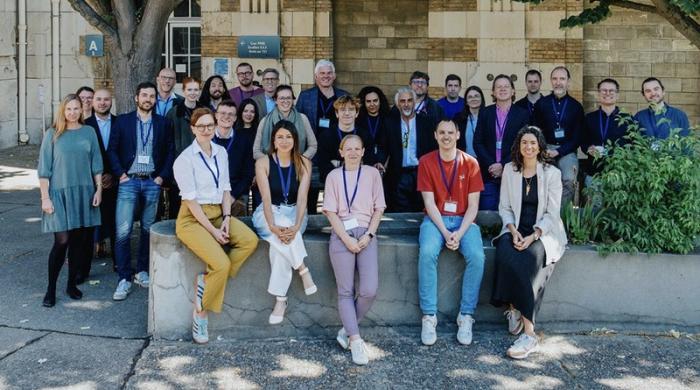
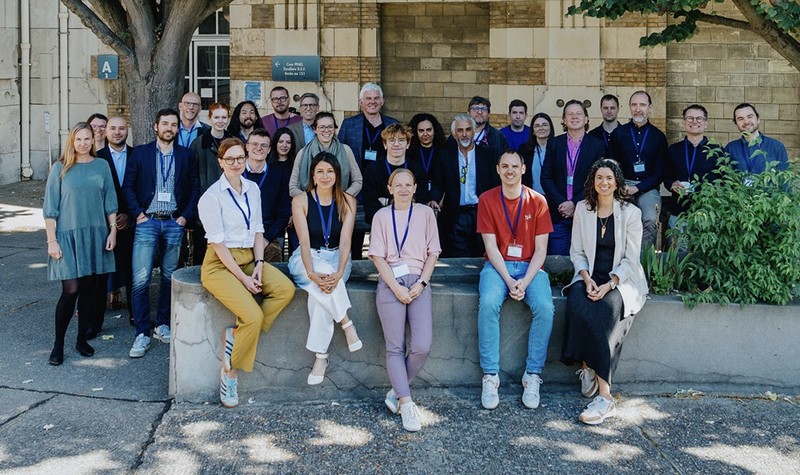
Funded with 8 million euros under Horizon Europe and coordinated by Arts et Métiers, the CIRCUIT4EU project (Circular Innovation for Critical Raw Materials Recycling & Reuse for PCBs, Permanent Magnets, and Electronic Components) was launched in June 2026 and will run for 42 months. It brings together some 20 partners to address a strategic challenge: making better use of the resources contained in waste electrical and electronic equipment.
Partners: Arts et Métiers/AMVALOR (France), EcoWise – Ekodenge Ltd (United Kingdom), UNITAR (Germany), ecosystem (France), Repic Limited (United Kingdom), WEEE Forum (Belgium), EPRON (Nigeria), Corporación Red Verde (Colombia), Corporación EcoCómputo (Colombia), University of L’Aquila (Italy), Arianee SAS (France), N-ABLE (France), Gorenje Gospodinjski Aparati (Slovenia), GAD Elektronika (Slovenia), Lortek COOP (Spain), MagREEsource (France), Tech Take Back (United Kingdom), Orange (France), University of Ljubljana (Slovenia), and Circular Intelligence Association (Belgium).