Pedro Rafael Chacón Acuña, a second-year student in Master of Science in Chalon-sur-Saône, is working on a project to develop a smartphone augmented reality app designed to facilitate the design of connected devices. This project served as the basis for his first widely acclaimed scientific article.
A methodology focused on user experience
Pedro Rafael Chacón Acuña's project is based on an innovative design approach: replacing traditional brainstorming sessions using sticky notes with an augmented reality application that allows users to explore a physical object (a bicycle, chosen for its availability and ease of observation), add virtual sensors to it, and simulate different usage scenarios.
“You can visualize a bicycle in 3D, placed on a table or on the floor, and attach various sensors to it,” explains Ruding Lou, a faculty member and academic director of Master of Science program.
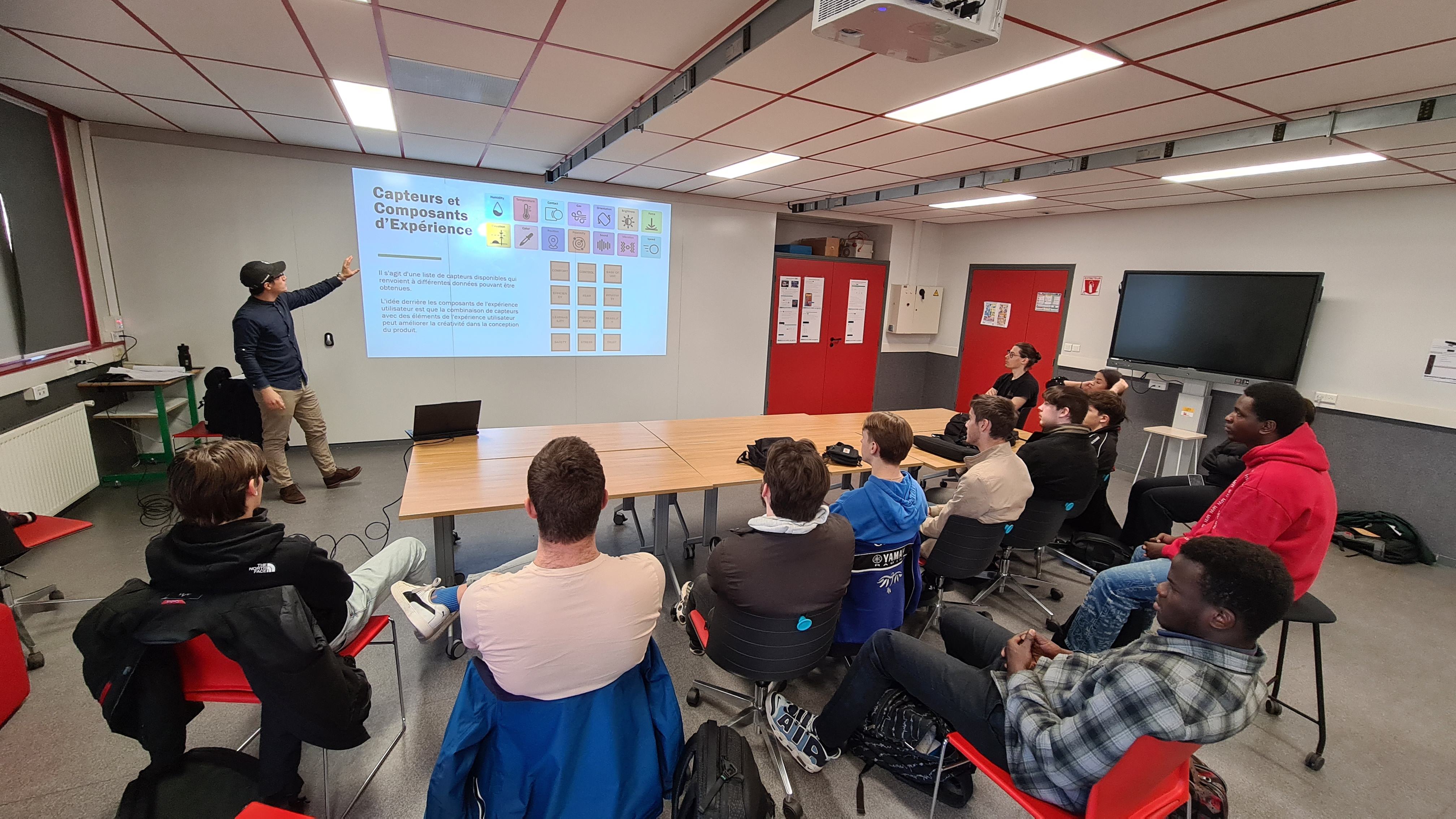
This project is a continuation of the work of Camille Jean, LCPI, who developed a methodology to help designers consider the real role of sensors from a technical perspective, but also in terms of user experience: safety, comfort, thermal comfort, navigation, etc.
Pedro decides to add additional features while conducting a testing campaign to validate the initial assumptions.
From experimentation to writing the article
To finalize the work, Pedro conducted a series of experiments with the help of students from the University Institute of Technology (IUT) in Chalon-sur-Saône. Fifteen participants tested the application, compared different design methods (including a card game developed by the LCPI), and evaluated the cognitive load required to analyze 3D objects.
The results are encouraging: the application reduces mental load thanks to features such as exploded views, making it easier to understand 3D structures.
Pedro Rafael Chacón Acuña presented his project in his very first scientific article at the 9th International Conference on Research and Applications in Human-Computer Interaction CHIRA'25 in Marbella, Spain. His work did not win an award but was selected for the shortlist of the five best candidates for the Best Student Paper Award, a recognition for a first scientific contribution.
Student reports often end up gathering dust in a drawer, Ruding Lou points out. Pedro, however, structured and synthesized all the data to produce a genuine scientific article. Today, it can be accessed with a simple search for "Connected Product Design augmented reality."
A springboard to new opportunities
In February, Pedro will begin an internship at ALTEN, with the possibility of continuing on to a PhD. The subject: developing software to translate French into sign language, based on a 3D avatar. This is a new step for the student, who sees his conference and thesis defense experiences as a good way to build his confidence and openness to scientific dialogue.
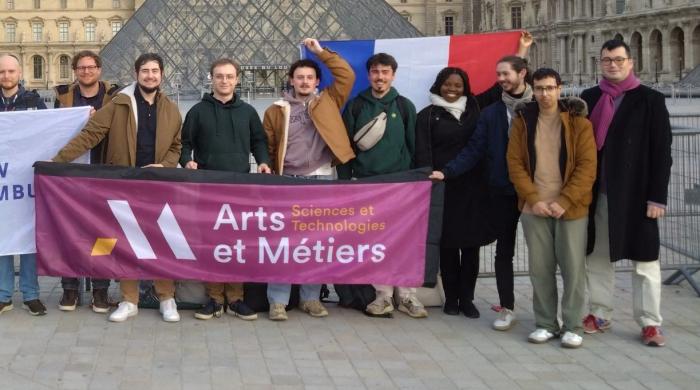
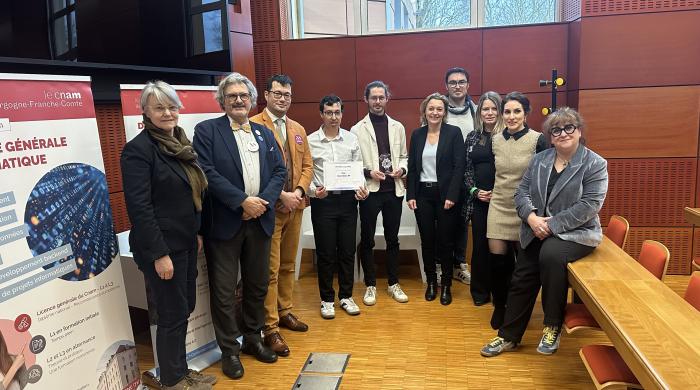
Pedro Rafael Chacón Acuña won the Economic Opportunity award at the 12th edition of the Chal’engeAM Challenge in January 2026. His team designed an application for Nextis, a company serving operators in the plastics industry, to facilitate learning about changes in manufacturing ranges.
The Internet of Things (IoT) is transforming all sectors by enabling traditional products to become smart and connected, capable of collecting, analyzing, and exchanging data. At the same time, augmented reality (AR) is emerging as a promising technology to support product design, offering immersive and interactive ways to visualize and iterate ideas.
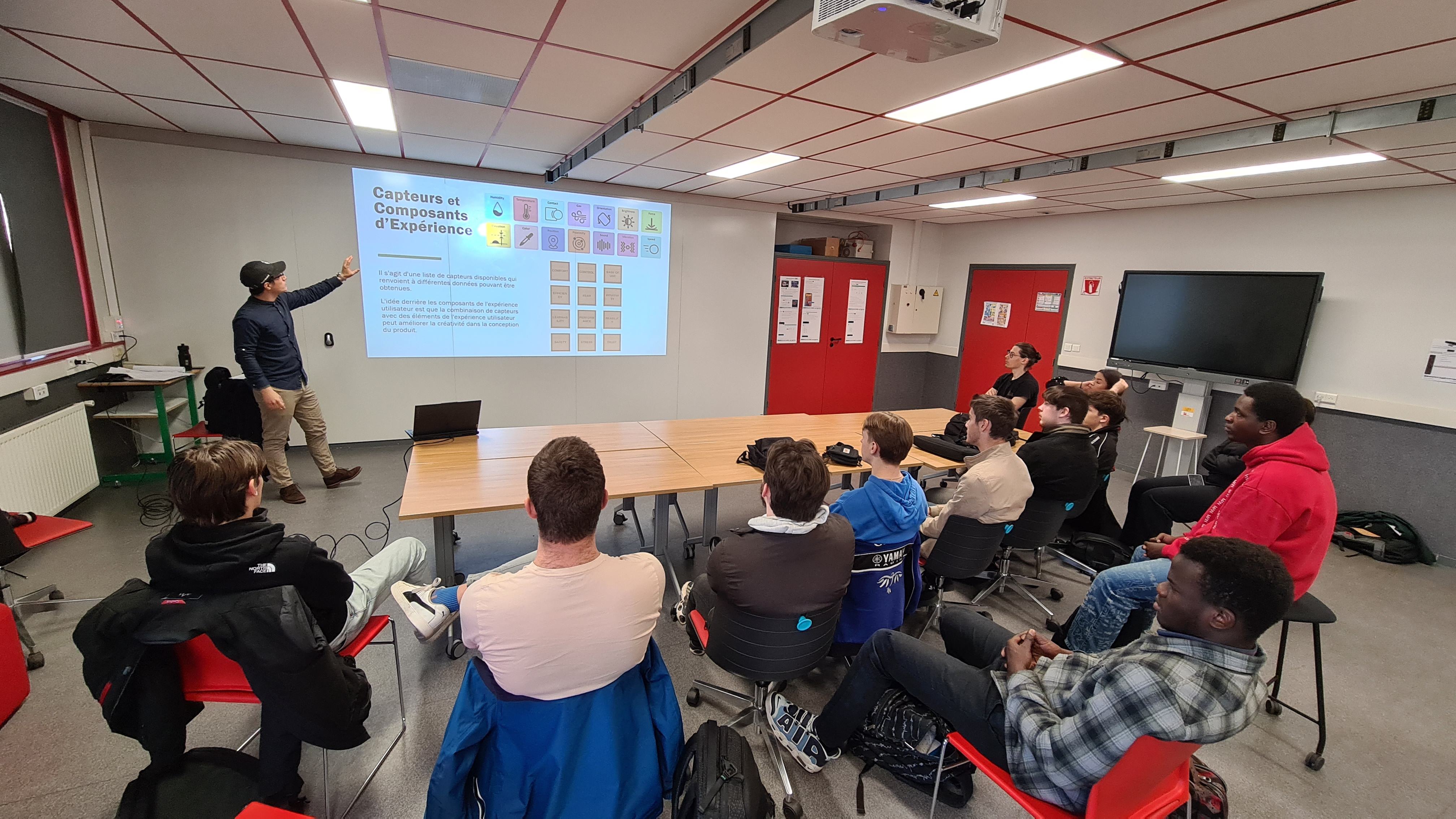
The article presents an augmented reality-based application developed to assist designers during the early ideation phase of IoT product design. The system allows users to visualize virtual objects and interact with 14 sensor capability cards and 12 user experience-related elements.
An experimental study conducted with 14 engineering students compared the proposed AR tool with a traditional 2D paper-based method, using two design cases: a connected bicycle and a smart window.
The results show that the augmented reality method maintains or reduces the perceived workload, particularly in terms of complexity and time pressure, while offering a level of usability that is comparable to or even superior to the traditional approach.
These findings demonstrate the potential of augmented reality as an effective and cognitively sustainable tool for stimulating creativity in the early stages of product design.