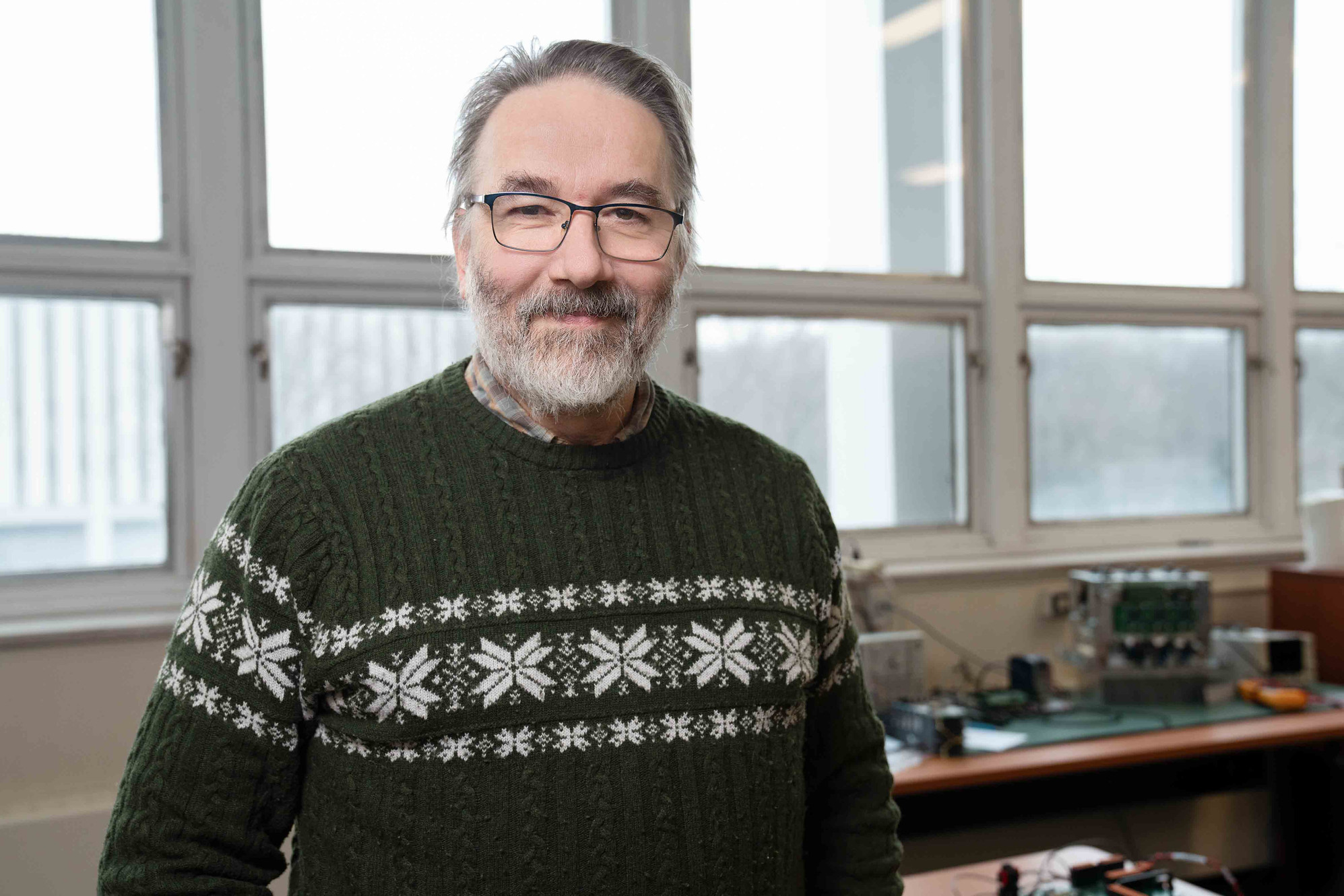
A professor atLaval University in Quebec, Jérôme Cros was welcomed to Brest as a visiting professor. A specialist in embedded electrical systems, he discusses his collaboration withIRENav, his career path, and his vision for international collaborations.
Arts et Métiers a strong scientific network, promoting highly enriching exchanges.
What were the reasons that led you to accept this position as visiting professor at Arts et Métiers
I have known Professor Jean-Frédéric Charpentier for many years. We met in 1995 when he was doing postdoctoral research at Laval University. Although we stayed in touch, we had never really collaborated directly on research. The opportunity to spend time at IRENav allowed me to discover his work, which focuses on maritime applications, a field that was quite unfamiliar to me since I had been working on electric vehicles and, more recently, on electrical systems for aircraft. I saw this as a great opportunity to broaden my knowledge and develop new areas of joint research.
Our discussions began with the idea of combining our expertise: his knowledge of electric propulsion systems for ships, and my experience with land and air vehicles. We identified common issues, such as onboard energy management and the optimization of onboard electrical networks, which arise for both ships and aircraft. IRENav and L2EP in Lille already collaborate closely, and my university in Canada maintains regular links with industry. This paves the way for joint projects, particularly in the field of real-time simulation of electrical systems.
How do you feel after a month since your arrival?
I was made to feel very welcome, both by the teams and by the region. It was my first experience in Brest, and I discovered an environment rich in scientific resources. I was able to visit unique facilities, such as the test tanks for marine propulsion, and meet researchers with approaches that complemented my own. This immersion allowed me to better understand their practices and find interesting parallels with my own work.
In your opinion, what is the main advantage of international research collaborations? Is there anything in particular that you appreciate about your collaborations with France or with Arts et Métiers
The major advantage is complementarity. In Canada, we often work in a very focused manner, with short-term projects designed to meet specific industrial needs. In France, I discovered more collective and organized structures, with a longer-term vision. These approaches feed into each other: my French colleagues provide modeling tools and structured frameworks, while I can share my industrial experience and concrete application cases. Arts et Métiers also Arts et Métiers a solid scientific network, promoting very rich exchanges.
What sparked your interest in electrical engineering and embedded electrical systems?
My career path has developed gradually. I started out working on the design of electric motors and converters in the 1990s, eventually developing an electric bike motor that was also marketed in Europe. I then moved on to higher-power applications, designing electric motor systems for cars, buses, and even trains. In recent years, my research has focused more on hybrid systems and energy management for ships and aircraft. What has always motivated me is the ability of these technologies to reduce energy consumption and their environmental impact.
When did you decide to become a researcher?
This choice was not immediate. During my studies, I did not necessarily have the idea of staying in academia. It was during my PhD that I discovered the richness and variety of problems to be solved. I enjoyed being able to work in several fields (mechanics, thermal engineering, power electronics) and collaborate on large-scale projects with researchers from different European laboratories. After a postdoctoral fellowship in Quebec and teaching experience in France, I finally decided to pursue research in academia in Canada, attracted by the scientific freedom, contact with students, and proximity to industrial partners.
What advice would you give to students interested in a career in research?
I would tell them not to be afraid to step outside their area of expertise and broaden their skill set. Research is, above all, a process of constant discovery: you learn to integrate knowledge from other disciplines and collaborate with experts who have different approaches. It is also a path that offers a great deal of freedom and creativity, much more so than certain positions in industry where tasks can be very structured. Finally, topics related to energy, smart systems, and electrification offer many exciting opportunities today.
Thank you to the Arts et Métiers Foundation Arts et Métiers its support in hosting visiting professors.
About Jérôme CROS
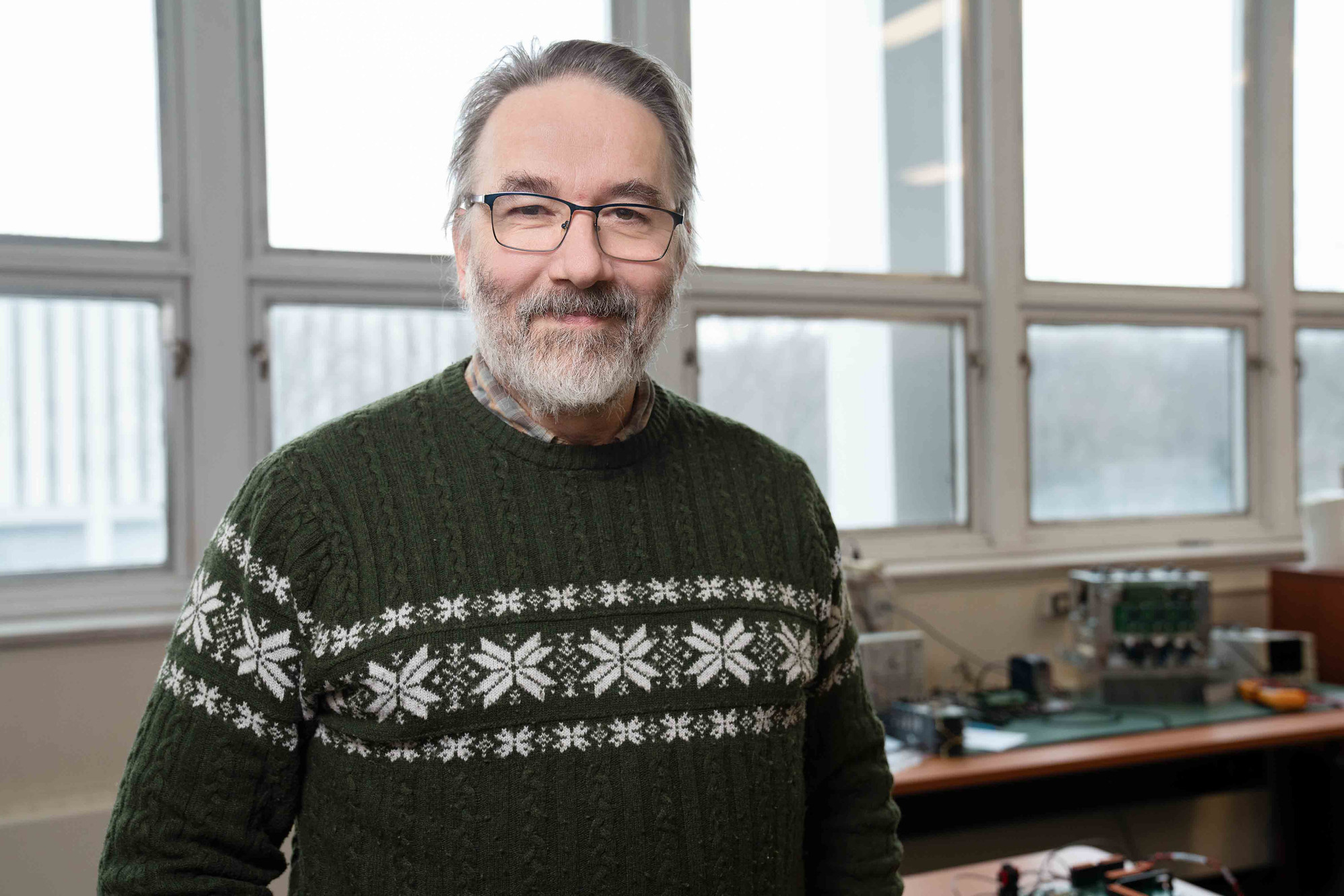 Jérôme Cros holds a PhD in electrical engineering from the Institut National Polytechnique de Toulouse (1992), supplemented by postdoctoral studies at Laval University (1994). After a stint at ESA-IGELEC in Saint-Nazaire, he joined Laval University (Quebec) in 1995, where he became a full professor in 2004. A specialist in electrical machines, energy conversion, and energy management, he has developed research applied to land, sea, and air transport. His work has resulted in numerous patents, particularly in the field of electric motors for vehicles. Very active in mentoring, he has supervised several international doctoral and postdoctoral students. His collaborations extend across Europe and South America, with a strong industrial presence in Canada. Today, he continues his research on the electrification of transportation and smart grids.