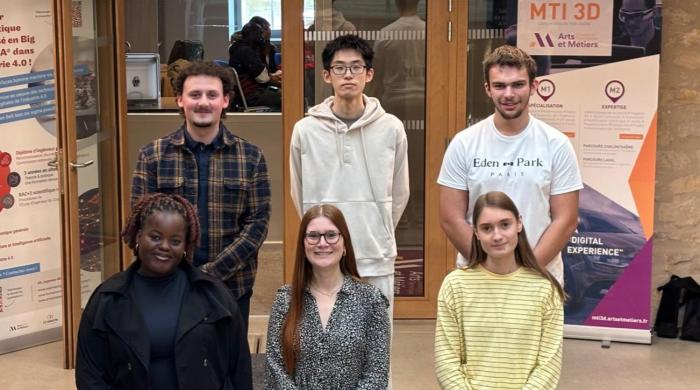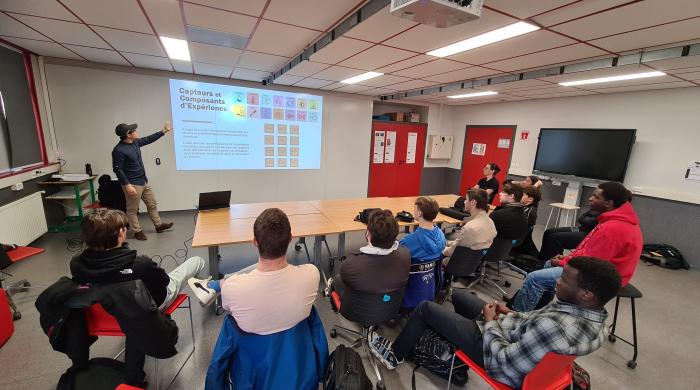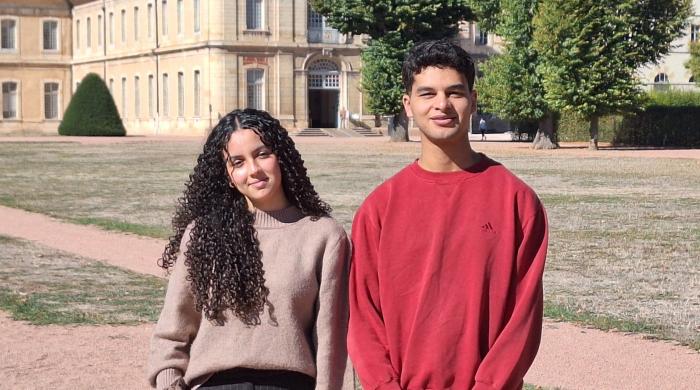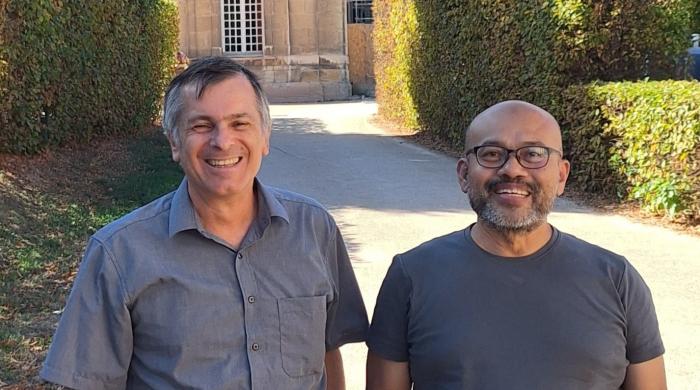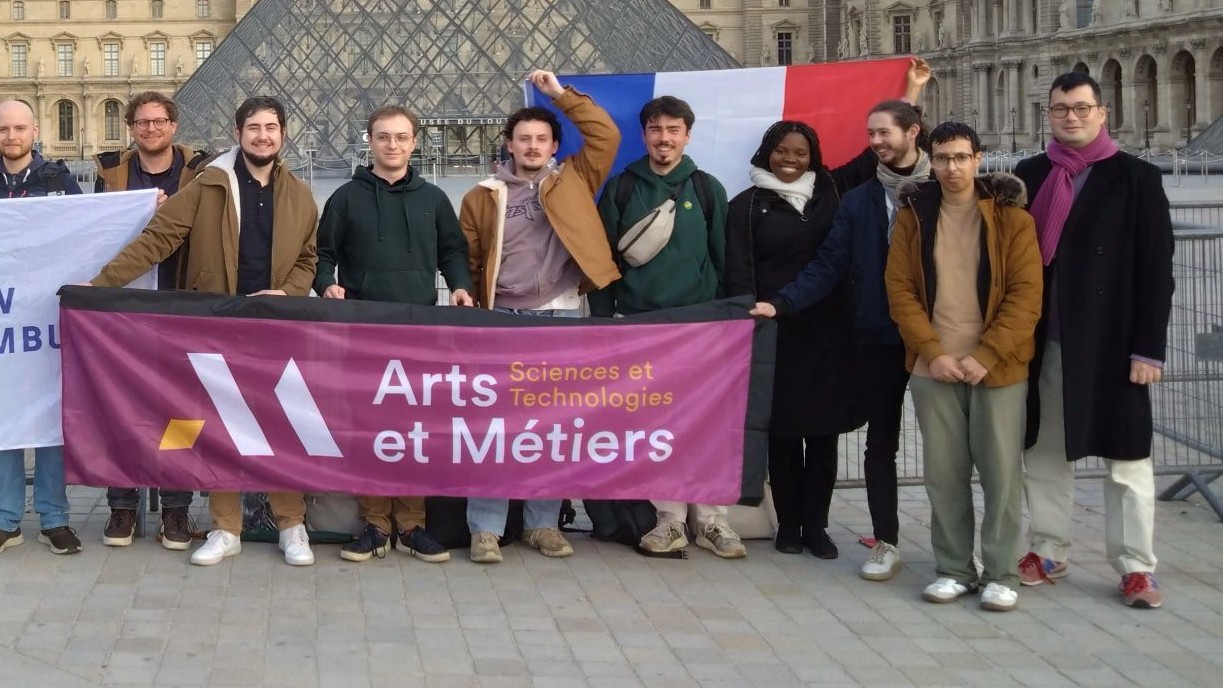
As part of the "Live My Life as a Person with Reduced Mobility" hackathon co-organized with HAW Hamburg University, a team of four students proposed an immersive application that allows users to experience the difficulty of everyday tasks when living with Parkinson's disease.
Making an unknown reality tangible
When the hackathon theme of disability was announced, the team, made up of two representatives from Germany and two from France, expressed some hesitation: tackling such a sensitive subject requires sensitivity, listening, and commitment. They chose to highlight a reality that is often overlooked: the difficulty of performing even the simplest everyday tasks for people with Parkinson's disease. Ordinary actions, carried out without thinking, become sources of tension, fatigue, and frustration.
From lived experience to choice of subject
Parkinson's choice gradually took shape during discussions, driven by a real-life experience: one of the team members had seen his grandfather cope with the disease on a daily basis. Drinking coffee was no longer a simple task: his loved ones were concerned about the risk of burns, while he refused help, wanting to remain independent despite his tremors and the occasional spilled coffee. This tension between the desire for independence and the limitations imposed by the disease guided the project's approach.
An immersion to understand and feel
The team designed an immersive application that puts the user in the shoes of someone with Parkinson's disease. The goal is not to represent the disease in a theoretical way, but to make the user feel it: the controllers reproduce tremors whose intensity and amplitude can be adjusted, simulating the characteristic motor disorders.
During the experiment, the user performs everyday tasks: picking up fruit and placing it on a plate, drawing a simple shape on a board, inserting a small object into a piggy bank-type box. Very quickly, these deliberately simple gestures prove to be complex: tremors, imprecision, and slowness disrupt each action, revealing the constant effort, mental fatigue, and frustration that may be involved.
This immersion aims to provide a better understanding of the difficulties faced by people with Parkinson's disease on a daily basis, to develop empathy, and to change perceptions, particularly regarding invisible disabilities. Even if brief, the experience allows participants to gauge the extent of the constraints and raises lasting awareness.
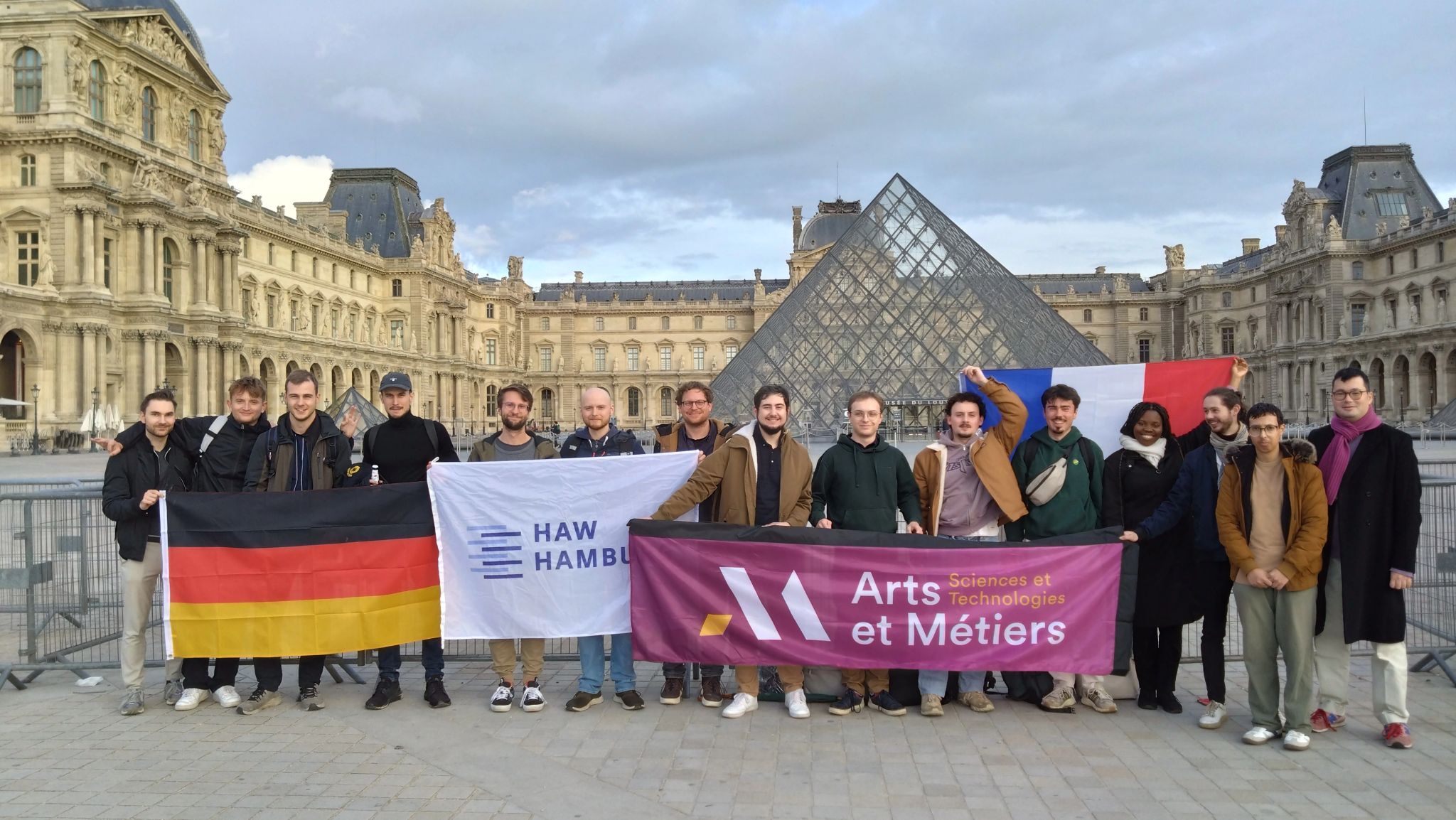
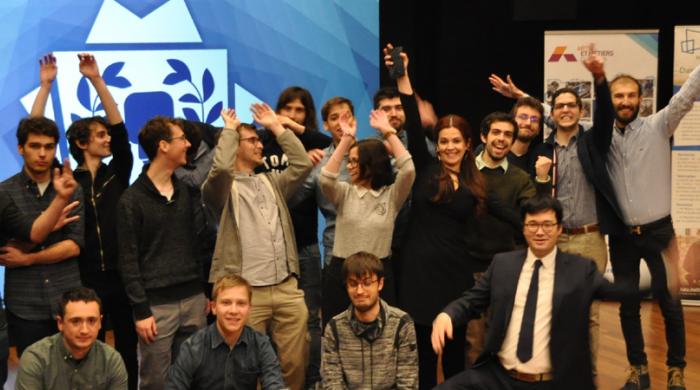
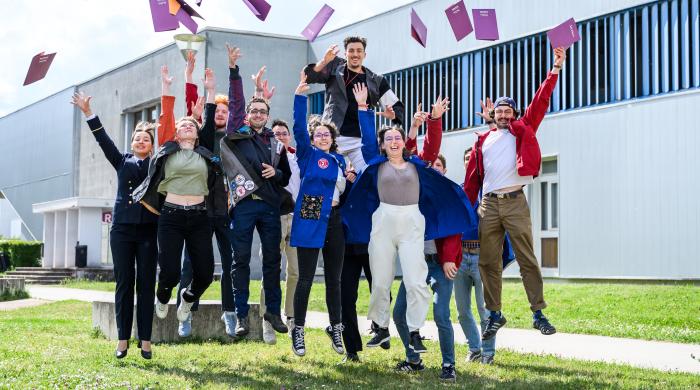
Students from HAW Hamburg and the institute in Chalon-sur-Saône took part in the hackathon "Live my life as a person with reduced mobility."
What next?
The hackathon is a decisive first step: the foundations for an immersive educational tool have been laid. The team plans to continue development, enrich interactions, and make the application accessible to a wider audience. Ultimately, the tool could be used in schools, businesses, or at awareness-raising events as a medium for dialogue and reflection, reminding us that beyond disability, there are people, life stories, and daily experiences that deserve to be better understood.
On October 19, 2025, seven students from HAW Hamburg and six students from the institute in Chalon-sur-Saône took part in the hackathon "Live my life as a person with reduced mobility" with the support of the DAAD (Deutscher Akademischer Austauschdienst). The goal: to co-create immersive experiences in order to understand the realities of disability.
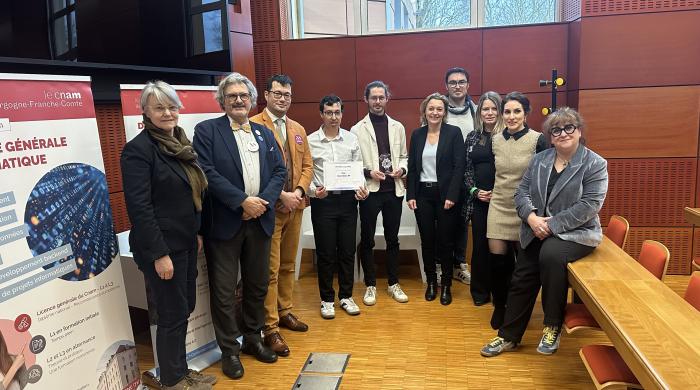
From Parkinson's disease to ADHD (attention deficit disorder with or without hyperactivity) and color blindness, the quality and diversity of the projects reflect a committed school that collaborates across borders.