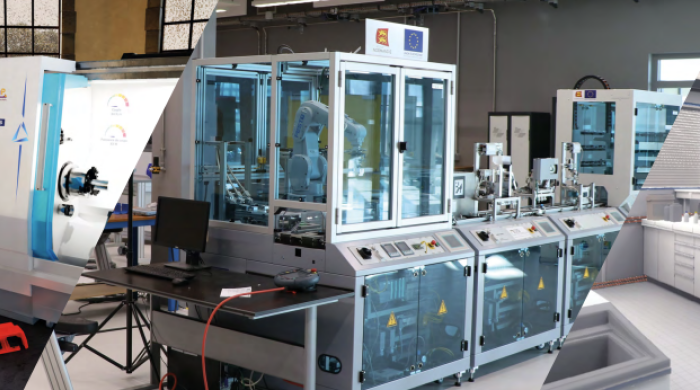
Arts et Métiers its educational platforms to meet the challenges of the industry of the future and train those involved in its transformation. The ELF Evolutive Learning Factories program aims to transform campu
s into Industry 4.0 training factories, true incubators of talent through encounters between education and industry, and between technical and scientific skills.
The ELF ( Evolutive Learning Factories ) program Evolutive Learning Factories Arts et Métiers its teaching to the highest standards by combining theory and practice on full-scale industrial systems.
In addition to acquiring cutting-edge technical skills, students will be trained in societal expectations regarding energy and the environment, enabling them to become responsible leaders. Their future careers will take on a new meaning.
A €15 million fundraising campaign over five years has been launched among businesses and individuals, jointly by the School, the Arts et Métiers Foundation Arts et Métiers the Arts et Métiers Society of Engineers.
THE OBJECTIVES OF EVOLUTIVE LEARNING FACTORIES
- the modernization of buildings,
- the transformation of technology platforms into connected, sustainable, and responsible factory schools on each campus,
- the development of new teaching practices focused on 4.0 technologies and techno-diversity in the ADEME's four Carbon Neutrality Transition scenarios,
- supporting staff in developing new skills and adapting to different ways of working.
THE AMBITION OF EVOLUTIVE LEARNING FACTORIES
- DEVELOP skills through practical projects focused on digital and ecological transition issues and significant exposure to industrial realities.
- SUPPORTING industries through continuing education, collaborative research, and co-development
- BEING a showcase for solutions for the industry of the future
THE 9 MAJOR PROJECTS OF THE EVOLUTIVE LEARNING FACTORIES
Axis 1: Digital and technological revolution in industry
- Connected manufacturing : Capturing, processing, and sharing data
With the existence of diverse manufacturing processes, this project introduces systematic instrumentation to create a robust database involving students and teachers in practical scenarios.
This innovation will enable real-time monitoring of manufacturing processes, immediate response to anomalies, and the implementation of AI-assisted predictive models capable of feeding digital twins, which are essential for energy efficiency and performance optimization.
- Robotic manufacturing : Improving productivity and flexibility in manufacturing processes
Arts et Métiers, already an expert in metallurgy, plastics processing, machining, assembly, and automation and robotics models, is embarking on the robotization of its manufacturing processes and parts inspection. This development will enable precise and responsive quality control, as well as flexible and efficient production, responding to the crucial challenges of reindustrialization and technological sovereignty in France. This project is committed to training 5,000 students in real-world production scenarios, where they will experiment with robot-assisted manufacturing, from programming to industrial management.
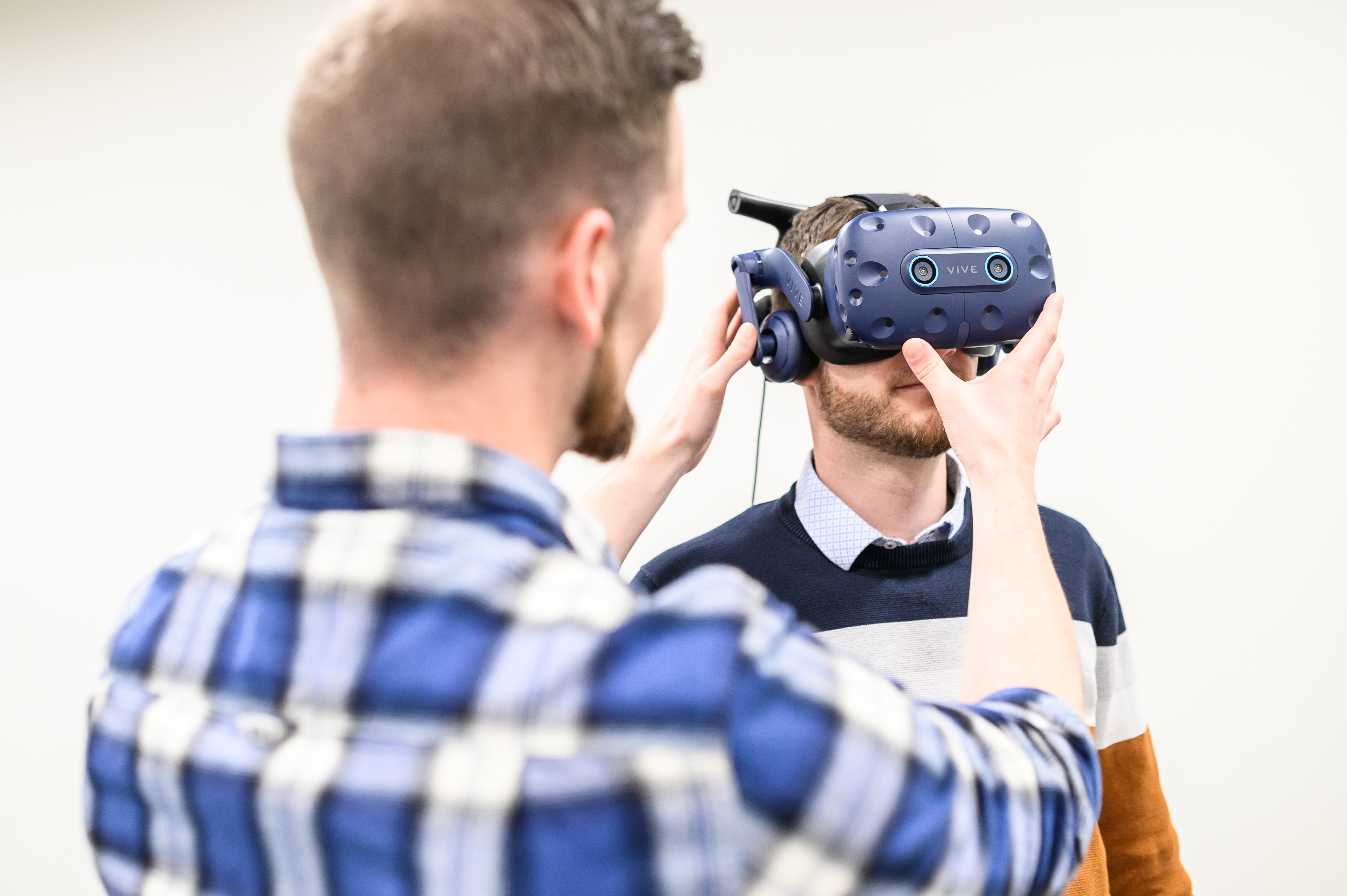
- Digital twins : Developing a virtual reality space
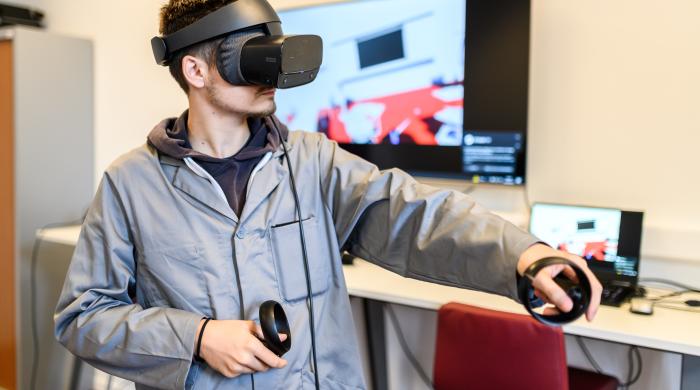
Digital twins, detailed virtual models, are revolutionizing the way we understand and interact with industrial processes. Students will be actively involved in their design and use, applied to a variety of fields. They will explore how industrial entities work, design industrial processes, and hone their practical skills.
- Agile Production : Experimenting with Augmented Humans
Students will play an active role in reconfiguring traditional assembly lines, using cobotics and mixed reality to simulate and experiment with different production scenarios. The goal is to quickly reconfigure the production line for greater product customization, using modern technologies in an ethical and responsible manner to assist the operator.
- Connected factory : Managing resources and flows at the factory level
This project complements the Connected Manufacturing project and is being implemented at the factory-school level. Its objective is to deploy supervision of all technological cells and add the supply chain. Artificial Intelligence processing of the data flow collected on the cells will enable continuous analysis of the status of the machine park, production, and resources.
Axis 2: Eco-responsibility and leadership in sustainability
- Energy impact : Developing energy efficiency and experimenting with carbon-free energy systems
The energy impact of production systems is an important issue that future engineers must be prepared for in order to limit global warming and reduce companies' energy costs. They will therefore need to gain a better overview of the energy impact and possible solutions for reducing it, design efficient and environmentally friendly energy systems, and reduce the environmental footprint of production systems.
- Recycling metal alloys : Recycle the material before it degrades
Recycling transforms waste into new products, using fewer natural resources and less energy than manufacturing from raw materials. It is an important issue for the circular economy
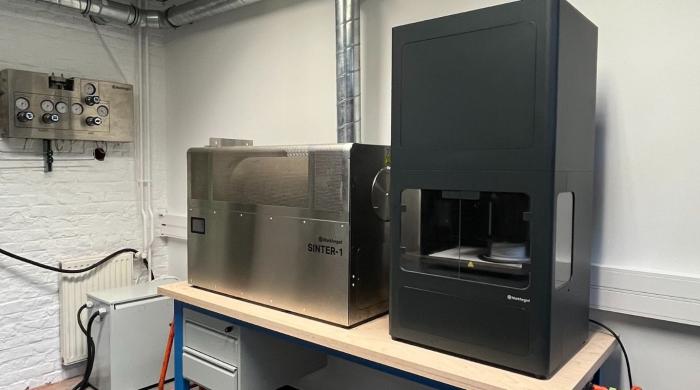
and the sustainability of industries. This project will therefore evaluate the transformation capabilities and mechanical performance of recycled metal alloys, update knowledge on new, higher-performance alloys, and adapt transformation processes to these new grades.
Axis 3: Innovative collaborative engineering
- Learning centers and learning spaces : Creating independent and remote learning spaces for students
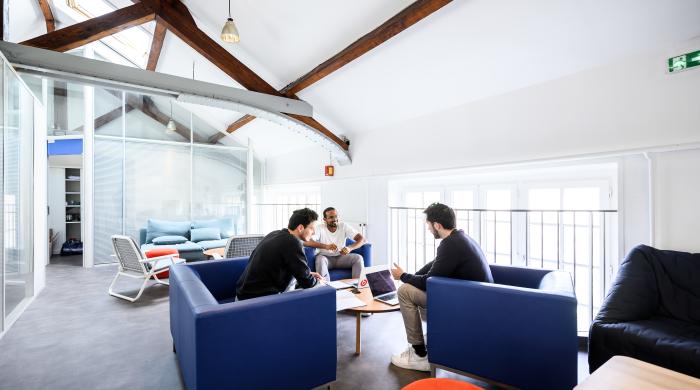
These independent collaborative workspaces, located near technology platforms or within learning centers, will include documentary resources, technological equipment (FabLab), scientific mediation, quiet or convivial workspaces, video studios, etc. Combining theory and practice, these spaces aim to create an environment focused on learning and the personal and professional development of students.
- Reconstruction of the legendary Delage V12 Labourdette : Rebuilding this legendary car
In 1927, the DELAGE automobile company founded by Louis Delage (An 89), a leading car manufacturer, made history with the V12, designed by engineer Albert Lory (An 119). In 1937, this "Sport" model distinguished itself at the ACF Grand Prix, reinforcing DELAGE's prestige. This intercampus project aims not only to faithfully reconstruct the Delage V12 Labourdette, without existing plans, but also to promote traditional technical skills while integrating modern technologies.