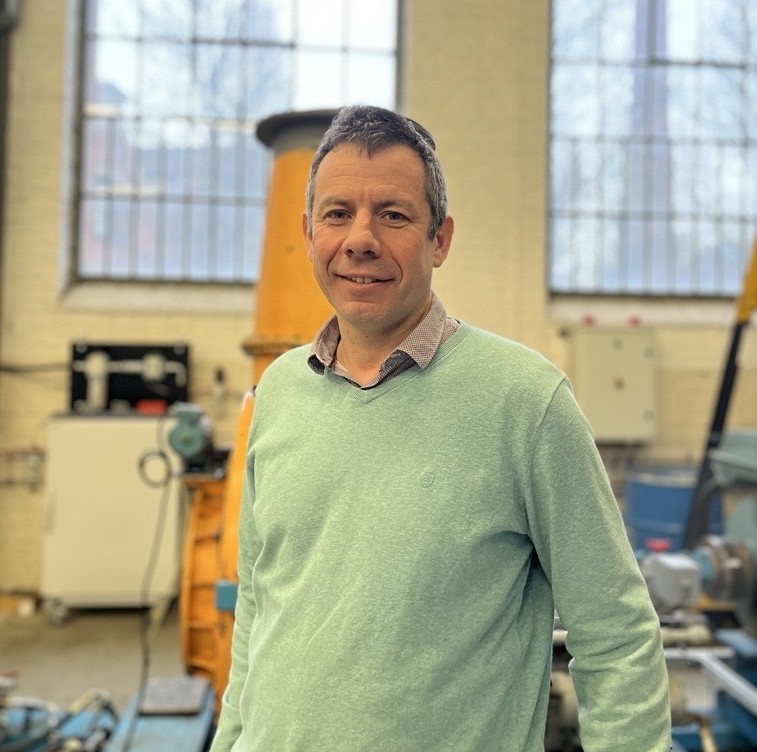
The final meeting of the European CleanSky Aconit project has just taken place in Munich. We meet Antoine Dazin, from the Lille campus, who coordinated the project.
What are the results of the Aconit project?
The aim of the project is to build aircraft engines with fewer compression stages, making them lighter and reducing their fuel consumption.
To achieve this, we have developed actuators. These actuators send jets of air locally to delay the onset of unstable phenomena in the internal flows of the compressor, thereby increasing the pumping margin, the indicator used in aeronautics to represent the operating range of compressors.
With our actuators, engine bench tests have shown increases in this margin of around 50% at certain speeds.
Safran, which acted as an advisory board for the project, has also shown interest in this solution.
But there is still a long way to go before it can be applied in practice.
How did the project go?
It got off to a bad start because the kick-off was in March 2020, just before lockdown! We were unable to carry out tests for several months and the project fell behind schedule right from the start.
But the three other partners—the Bundeswehr University Laboratory in Munich, Onera (a French research center dedicated to aeronautics and space) and the SME Cetec—were very helpful and responsive.
For example, one partner agreed to take on some of the testing that another partner had to do but couldn't because of scheduling issues.
We were also able to negotiate additional time from Europe.
What have you gained from your experience as coordinator?
It is an enriching experience both personally and scientifically. As coordinator, you oversee all aspects of the project, not just one part. You also get to work closely with partners, especially those from other countries. It's different from just bumping into them at conferences.
It's time-consuming, though. Luckily, I had the support of the Europe unit, which handled the administrative and financial aspects!
Do you have any new projects?
I am going to submit a project proposal to the ANR (French National Research Agency) with Onera, the Naval Academy, and the Jean Le Rond d'Alembert Institute. The aim is to develop models that can use machine learning (AI) to provide reliable, low-cost predictions of flows in rotating machinery, such as aircraft engines or boat propellers.
This has several advantages: it saves time and reduces simulation costs, but also has an environmental impact, as large computers consume a lot of energy.