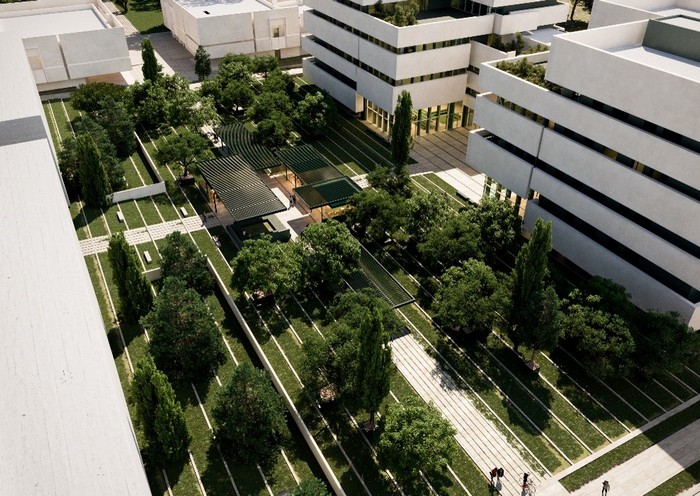
On July 24, 2024, the Arts et Métiers campus Arts et Métiers Rabat will open its doors, ready for the start of the academic year. This innovative campus meets the most stringent environmental standards.
The Arts et Métiers campus Arts et Métiers Rabat stands out as a high-level institution that combines academic excellence with a commitment to environmental sustainability. This innovative campus was designed with a bold vision, incorporating modern infrastructure that meets the most stringent ecological standards.
Solar and thermal energy
The campus relies on a modern energy infrastructure with the judicious use of solar panels. These 400m² of photovoltaic and thermal panels not only provide renewable electricity, but also help heat water for the campus's needs. This transition to clean energy reduces dependence on traditional sources and supports the institution's ecological mission.
Ecological architecture and innovative design
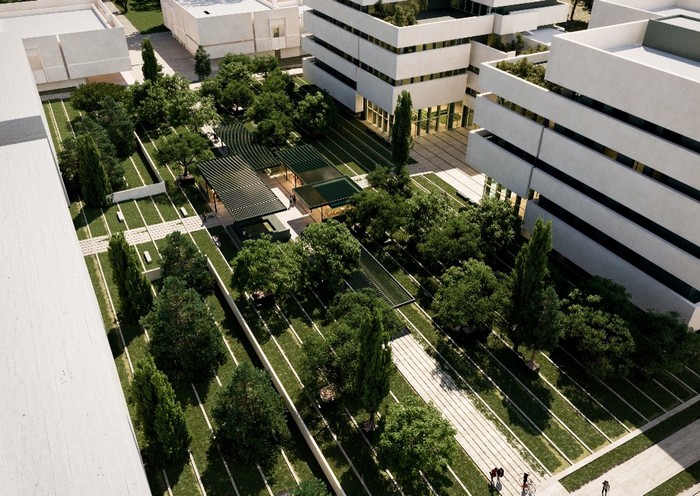
TheArts et Métiers campusArts et Métiers Rabat stands out for its eco-friendly architecture and innovative design. The 11,700m² buildings are designed to maximize the use of natural light, reducing dependence on artificial lighting and minimizing energy consumption. In addition, the use of sustainable and recyclable materials in construction reflects the campus's commitment to environmental responsibility.
Green spaces and biodiversity
The campus has been carefully designed to preserve and promote biodiversity. Lush green spaces not only provide a pleasant environment for students, but also help improve air quality and support local wildlife. Areas planted with native species have been incorporated, contributing to the preservation of the local ecosystem. Finally, motor vehicles will be parked in underground parking lots, freeing the outdoor space on campus from visual and environmental pollution.
Green technologies and renewable energies
The Rabat campus is at the forefront of adopting green technologies. Smart management systems control energy consumption in buildings, optimizing energy efficiency. In addition, the campus incorporates renewable energy sources such as solar panels and wind turbines, reducing its carbon footprint and contributing to the transition to cleaner energy.
Educational approach focused on sustainable development
Beyond its commitment to environmental sustainability on a physical level, the Rabat campus also incorporates an educational approach focused on sustainable development. Academic programs integrate concepts of social and environmental responsibility, preparing students to become leaders who are conscious of the impact of their actions on the planet.
International collaborations and ecological exchanges
The campus promotes international collaboration in the field of sustainability. Partnerships with institutions around the world enable the exchange of ideas and best practices, creating a global network of experts committed to building a more sustainable future.
Reducing paper usage
Aware of the environmental impact of excessive paper consumption, the campus is actively committed to reducing its use. Administrative and educational processes are gradually being digitized, encouraging students and staff to adopt more sustainable practices. Digital platforms and online tools are favored to minimize document printing.
The Rabat campus is thus positioned as a model of academic excellence while embodying the fundamental principles of sustainable development. This innovative campus is leading the way toward environmentally friendly higher education, preparing the next generation of professionals to tackle global challenges while preserving our planet for future generations.