The Arts et Métiers campus Arts et Métiers Bordeaux-Talence invites you to attend the thesis defense of Léna VERCHERE, a doctoral student at the I2M laboratory, on "Local microstructure-mechanical-electrochemical interaction. Application to the nickel-based alloy A600," this Friday, November 15, at 10:30 a.m. (Lecture Hall 2 - Building A9 - University of Bordeaux).
Thesis summary
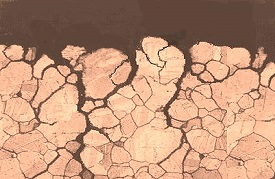
Stress corrosion cracking (SCC) is a localized degradation phenomenon resulting from the synergy between microstructural, mechanical, and environmental parameters. Understanding the interactions between these parameters enables manufacturers to continuously improve component reliability models and thus increase the safety of installations. This study focuses on Alloy 600, a nickel-based alloy used in pressurized water reactors and subject to SSC. Understanding and modeling material-mechanical-environment interactions requires looking at the scale of microstructural heterogeneities, mechanical fields, and electrochemical properties in order to overcome averaging effects. During the thesis, this change of scale was achieved through the use of both experimental and numerical local techniques. The scanning electrochemical microscope (SECM) was used to perform current measurements at the grain scale. By coupling it with EBSD, the effect of the crystallographic orientation of the grains on the electrochemical properties of the passive film could be quantified. The effect of the
nature
of the grain boundaries was also investigated. Subsequently, the same measurements were made on a test piece under mechanical stress, thanks to the development of an in situ tensile experimental setup coupled with SECM. The microstructure obtained by EBSD was then used to reconstruct a virtual microstructure, on which the local mechanical fields were determined by a crystalline plasticity calculation. The influence of pre-work hardening and then the influence of mechanical tensile stress on surface reactivity were demonstrated at the microstructure level, confirming that CSC models must incorporate local heterogeneities.
Composition of the jury
Mr. Olivier DEVOS (University of Bordeaux), Thesis supervisor
Ms. Isabelle AUBERT (University of Bordeaux), Co-supervisor
Mr. Xavier FEAUGAS (University of La Rochelle), Rapporteur
Mr. Vincent VIGNAL ( CNRS - University of Bourgogne Franche Comté), Rapporteur
Ms. Christine BLANC ( ENSIACET - INP Toulouse), Examiner
Ms. Cécilie DUHAMEL (MINES ParisTech), Examiner
Mr. Yves CHEMISKY (University of Bordeaux), Examiner
Location of the defense
Amphitheater 2 - Building A9 - University of Bordeaux