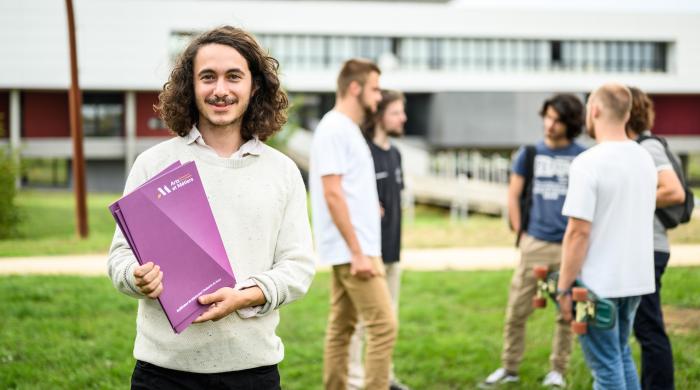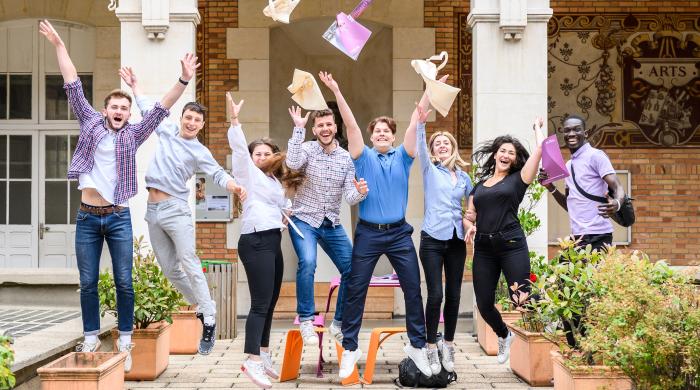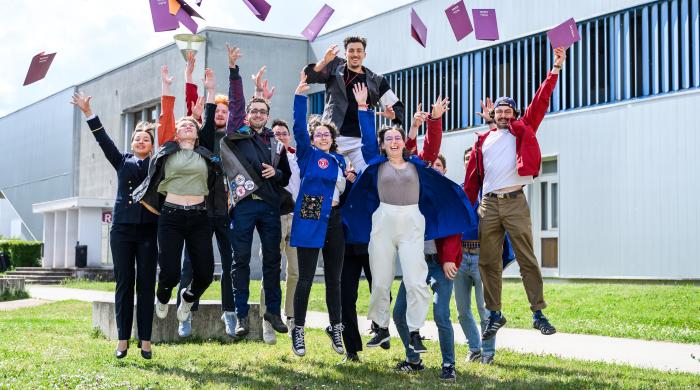
For this unique program in France, open to high school graduates with a STI2D diploma, Arts et Métiers drawn on its expertise and know-how to develop a teaching approach rooted in technological and industrial realities. The project plays a central role in the three-year program. Another unique feature isthe constant interaction with the company, which offers multiple opportunities to develop skills through site visits, work-study programs, and industry conferences.
A first year to discover (oneself)
Throughout the program, the teaching approach focuses on putting knowledge into practice. This post-baccalaureate year is structured around theoretical courses and case studies. The study of technological objects, from design to implementation, serves as the guiding principle for the teaching. Many activities are carried out in project mode in order to make students the main actors in their own learning.
Bachelor's students also benefit from a minimum four-week internship: an experience that promotes initial immersion in the workplace and allows teachers to assess their early achievements in a professional environment. Throughout this first year, the teaching team supports students in defining their goals.
Two years to become a professional
This second part of the curriculum, focused on work experience, draws on links with local manufacturers. A three-month internship is planned for the second year, followed by an intensive professional immersion the following year. The courses themselves are mainly dedicated to product, process, and energy engineering.
To ensure that it closely reflects the realities in the field, the educational model is tailored to the needs of the campus's industrial and academic partners. The entire program is focused on developing scientific and technical skills, enabling students to enter the workforce or continue their studies in engineering.
A contest to stimulate creativity
Arts et Métiers bachelor's students Arts et Métiers encouraged to develop their creative and technical skills through practical projects and stimulating challenges. They regularly participate in internal and external competitions, such as RoboCup, as well as hackathons organized by academic and industry partners. These experiences allow young people to put their knowledge into practice, work in teams, and apply their ideas to real-world problems, while gaining recognition from professionals and scientists.