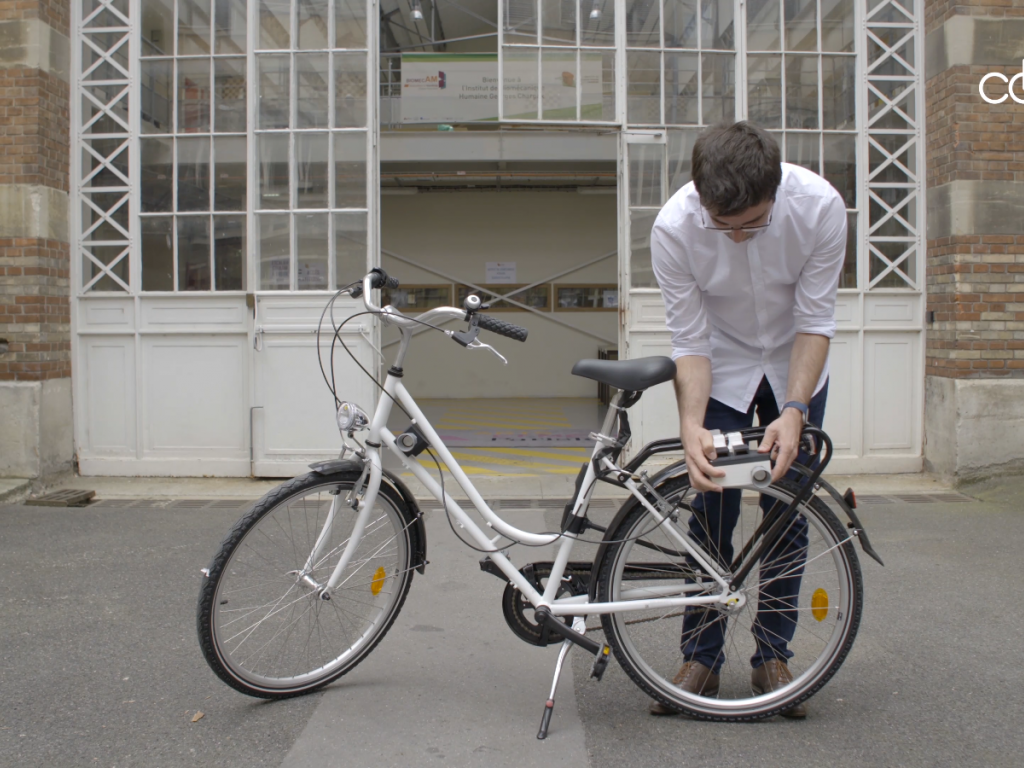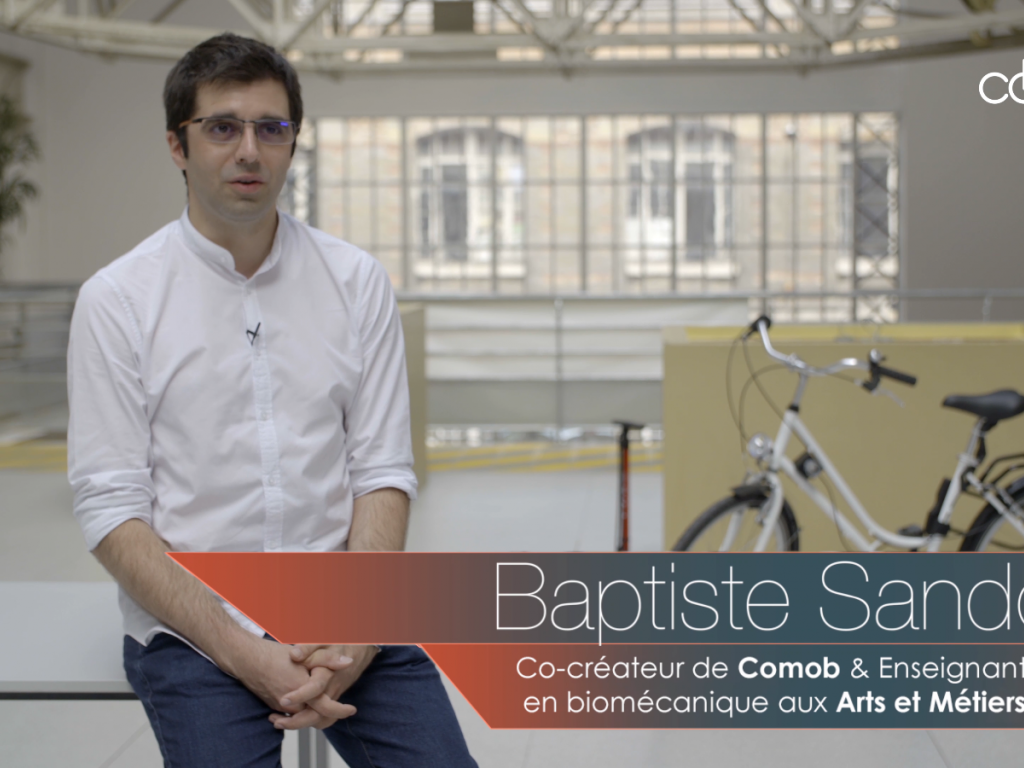

Comob is the first tool for studying the dangers of cycling in urban areas. It involves, first, equipping bicycles with sensors to measure the distance at which cars overtake bicycles, and then developing a mobile application that can be used to plan safe routes. Comob is being developed at Arts et Métiers, within the Georges Charpak Institute of Human Biomechanics.
Connected bikes to measure the danger of traveling in urban traffic
Numerous studies have shown that the most serious bicycle accidents result from vehicles passing too close to cyclists. Comob's mobile app offers routes that avoid dangerous areas and take cyclists along safer, more comfortable roads.
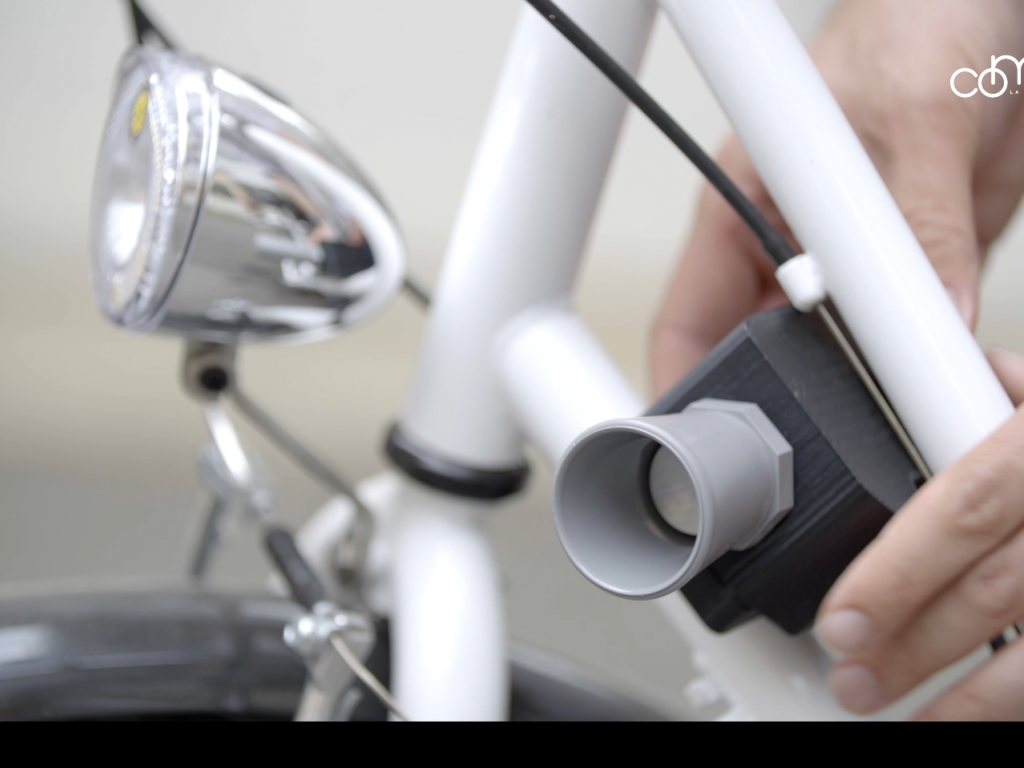
Bicycles are transformed into connected objects equipped with a GPS receiver and distance sensors placed on the frame and at the height of the rear wheel, allowing the distance between the cyclist and the nearest vehicles to be measured. The data is compiled and will be available on a dedicated website.
Objective: to equip a large number of bicycles as part of a citizen participation initiative
Five bikes are now equipped and have been used to collect data, proving the reliability of the concept. The project won first prize in the Innov'Street competition organized by the Road Safety Delegation.
The project's initiators, two researchers from the Georges Charpak Institute of Human Biomechanics at Arts et Métiers, now want to accelerate the development of Comob by calling on citizen participation to equip a large number of bicycles with lightweight instruments that measure both crossing distances and cyclist behavior. "The goal is not to map an entire city, but rather the routes that people use, which is why our study is naturalistic, based on actual bicycle use. We hope that Comob will be of interest to municipalities and public authorities. Mapping will make it possible to determine whether existing infrastructure is useful and whether it is necessary to consider other options."
Improving cyclist safety in urban areas
Comob is part of the soft mobility movement. "For more than a decade, bicycle use has been booming. It is a particularly popular means of transportation in large cities, especially in Paris, where traffic is often difficult and dangerous. " It was after making this observation that Baptiste Sandoz and Damien Subit, two biomechanics researchers, came up with the idea for Comob. "This project makes it possible to map risky, accident-prone events (evasive maneuvers, sudden braking), but for which no accident has yet occurred."