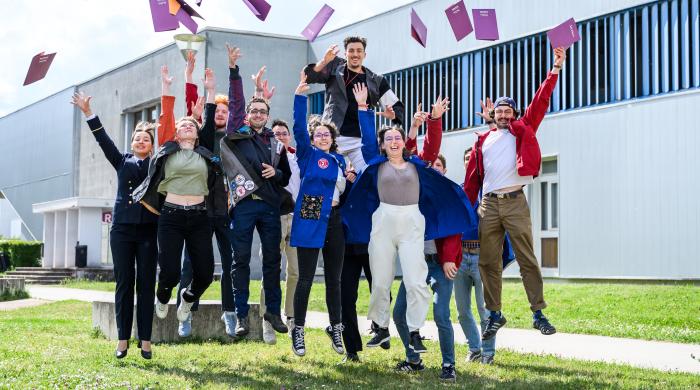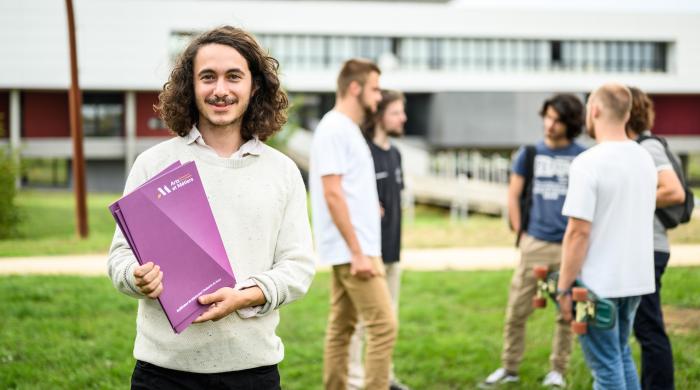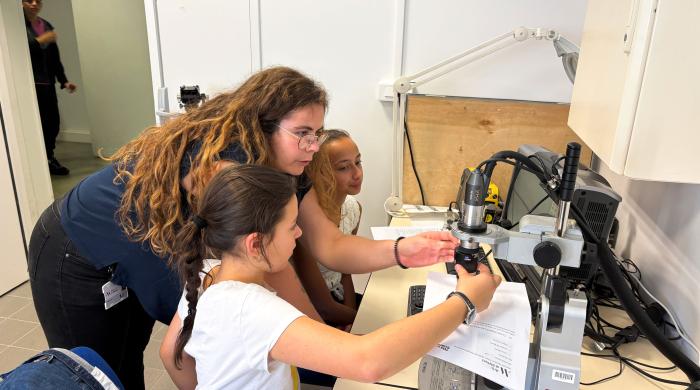
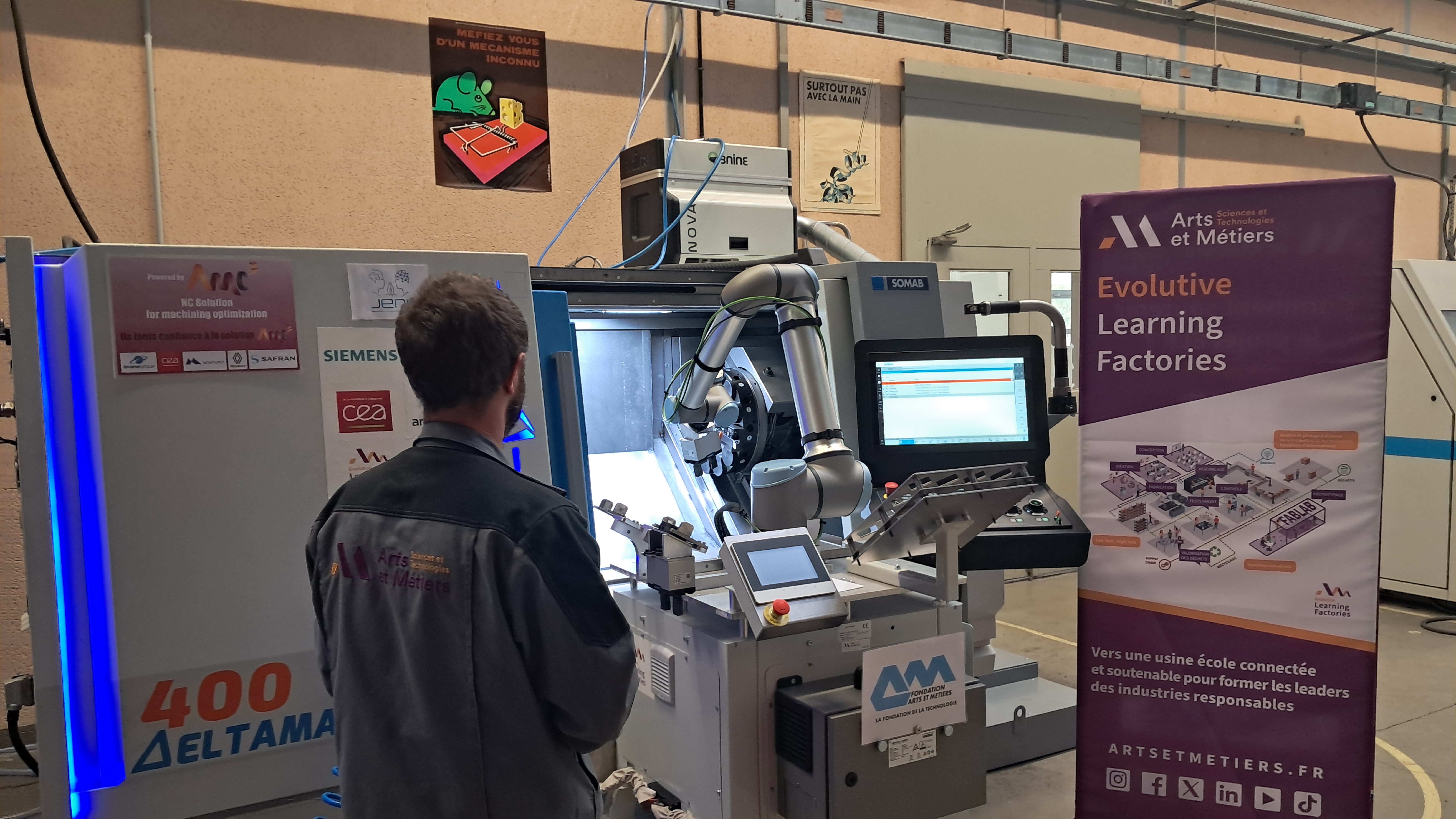
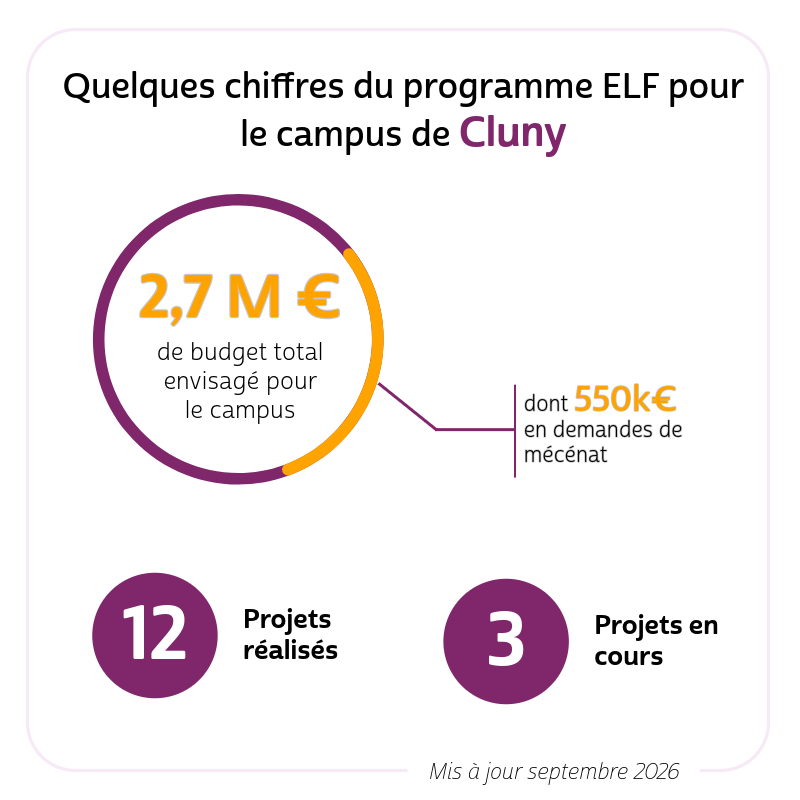
The Evolutive Learning Factories ELF) program aims to transform our campuses into Industry 4.0 training factories. Find out how it is being rolled out on the Cluny campus.
The Cluny campus is transforming its educational platforms to meet the challenges of the industry of the future, and in particular to enhance the appeal of careers in the woodworking sector.
Projects
Welding Simulator
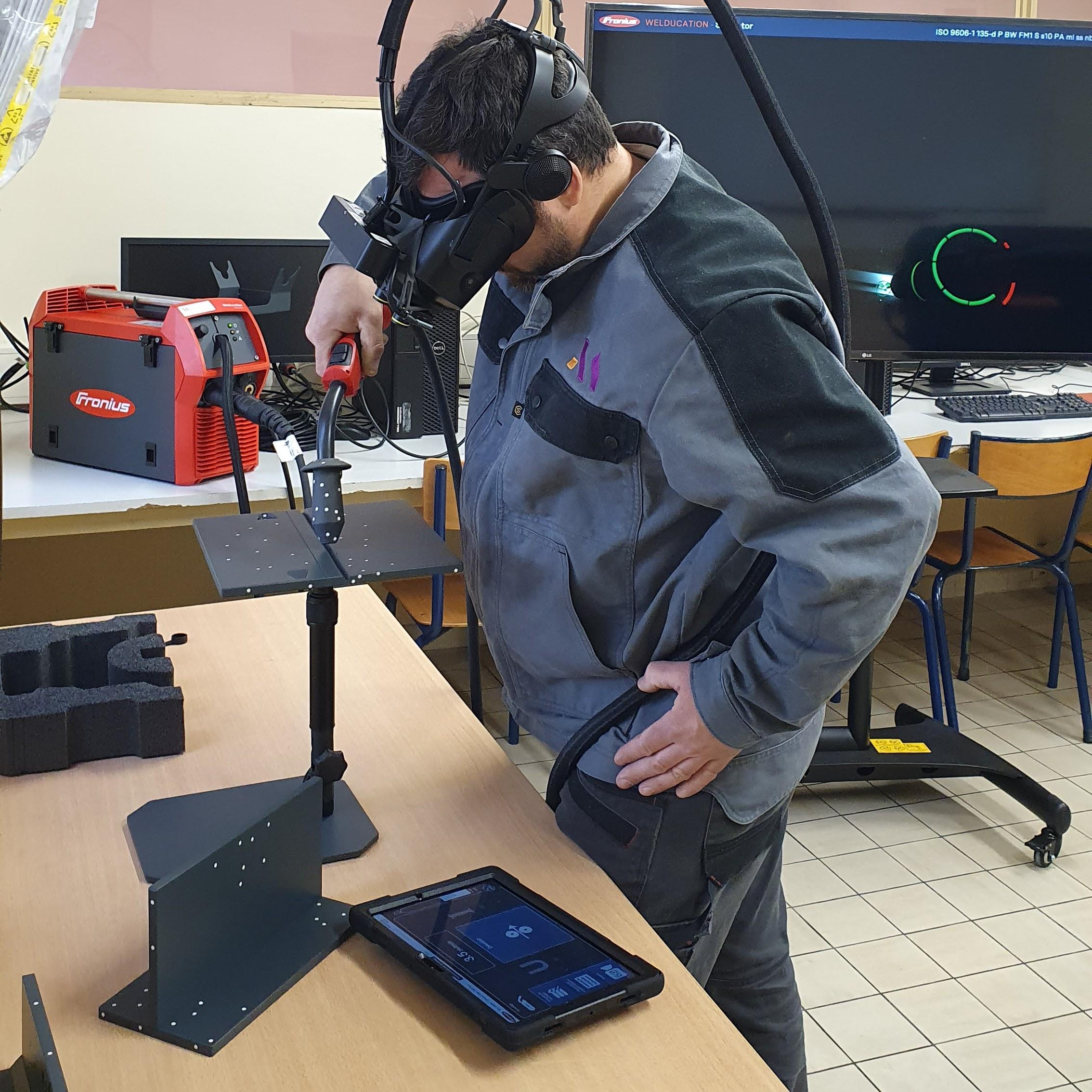 The ELF in Cluny has acquired a new welding simulator with funding from the Arts & Métiers Foundation and sponsorship from Comège. This demonstration unit is designed to help students learn and refine welding techniques.
The learner has access to physical equipment (welding test pieces, torches, welding machines, etc.) over which virtual models are superimposed using augmented reality. The entire experience is viewed through a virtual reality headset. The goal is toImmerse the learner in a world that provides the most realistic sensory experiences possible, whether from a visual or auditory perspective. To ensure the most effective immersion possible, equipment from FRONIUS, one of the world’s leading manufacturers of welding equipment, was selected.
Learn more about the welding simulator
LabLean 5.0
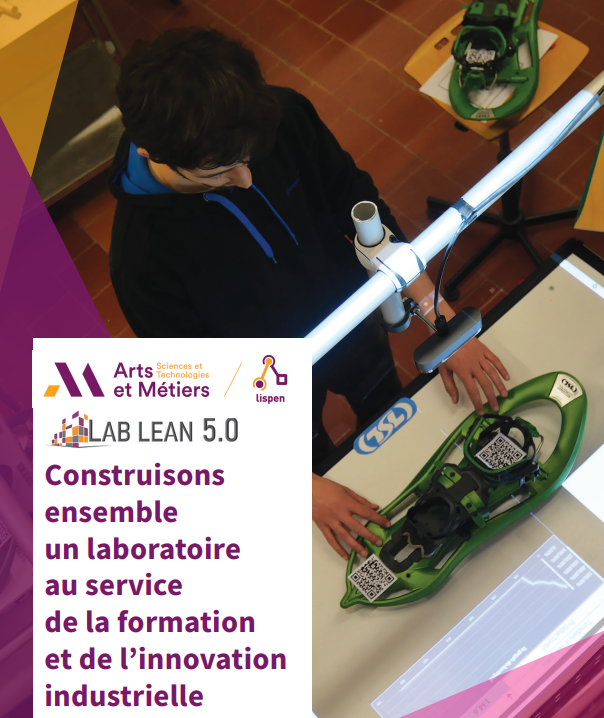 The campus plans to establish, by the end of 2026, the LAB LEAN 5.0, an innovative laboratory dedicated to experimentation, observation, and education focused on LEAN, frontline workers, and new industrial technologies. As part of the ELF program, this project is structured around four pillars: action-oriented training, research and innovation, network coordination and knowledge dissemination, and business support. It aims to place students at the center of these initiatives, study the impact of advanced technologies on operators, develop concrete demonstrations of the industry of the future, and strengthen the links between education, business, and research. The project already receives support from the NCU RITM-BFC program (reference ANR-17-NCUN-0003). For more details, Download the brochure.
ROAM ( Arts et Métiers Collaborative Robot)
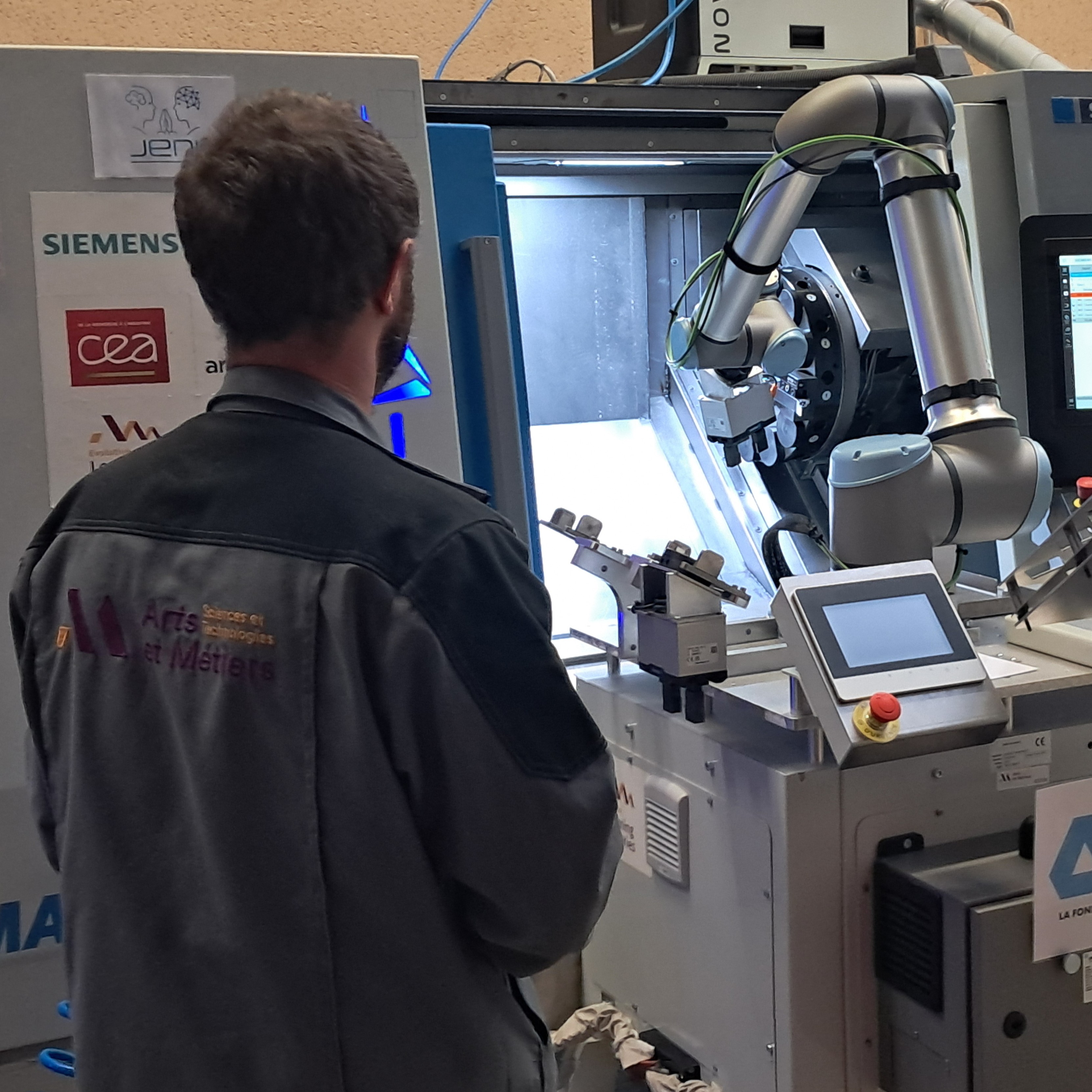 Since the start of the 2025 academic year, second- and third-year students in the Grande École Program have had access to a collaborative robot as part of their coursework. ROAM is a prototype that incorporates innovative features and paves the way for educational projects that combine technology and traditional craftsmanship within the framework of the “ Evolutive Learning Factories.”
Other Projects
- 4-axis woodworking machines
- High-Performance 5-Axis Machines
- TechLab SLS Machine
- X-REVE Augmented Reality Device
- Protometam
On the rest of the campus
Arts et Métiers ’s Cluny campus aims to establish, by the end of 2026, the LAB LEAN 5.0—an innovative laboratory for experimentation, observation, and education focused on operators and new industrial technologies. This project, which combines the study and integration of Industry 5.0 advancements with industrial performance, will place people at the heart of the process.
This project is structured around four pillars: action-oriented training, research and innovation, network coordination and knowledge dissemination, and business support. It aims to place students at the center of these initiatives, study the impact of advanced technologies on operators, develop concrete demonstrators of the industry of the future, and strengthen the links between education, business, and research. The project already receives support from the NCU RITM-BFC program (reference ANR-17-NCUN-0003).
Practical information
Correspondent: Guillaume Fromentin
Communications Officer: Frédéric Delmas