Find out more about the "connected manufacturing" project, one of the nine major Evolutive Learning Factory projects.
OPTIMIZING MANUFACTURING PROCESSES BY CAPTURING AND PROCESSING DATA USING AI
Introduce systematic instrumentation
The connectivity of manufacturing processes is a major challenge for industry. It enables production processes to be monitored by interconnecting all means of production (connected objects: machines, robots, digital twins), establishing performance indicators for decision-making, and improving productivity and quality.
In addition, measuring energy consumption prevents overconsumption and promotes energy efficiency.
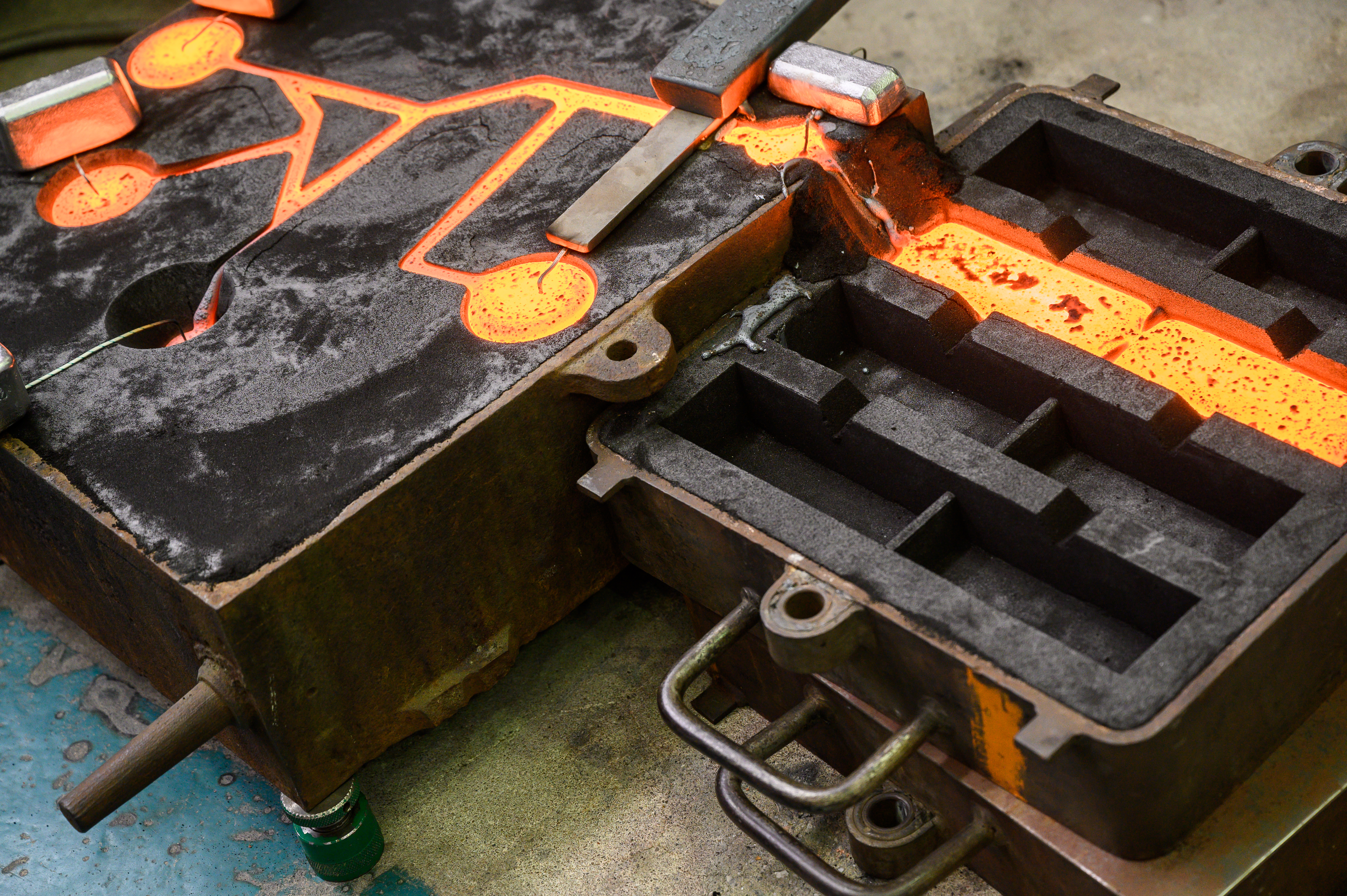
Arts et Métiers numerous manufacturing processes—metallurgy, plastics/composites, forming, assembly—which are partially instrumented.
The novelty lies in introducing systematic instrumentation to build a database processed by Artificial Intelligence (AI) tools. It also involves implementing performance indicators and real-time monitoring of the manufacturing and inspection of the part. The aim is to respond immediately to any deviations observed.
The implementation of a predictive model for defects (for example) will enable the creation of a digital twin of the process (Digital Twins project).
How?
The project is scheduled to run for five years across eight campuses covering an exceptional and unique range of manufacturing and quality control processes in the academic world. Each campus has established a multi-year plan to gradually connect its various manufacturing processes.
Need for financing
- Total project cost: €1.9 million, including €900,000 in sponsorship requirements
>>> Would you like to make a donation as an individual? individual ? Click HERE | >>> Would you like to make a donation as a professional ? Click HERE |
Priority projects for 2025
Materials Unit
This project will enable the Materials Unit at the Bordeaux campus to acquire a state-of-the-art mechanical testing machine (tension, compression, bending, etc.) connected for the development of digital twins of tests for their preparation and data processing. This equipment will be used by all students on campus in several courses on Materials, Structures, and Transformation Processes, as well as in numerous cross-disciplinary projects (hackathons, educational projects, junior enterprises, etc.).
- Bordeaux campus
- Project cost: €90k, including €45k in sponsorship requirements
Machining cell
This project aims to digitize and connect the machining cell to control production by monitoring machining processes. The investments will make it possible to assess the wear and tear of cutting tools, the condition of the surface generated at the micro level, and vibrations during machining. Compared to digital twins, this will help to understand material cutting phenomena and optimize process parameters. The aim of monitoring is to obtain intelligent machines capable of modifying parameters autonomously and helping operators make strategic decisions. This project involves various teaching units from the Grande Ecole Program and the Specialized Engineering Program.
- Châlons-en-Champagne Campus
- Project cost: €196k, including €34k in sponsorship requirements
Machining cell
- Campus: Angers
- Project cost: €585k, of which €292k requires sponsorship
- Acquired with InUse: connectivity and data:
Machining cell
This project aims to acquire a new 5-axis machining center to teach manufacturing using state-of-the-art equipment, introducing students to new technologies (monitoring, supervision, digital twins, material and energy flow management, etc.) and the integration of robotics. This cell will be connected to an inter-workshop robot (see Robotic Manufacturing/Collaborative Robots project) to link the manufacturing of products in teaching.
- Campus: Cluny
- Project cost: €918k, including €170k in sponsorship requirements
Completed projects
Foundry unit / Materials testing unit
- Campus: Châlons-en-Champagne
- Die casting: project cost: €4,000k
- Melting and holding furnace: project cost €123k, including €62k in sponsorship requirements
- Partners: Grand Est Region, OPCO-2I
Remote microscopy
The project involves making a scanning electron microscope (SEM) remotely operable. This will enable real-time demonstrations as part of materials science teaching across the eight campuses. Researchers will also be able to access this equipment from their own campuses.
- Campus: Aix-en-Provence
- Project cost: €18k, including €10k in sponsorship requirements
Projects currently underway
Foundry unit
- Campus: Angers
- Project cost: €238k, including €119k in sponsorship requirements
Forging cell
- Campus: Angers
- Project cost: €118k, including €59k in sponsorship requirements
Composite cell
- Campus: Angers
- Project cost: €244k, including €122k in sponsorship requirements
Wood cell
The project involves installing a digital wood lathe/milling machine in the foundry workshop. This will enable a complete digital chain to be established between the design/manufacture of foundry models and the machining of raw materials. This equipment will mainly be used for teaching purposes.
- Campus: Cluny
- Project cost: €193k, including €77k in sponsorship requirements
Forging cell
- Campus: Cluny
- Project cost: €94k, including €47k in sponsorship requirements
Modernization of the Vulcain platform
The Metz campus plans to modernize the forging facility to reduce energy consumption and noise levels and to show students how modern equipment can be used. This will allow for a wider range of working speeds (currently, the working speed is fixed). Modulating the working speed will allow students to see how speed affects the shaping of materials.
- Campus: Metz
- Project cost: €800k, including €200k in sponsorship requirements