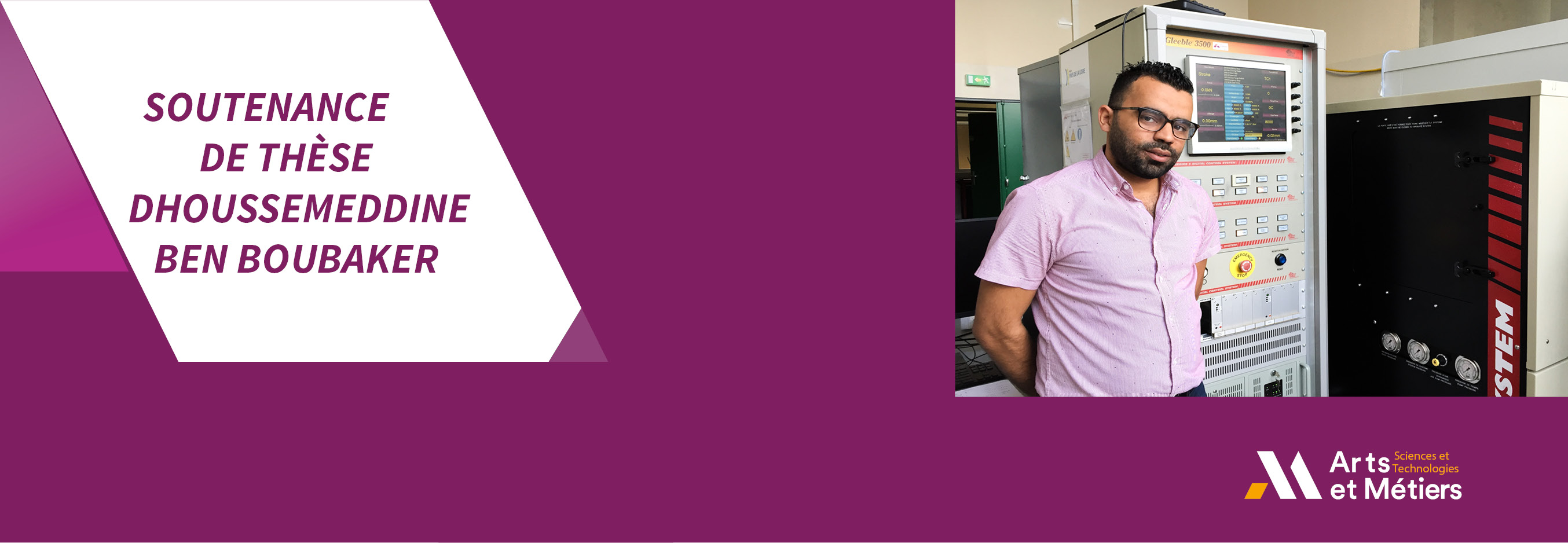
TheLampa laboratory, located on the Arts et Métiers campus Arts et Métiers , invites you to attend the thesis defense ofBEN BOUBAKER Houssementitled"Development of crystal-scale modeling of a titanium alloy for machining simulation."
THESIS TOPIC
Titanium alloys, thanks in particular to their low density and good mechanical properties, have seen their use increase in recent years. However, because these materials are refractory, they are difficult to machine. Improving the machinability of these alloys is therefore an important challenge, but it is difficult to understand the mechanisms that cause this poor machinability based solely on experimental tests. The use of numerical modeling is an effective alternative that provides access to local and instantaneous physical quantities, facilitating understanding of the chip formation mechanisms. Most numerical machining simulations are based on modeling in which the material is considered to be macroscopically homogeneous. These simulations provide an overall estimate of the mechanical, thermal, and tribological phenomena generated by cutting. They do not, however, highlight the effect of microstructure on the machinability of the material.
The main objective of this study is to develop a behavior model suitable for modeling the machining of Ti17 titanium alloy. Due to its large grain size (on the order of a millimeter), taking microstructural heterogeneities into account is an essential part of the modeling approach, which uses crystalline plasticity laws. A homogenization law written at the local scale allows the heterogeneous nature of Ti17 to be taken into account. While the objective of this work is to construct a numerical model at the crystal scale, it is nevertheless necessary to characterize the behavior of the Ti17 titanium alloy at this scale. A parameter identification procedure based on tensile, compressive, and shear behavior curves is proposed. The viscoplastic and damage behavior of the two phases of the alloy has been characterized. Finally, the digital model makes it possible to predict the effect of microstructural parameters, such as crystal orientation, and cutting parameters on chip formation mechanisms.
PRACTICAL INFORMATION
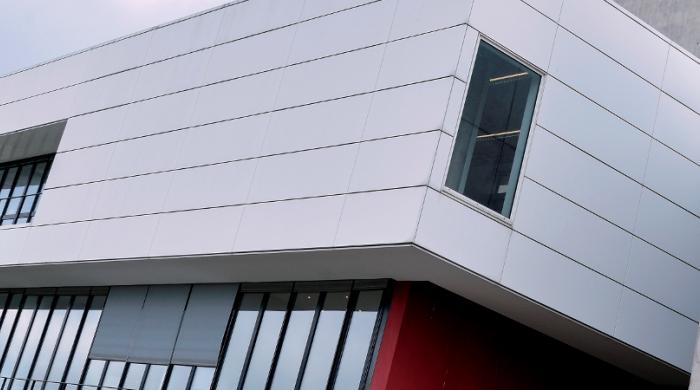
Arts et Métiers Campus in Arts et Métiers
2 Boulevard du Ronceray, 49000 Angers, France
At 10 a.m. in the Council Chamber