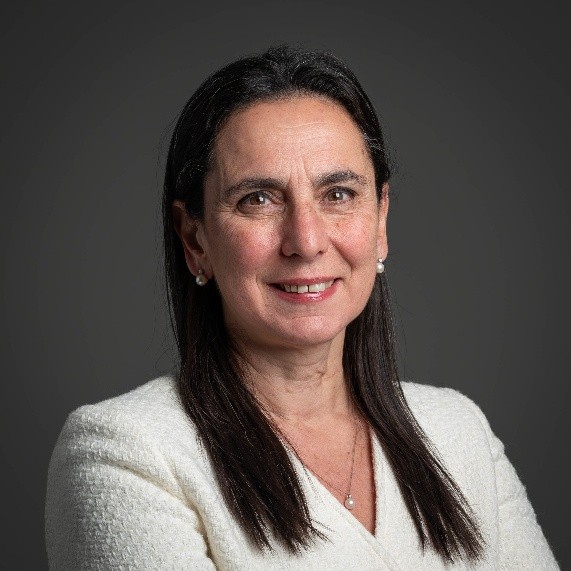
After spending two months at Arts et Métiers a visiting professor, Maria Pina Limongeli reflects on her collaboration with Professor Nazih Mechbal, the benefits of international research, and the opportunities offered by this scientific partnership.
This diversity enriches our research and allows us to approach challenges from different angles.
What were the reasons that led you to accept this invitation to Arts et Métiers
My decision to accept this position as a visiting professor was primarily motivated by the opportunity to initiate a collaboration on the monitoring of composite structures, a topic that bridges my background in civil engineering and Professor Nazih Mechbal’s expertise in aerospace systems. We first met at a conference in the United States a few years ago, where we discovered our shared interest in sensing technologies and data processing algorithms. Although we work in different fields, the tools and approaches we use are quite similar. This common ground prompted us to explore how techniques derived from aerospace composites could be adapted to civil engineering applications, such as wooden buildings and bridges. The idea of transferring knowledge between these fields—particularly in a context where sustainability and the circular economy are becoming increasingly important—was one of the main motivations for this collaboration.
Our collaboration began with discussions at international conferences and evolved into a joint research initiative. We then organized a workshop that brought together colleagues from Sweden, France, and Italy, as well as industry partners. The goal was to foster the creation of an interdisciplinary network focused on the condition monitoring of composite structures, with an emphasis on both research and practical applications. We hope to establish ties with industry to understand the challenges, explore opportunities for joint projects, and investigate funding possibilities. Professor Mechbal played a key role in inviting French colleagues and forging these connections.
How did you feel during your two-month stay?
Paris isn't a new city for me—my family lives there and I spend a lot of time there—but Arts et Métiers a new environment. I was impressed by the range of laboratories and testing facilities available. This opens up exciting possibilities for new collaborations between my home institution in Milan and Arts et Métiers. It has been very helpful for me to learn about the culture of hands-on research and to identify areas where our teams can work together in the future.
In your opinion, what is the main benefit of scientific collaborations with other countries? Is there anything you particularly appreciate about your collaborations with France or with Arts et Métiers
International collaborations are invaluable for launching new research initiatives and strengthening existing ones. I have been fortunate to work in several countries, and each experience has provided me with new perspectives and opportunities. Collaborations are often most effective when they revolve around specific projects, such as doctoral student exchanges, where everyone has clear objectives. What sets Arts et Métiers apart is its unique range of testing facilities, which complements the expertise and resources of my home institution. This diversity enriches our research and allows us to approach challenges from multiple angles.
What sparked your interest in your research topics?
My interest in structural health monitoring began during my Ph.D., which focused on seismic monitoring in Italy, a country prone to earthquakes. Over time, my research has evolved from studying masonry structures subjected to seismic loads to monitoring bridges under operational conditions. The tragic collapse of a bridge in Genoa in 2018 sparked enormous interest in structural health monitoring systems, which have since become a priority in Italy. Collaborating with experts from the aerospace sector, where structural health monitoring is more widespread, has been particularly inspiring and has broadened the scope of my work.
When did you decide to become a researcher?
I decided to pursue a career in research immediately after earning my Master of Science degree. I’ve always loved studying and learning, so continuing on to a Ph.D. and then staying in academia seemed like a natural choice. During my Ph.D., I considered other options, but in the end, I found that research was the most fulfilling path.
What advice would you give to students interested in a career in research in your field or in any other field?
My main piece of advice is to strive for independence and curiosity. While it’s important to learn from your supervisors, it’s essential to become self-reliant and proactive, particularly when it comes to writing proposals and securing grants. Research is a rewarding career for those who are passionate about discovery and learning, but it’s not the best path for those who are primarily motivated by financial gain. Freedom and intellectual stimulation are the true rewards of this profession.
About Maria Pina Limongeli
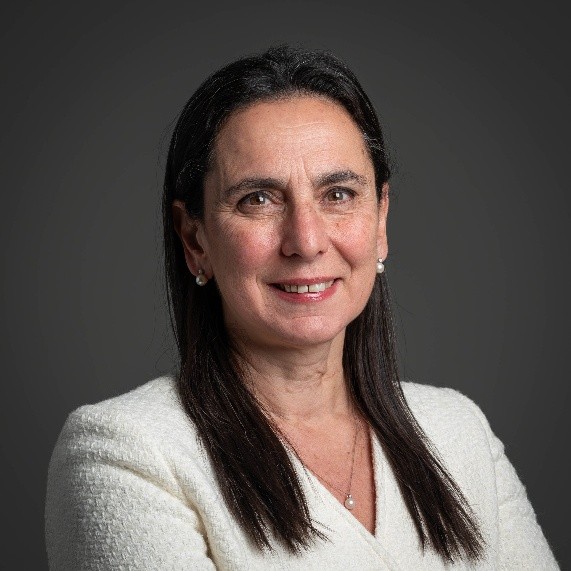 Maria Giuseppina Limongelli is a recognized expert in seismic engineering and structural health monitoring (SHM). She holds a degree in civil engineering from the Politecnico di Bari and a Ph.D. in seismic engineering from the Politecnico di Milano. After gaining experience in the field of engineering consulting, she pursued an academic career at the Politecnico di Milano, where she is currently an associate professor and teaches several courses on structural analysis and design. She leads the SPM3 research group, composed of 17 engineers, and has supervised numerous doctoral and Master of Science students. Her scientific work is reflected in more than 180 publications, significant involvement in European and national projects, and leadership roles on international scientific committees. She is also vice president of the IABSE and a member of several European standardization and policy committees.