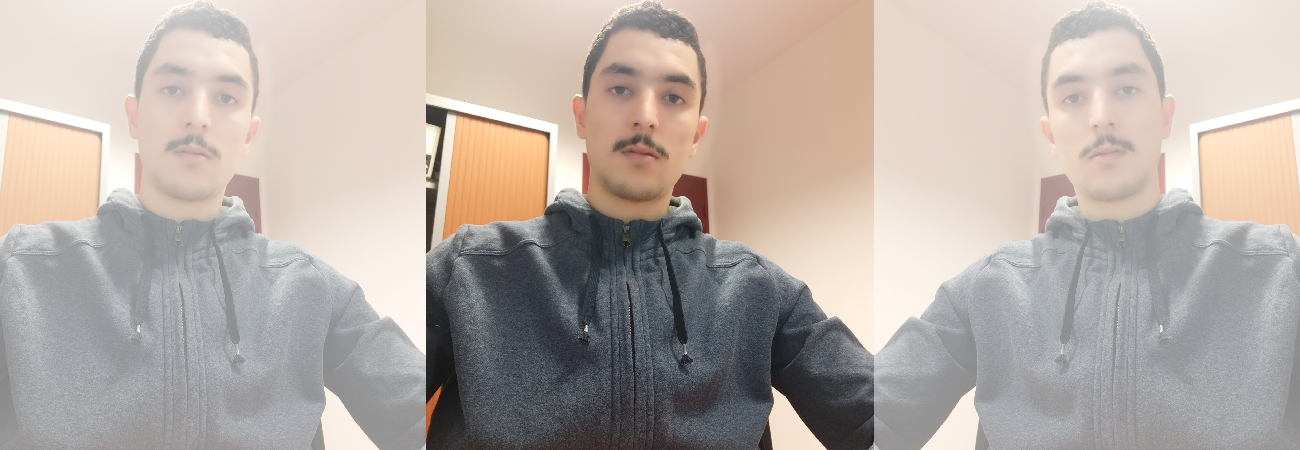
As part of the joint laboratory and chair between Arts et Métiers ESI group, Mohammed El Fallaki Idrissi has begun his thesis on predicting the behavior of composite materials using Artificial Intelligence. Interview with this doctoral student who is passionate about research.
What is the subject of your thesis?
In industry, there is a constant drive to size and optimize composite structures. To do this, multi-scale methods are often used, i.e., modeling methods involving calculations at several scales (micro and macro). However, these methods are very time-consuming.
In my thesis, we seek to use the new paradigm of Artificial Intelligence to predict the behavior of composite structures in a reduced calculation time while maintaining a high level of accuracy.
How do we use AI to do that?
Using artificial intelligence tools and dimensional reduction methods, we will be able to process and analyze the data. This data will be collected from both experiments and numerical simulations. Based on these techniques, we will be able to predict the response of the composite structure from its microstructure.
What benefits are expected for the industry?
The main benefit will be reduced computation time, which facilitates the process of designing and optimizing composite parts and structures in real time. This will enable engineers to make the right decisions in less time.
It will also help researchers better understand the effects of microstructural parameters on the macroscopic response of composites. They will also be able to obtain the response of the composite structure by changing its microstructural parameters without having to redo the calculations each time.
Why aren't these methods already in use?
Even though there is a lot of talk about AI, it is relatively new, especially in the field of composite materials and their damage. Furthermore, the use of AI is only possible now that we have sufficient data.
How are you supported in writing your thesis?
I benefit from scientific supervision and a very stimulating work environment. I am supervised by Fodil Meraghni, a specialist in composites in terms of both multiscale modeling and experimental approaches, and Francisco Chinesta, who specializes in digital simulation, artificial intelligence, and model reduction.
This is a great opportunity for me to pursue my career goals in the fields of innovation and research.