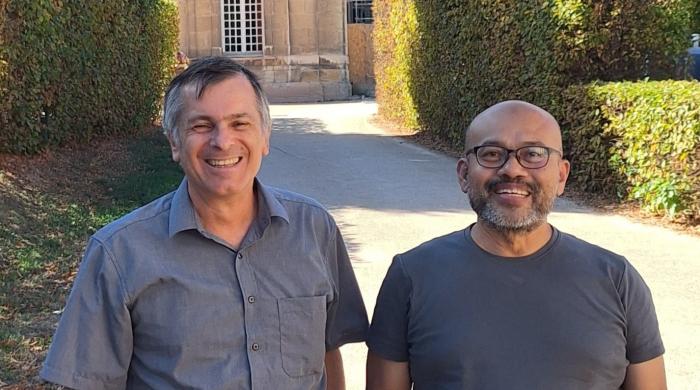
The laboratory LISPEN has been awarded an ANR Young Researcher projectproject, led by Arnaud Polette, a lecturer and researcher at the Arts et Métiers campus Arts et Métiers . The GENERAT3D project aims to automatically generate multimodal data from mechanical part assemblies for machine learning in product reverse engineering.
The objective of GENERAT3D is to develop methods for automatically generating large volumes of data to feed machine learning methods for reverse engineering mechanical parts and assemblies.
Methods for generating artificial data for machine learning
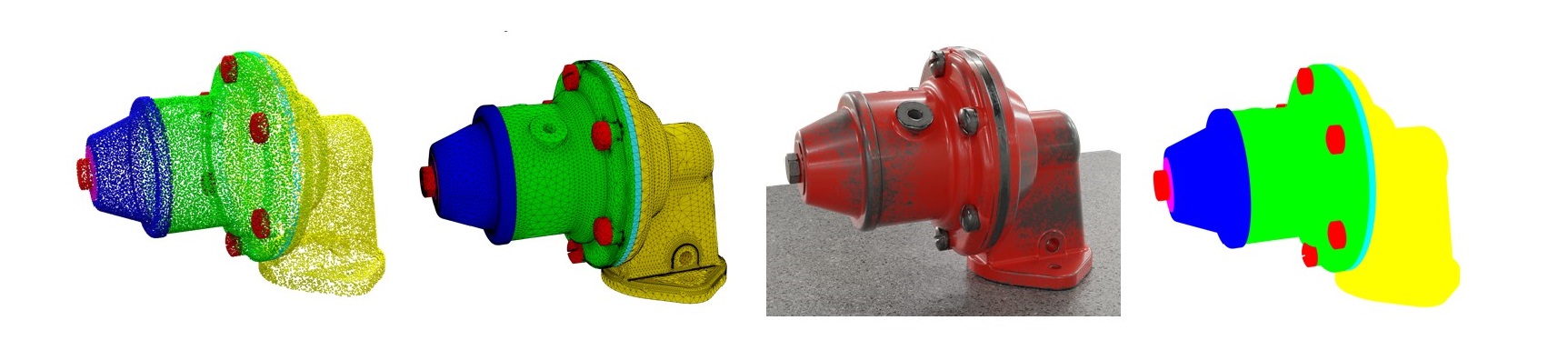
Collecting and labeling data for machine learning can be a time-consuming task, especially in the multimodal context of product reverse engineering, where it is necessary to have labeling by part and by assembly in several types of 2D and 3D representations. To this end, methods for augmenting CAD data, generating photorealistic images, "as-scanned" point clouds, and depth maps will be developed. Case studies using this data will be developed during the project to illustrate its applications.
Expected impacts and benefits for the Industry of the Future
The availability of these methods for generating large volumes of data (as well as already generated data sets) will primarily enable the implementation of new product reverse engineering methods such as reverse engineering assistance or reverse engineering automation.
In the longer term, these methods will also be beneficial to other applications related to systems engineering in the context of Industry of the Future, where machine learning is now making it possible to overcome new scientific barriers, such as product design, real-time operation of digital twins, manufacturing defect detection, and virtual and augmented reality.
Impacts and repercussions for the scientific community
These databases and algorithms will also be designed to function in a community-based manner, so that they can be disseminated, enriched, and shared with different scientific communities. For example, they could serve as a common benchmark for projects related to CAD, geometric modeling, computer graphics, and many other scientific communities involving 3D and image processing.
The databases generated by these methods could be shared in the form of an interactive web page freely accessible on the laboratory's website.
The results, algorithms, methods, and experiments obtained will also be disseminated through various international journals, as well as in national and international communications.
Impacts and benefits for the institution
The databases and generation algorithms developed during the project will open up numerous avenues of research in this field within the current scientific landscape, where digital data is a valuable resource. The data produced can also be used in the institution’s educational programs, particularly for Master of Science students Master of Science doctoral candidates.
Thanks to what funding?
The budget allocated by the ANR to GENERAT3D is 172,000 euros. It will fund the doctoral thesis of Lucas Vergez who joined the Aix-en-Provence campus in early January 2021 for a three-year term, as well as two Master of Science interns.
Project duration: 42 months
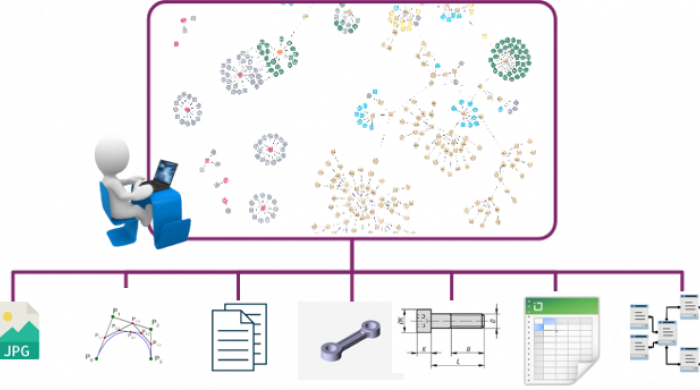
Multimodal data: point cloud, mesh, photorealistic image, labels | Photo credit: Arnaud Polette
Contact: arnaud.polette@ensam.eu