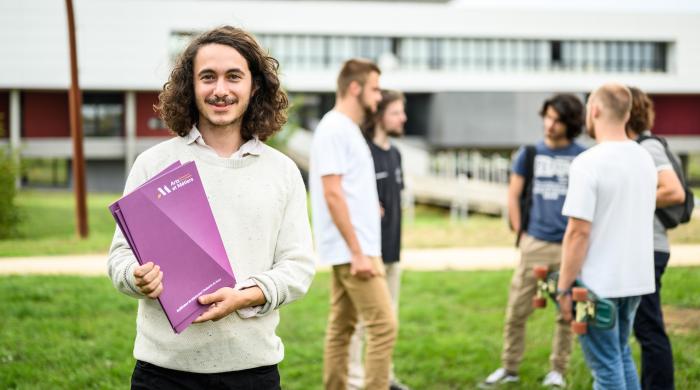
Discover the career pathof Étienne Mallo, a former student Arts et Métiers the Arts et Métiers Grande École Program, for his contribution to the design of the Olympic and Paralympic Cauldron for Paris 2024 with EDF.
The context of the design of the Basin
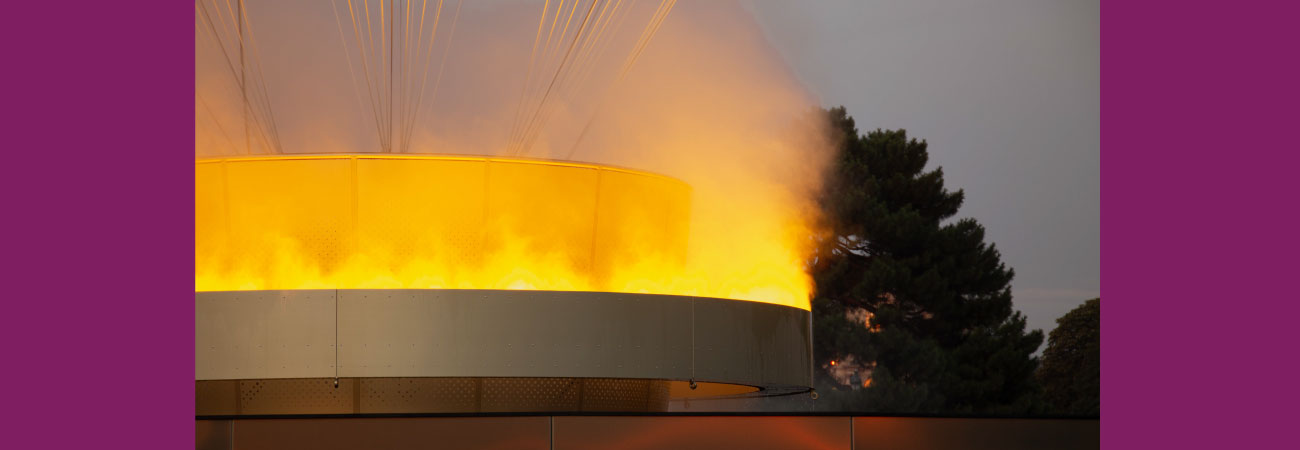
Designed by Matthieu Lehanneur, EDF contributed to the design of the Paris 2024 Olympic Cauldron by proposing an electric, low-carbon flame.
Work on the genesis of this flame was carried out in 2021 and 2022 atEDF Pulse Design, a department attached to EDF's Innovation and Pulse Programs Division, where Étienne contributes.
It was therefore in 2023, after the Vasque project had been approved, that EDF teams and their industrial partners began designing the flame ring.
Étienne's role at EDF Pulse Design
EDF Pulse Design supports the group's business lines and subsidiaries on innovative projects by understanding their needs and offering concrete solutions to clients through immersive deliverables or functional prototypes.
On this project, Étienne and the team (Alix Auvin, Lucile Brugière, Louis Charron, Guillaume Foissac, and Logu Kirouchenaradjou) worked on researching an electric flame: from drawing up the specifications to developing solutions. Gradually, they attracted the attention of the Paris 2024 organizing team and the IOC.
Étienne also contributed to the second phase of the project by developing dedicated prototypes to refine the initial proposals and test the technological modifications required for the design of the flame ring, before handing over to the industrial partners led by Axel Morales.
Working on this project has been a very rewarding experience, made enjoyable by our close-knit and supportive team. My training as a general engineer Arts et Métiers invaluable in meeting technical requirements, but also in terms of creativity and teamwork.
The development of the flame ring in several stages
- Monitoring and state of the art: understanding the symbols of the Vasque through an in-depth study of previous creations in order to propose a low-carbon version that respects the codes specific to this object and the traditions associated with it.
- Testing and prototyping: conducting tests based on desired improvements and lessons learned from previous prototypes to create a visual effect that closely resembles the oscillations of a flame.
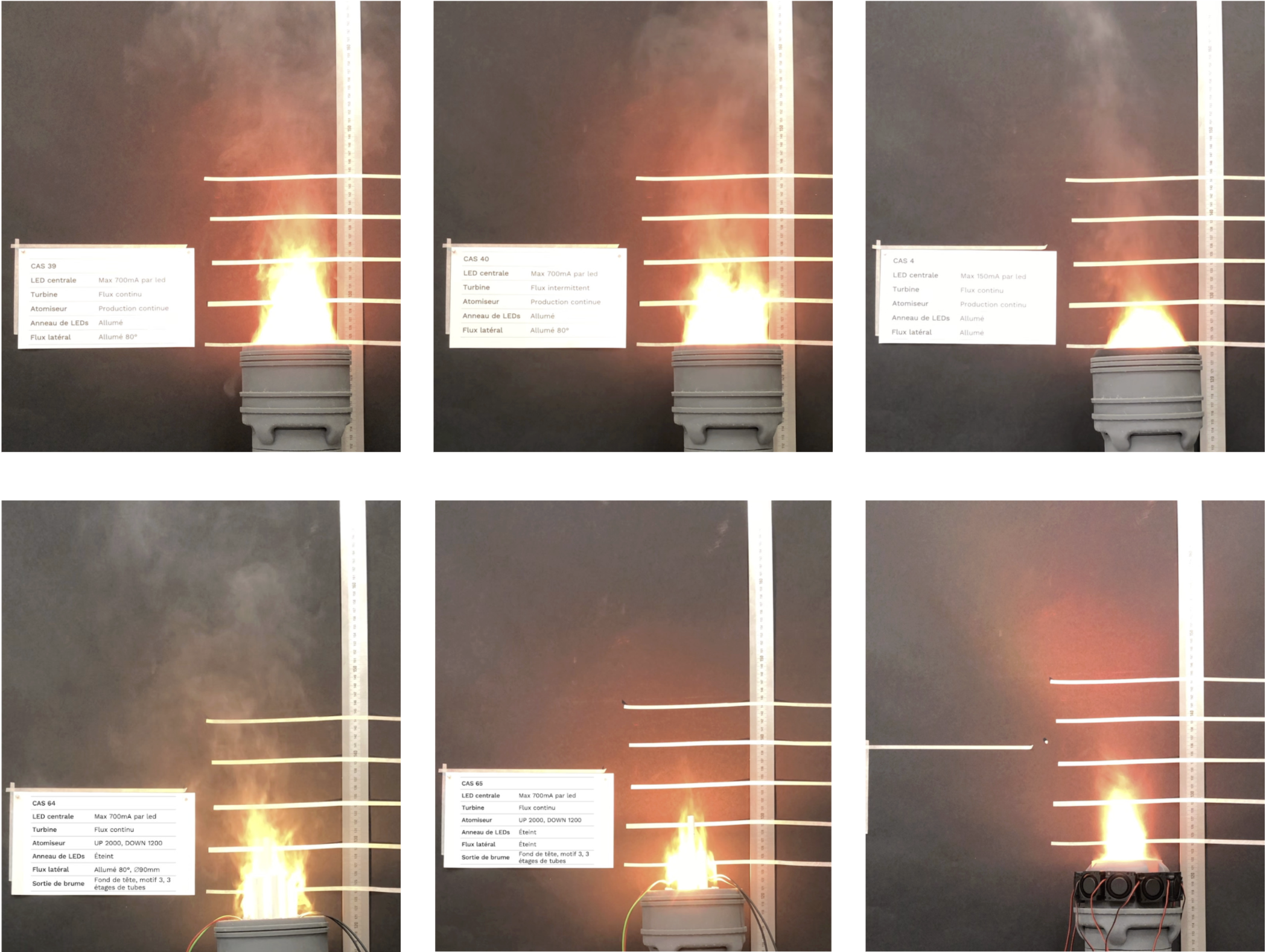
- Integration: present the prototypes to the Paris 2024 organizing committee and the IOC for approval.
- Industrialization: scaling up to define the technical requirements for designing the flame ring on the Vasque alongside industrial partners such as Atelier BLAM, Belle Environnement, and Aérophile.
The complexity of the electric flame
While creating a fake flame is nothing new, the complexity lies in the diffuser and how it receives light to reproduce the dynamics of a flame. This project was made possible thanks to the multidisciplinary nature of the team.
The behavior of the electric flame is made possible by a combination of mist, air, and light flows, governed by a set of conduits and electronic components. Interpreting this rendering and being creative in developing new implementations was essential.