This Specialized Master's® degree trains engineers to design renewable energy production units that are best suited to the meteorological, geographical, and economic conditions of a given site or region.

This renewable energy training course makes the most of the complementary nature of different forms of renewable energy, both in relation to each other and in combination with traditional energy sources and the electricity grid. The course also covers regulations, economic performance assessment, project management, and thermal issues in buildings. The integration of renewable energies into buildings and the electricity grid, and their acceptance by society, are all conditions for their successful development.
This renewable energy training program offers a unique balance between technical expertise and managerial skills. Thanks to a comprehensive curriculum, it provides in-depth knowledge in the design and optimization of systems using renewable sources such as photovoltaics, wind power, biomass, and geothermal energy, while taking into account thermal, economic, and societal constraints. It also trains participants to manage complex projects by integrating issues of regulation, integration into the electrical grid, and social acceptability. With a pragmatic approach rooted in industrial reality, this program prepares experts capable of advising local authorities and businesses on sustainable and economically viable energy solutions, thereby strengthening their role as key players in the energy transition.
Program
Educational objectives
- Assess economic performance and then design, in detail, a renewable energy production system in the now traditional fields of photovoltaics, hydraulics, wind power, and solar thermal energy, but also in the use of biomass or geothermal energy, combined with cogeneration, trigeneration, or energy storage systems.
- Advising as an expert:
- local authorities and administrations in order to select and define the elements of an energy policy that promotes more sustainable development and is economically viable.
- companies to study, under economically attractive conditions, the supply of energy from renewable sources.
Content and access times
Full-time training takes place in two phases:
From October to March:
- 400 hours of academic training with validation through written exams or report writing. The courses are divided into 5 modules:
- Introduction to energy and review of the fundamentals of engineering science
- Conditions for the success of renewable energy projects (energy efficiency, societal integration, integration into buildings, into the grid, etc.)
- Solutions that produce heat and then energy
electricity after thermodynamic conversion (solar thermal, biogas, biomass, geothermal energy) - Solutions that directly produce electrical energy (solar PV, wind power, hydroelectricity, H2 vector, etc.)
- Regulations, economics, and management of renewable energy projects
- 100 hours of collaborative operational projects leading students to work in groups on real-world issues faced by companies, associations, or local authorities.
From March to September:
Professional assignment/24-week internship in a company, association, or local authority.
Based on their work and activities, interns are required to take a step back and identify an issue whose resolution will form the basis of their professional thesis, which they will write and defend.
KEY FEATURES
Excellent job placement rate after 6 months: 90% for the last 3 graduating classes.
A highly pragmatic program, accredited by the Conférence des Grandes Ecoles, which stands out for its comprehensive technological content, as well as its economic and societal focus, which aims to provide future graduates with both:
- a detailed overview enabling the selection and sizing of renewable energy installations,
- a broader vision that allows multiple constraints to be taken into account in order to ensure the success of a renewable energy production project.
Practical training with 70% of instructors working in industry.
A collaborative operational project in partnership with an industrial partner, association, or individual.
Projects and professional theses are supervised by an Arts et Métiers instructor Arts et Métiers tandem with an industrial engineering tutor.
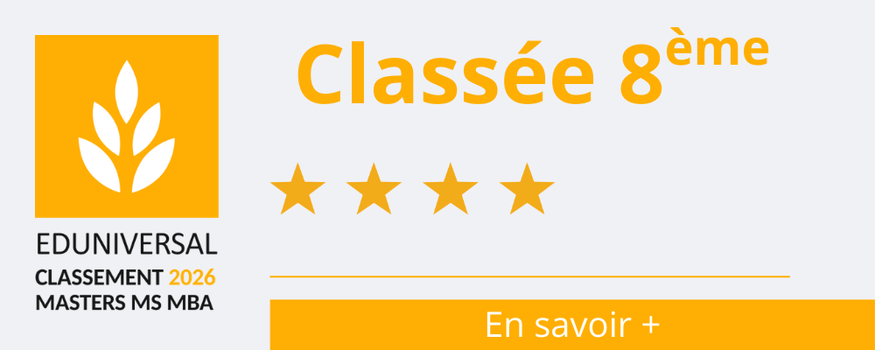
- Ranked 5th in the Eduniversal 2025 ranking of the best Masters, MS & MBA programs in the Renewable Energy category
- Training certification by the competitiveness cluster CAPERNERGIES.
- Training related to the laboratory's research activities LISPEN atArts et Métiers.
- Partners who host our interns or provide speakers, such as: ADEME, Capénergies, CEA Tech, EDF ENR, ENEDIS, ENGIE Green, Enercoop, Hynoé, Syndicat des énergies renouvelables, TECSOL, URBASOLAR, TENERGIE, etc.
- 7.72/10 - Reviews of Specialized Master® EXPPER - Expert in Renewable Energy Projects and Production
OUTLETS
Design Engineer, Project Manager, Project Executive, Energy and Energy Efficiency Consultant,Technical Assistant to the Project Owner (AMO)
Areas of activity: photovoltaic and thermal solar energy, geothermal energy, biogas, biomass, hydrogen sector, storage, energy demand management (EDM)
Graduates join startups, SMEs, and large international groups alike.
They are also employed by local authorities or become business/company founders.
STUDENT RESULTS AS OF SEPTEMBER 2025*
• Graduation rate: 95%
• Exam participation rate: 100%
• Extension rate (additional time to acquire missing skills): 0%
• Dropout rate due to changing companies: 0%
• Notification rate of program completion/interruption during training: 0%
• Rate of continuing education: Figures to be released
• Employment placement rate: 90%
* Find data on past promotions on the Data Observatory page at
https://artsetmetiers.fr/fr/observatoire-des-donnees
Admission requirements and procedure
Profiles:
- Employees
- Students
- Job seekers
Level of education:
- Engineering degree or university degree equivalent to Master of Science (5 years of higher education)
- Master of Science degree ( Master of Science a four-year bachelor’s degree) with three years of professional experience
- Equivalent foreign degree
Admission procedure:
- Admission based on application and assessment interview with a panel ⇒ apply online
- Online applications, review of applications, and interviews: January to mid-July
- Final registration: April to September
- Start of training: October
Teaching methods
In-person, 6 months of theoretical training and 6 months of immersion in a company through an internship or professional training contract, when conditions allow.
Accessibility
This training course may be accessible to people with disabilities. If you are affected, please contact us to see if specific support can be provided.
Bridge program and/or equivalency
Graduates can continue their studies at the doctoral level.
Training cost
- 12,500 euros, not subject to VAT.
- Application fee: €75
- Individual administrative advice can be provided to job seekers and employees.
Training may be eligible for funding depending on the trainee's situation and various criteria.
Several solutions are available: Professionalization Contract, Transition Pro, Pôle Emploi, etc. To find out what funding you are eligible for and how to access it, please contact us by email at: ContactAMTALENTS@ensam.eu
Program language: French
ECTS credits: 75
Contacts
- Julien GOMAND, Program Director: ms-enr@ensam.eu - Tel: +33 (0)4 42 93 81 20
- Address: Arts et Métiers Campus Arts et Métiers : 2, cours des Arts et Métiers 13617 Aix-en-Provence