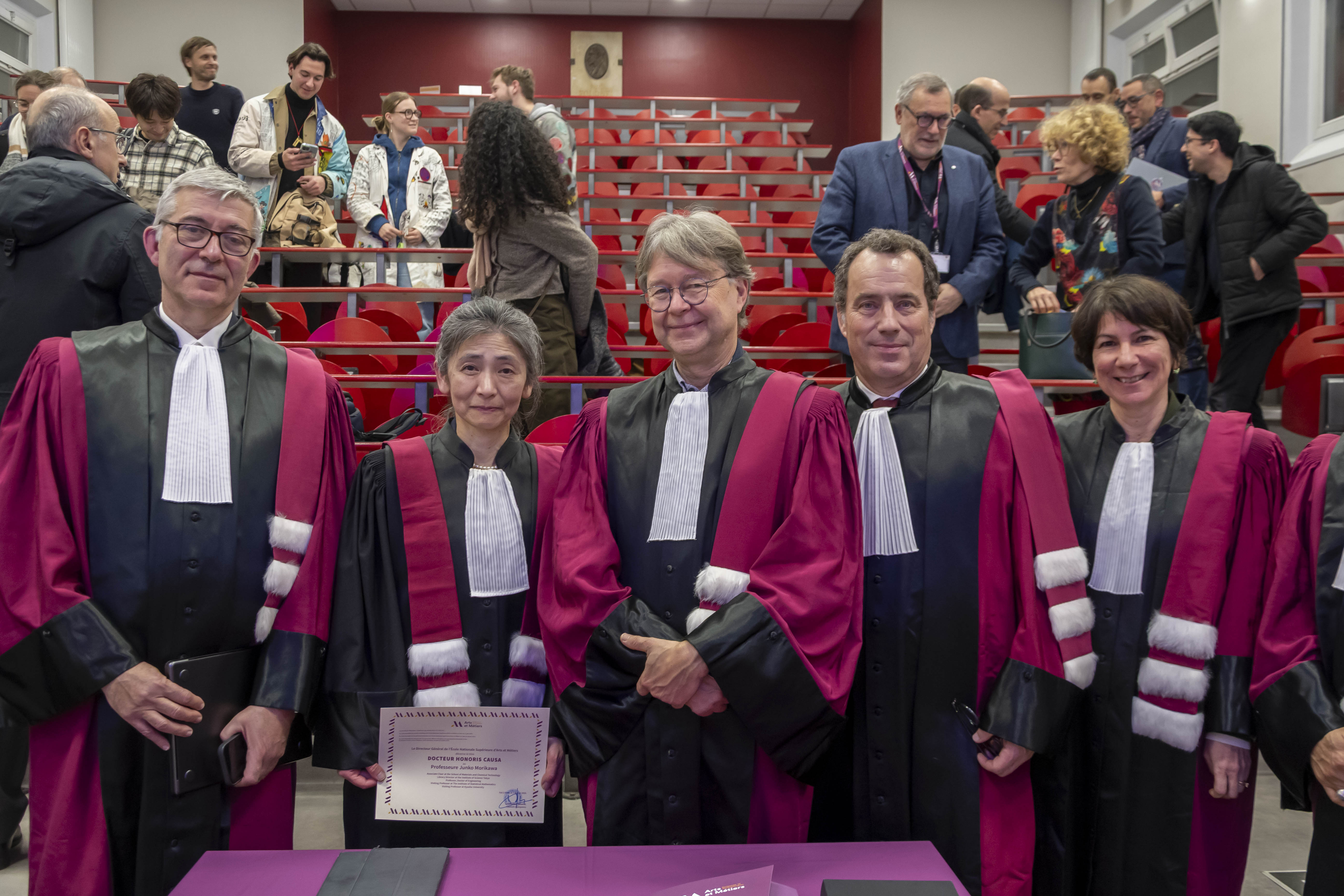
For nearly twenty years, the Bordeaux-Talence campus of the Arts et Métiers has been developing close scientific collaborations with Japan, particularly with Science Tokyo. Researcher exchanges, the sharing of expertise and equipment, and joint research and training projects are helping to build a lasting partnership centered on common challenges related to energy and the technologies of the future.
A long-term scientific and human collaboration
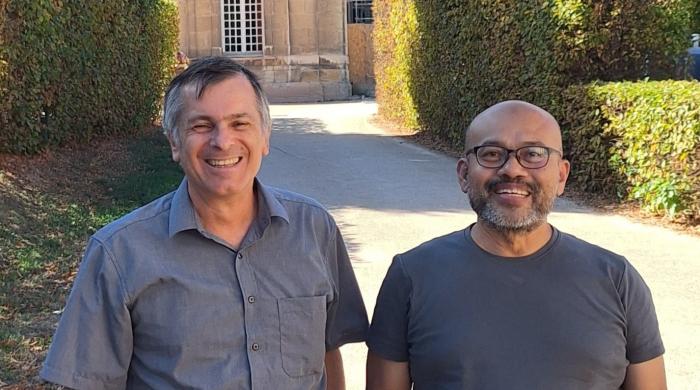
For nearly twenty years, researchers at the Bordeaux-Talence “ Arts et Métiers ” campus and Science Tokyo have been pooling their expertise to address the energy challenges of the future. This collaboration began with a meeting between Jean-Christophe Batsale, a university professor at the Bordeaux-Talence “ Arts et Métiers ” campus, and Junko Morikawa, a professor at Science Tokyo.
This collaboration is based, in particular, on a strong synergy: the advanced instrumentation and microscopy developed in Japan are combined with the mathematical modeling and signal processing methods developed in France. The teams are thus seeking to observe and understand energy transfers on extremely small scales in order to better comprehend much larger and more complex systems.
As part of this initiative, Jean-Christophe Batsale regularly travels to Japan to conduct his research and teach. Other scientists from the I2M laboratory have also participated in these exchanges; for example , Stéphane Chevalier, a lecturer on campus, spent time in Tokyo in 2025 to continue his work on energy microscopy and microfluidics. Jérémie Maire, a research fellow at the CNRS, spent several years in Tokyo during his early career as a researcher.
But scientists don’t just exchange instruments and data; methods and ways of thinking about science are also shared. The mathematical methods developed on the French side—with equations solved by hand on the blackboard—have, in particular, sparked keen interest among Japanese partners.
Cooperation Focused on the Energy Challenges of Tomorrow
French-Japanese cooperation is currently exploring a key issue: How can we develop and manage the energy transformations of the future? Energy microscopy, microfluidics, electrochemistry, and hyperspectral tomography enable the study of phenomena that open up very concrete prospects for industry. This research is further supported by partnerships with industry and the development of instruments for companies in the Bordeaux aerospace cluster —such as Safran and Dassault—as well as Japanese firms like Hitachi.
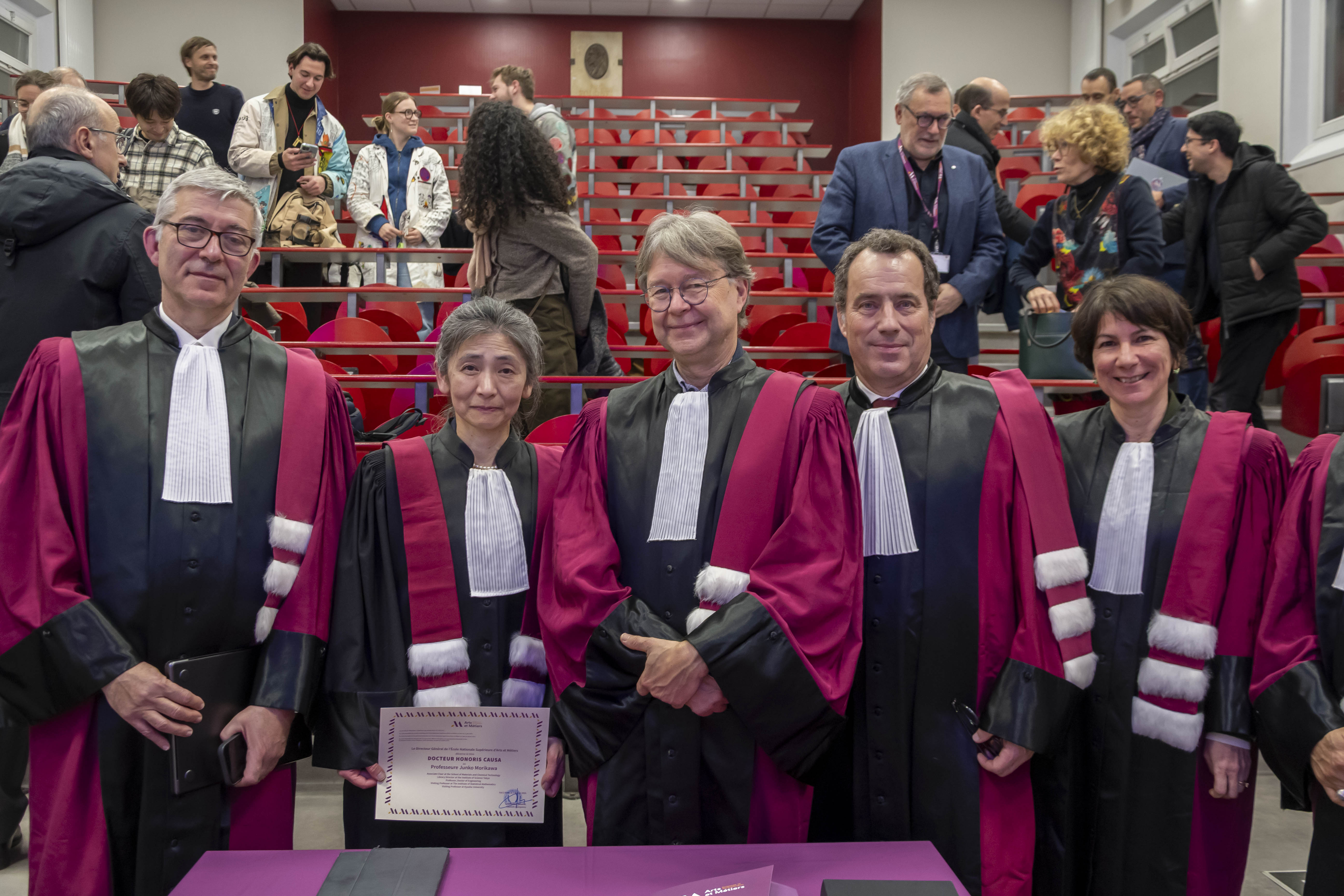
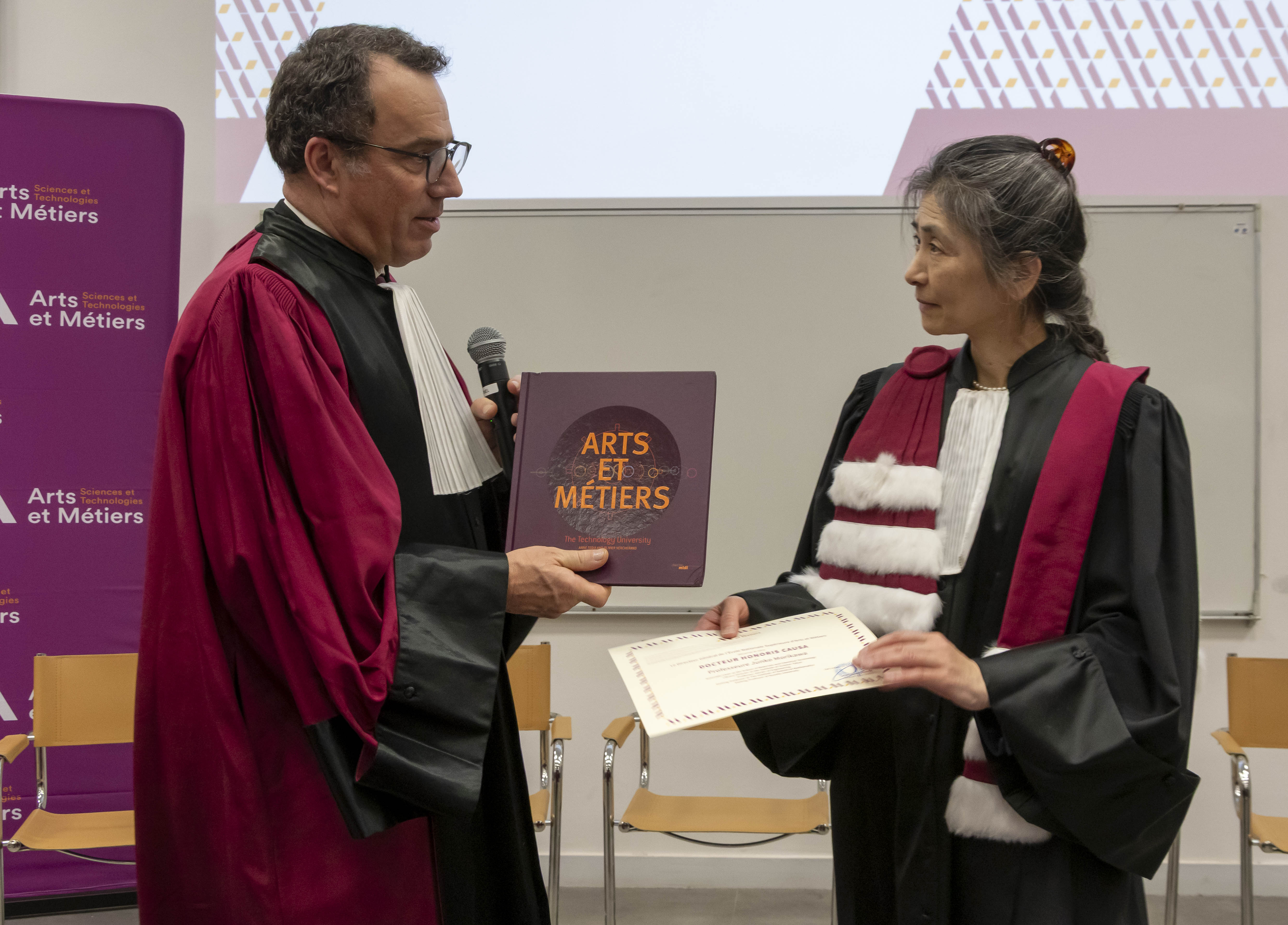
This relationship reached a high point in February 2026 when Arts et Métiers awarded Junko Morikawa an honorary doctorate. This distinction recognizes not only her international scientific career but also her longstanding collaboration with the institution and Jean-Christophe Batsale.
Beyond research projects, this collaboration also fosters cultural and personal dialogue between the French and Japanese teams, centered on shared interests ranging from science to the arts, music, and contemporary culture
This collaboration continues to grow today. Next November, Jean-Christophe Batsale will travel to Japan once again toteach and speak at a plenary conference on the measurement of thermophysical properties, thereby continuing a collaboration that contributes to the international reputation of the Bordeaux-Talence campus.