General engineer, student curriculum, professional training contract, third-year expertise in new energies for sustainable development.
Campus
Arts et Métiers Campus in Arts et Métiers
Objectives
Bring future engineers to a level of expertise that enables them to make relevant decisions in response to system design problems where energy efficiency is a particular focus.
Based on an analysis and energy assessment, they will be able to propose effective, economically viable solutions that lead to a reduction in primary energy consumption and a decrease in environmental impact. They will acquire skills in understanding energy issues and implementing efficient, innovative, renewable, and low-carbon energy solutions, from mastering technology choices to implementation.
The scientific and technological approach acquired by students is inseparable from a thorough understanding of the global energy context. That is why a significant portion of the curriculum is devoted to the global geopolitical context and the physical, economic, and social structure of energy flows.
Engineers specializing in " Energy Issues and Low-Carbon Systems Engineering" have the following specific skills:
- Select and size an energy production or storage system based on multiple constraints.
- Managing industrial and technological projects, R&D and design in the field of energy efficiency.
- Be involved in defining the strategic priorities of private and public companies in the energy and environmental sectors.
- Create and develop innovative businesses and activities.
- Carry out technological, economic, strategic, and forward-looking monitoring in sectors of the future.
Specificity: 2 possible courses of study
This training can be carried out:
- Under standard student status.
- In the form of a 12-month professional training contract.
During this period, the learner is therefore employed by a company (at a minimum of 80% of the minimum wage) and alternates between periods at the School and in the company.
Program
- Module 1 (50 hours): Building an energy policy
What are the objectives in terms of the economic, legal, and societal context?
The most comprehensive presentation possible of the environment in which energy-related issues arise:
• History of energy use, terrestrial energy potential, global geopolitical context, energy outlook
• Energy production and distribution (overview of production sources, transport, and energy networks)
• Regulation and deregulation of the energy market (economic aspects)
• Legislative and regulatory framework
• Biodiversity and climate (environmental, societal, and sociological impact),
• Management of major energy projects
• Scientific controversy (introduction to the scientific method, rhetoric, structuring of arguments and debates)
• Life cycle analysis
- Module 2 (50 hours): Increasing Energy Efficiency: Design Strategy
How can we achieve our goals?
In this second module, the focus will be on methodology, or how to approach an energy problem in general, the development of the main energy production and storage systems, or an energy efficiency issue in a project.
How to use a given problem to identify the elements that will best address the system's energy issues. The skills acquired in the first and second years will be fully utilized here to fuel the discussion.
• Means of energy production and storage,
Operating principles, advantages/disadvantages, performance, scientific challenges and obstacles, implementation strategy. Targeted systems (renewable or non-renewable): wind, photovoltaic, hydroelectric, nuclear, biomass power plants.
• Energy audits,
Analyzing facilities or systems to determine energy saving potential, using methods and means appropriate to the situation (urban complex, premises, manufacturing process, machine, component). The analysis of solutions includes a life cycle analysis.
• Energy efficiency
Based on a situation assessed by an audit, develop a solution to optimize the energy efficiency of the analyzed system based on a technical and economic analysis, from a range of possible solutions.
• Renewable and decarbonized energy.
Particular emphasis is placed on renewable energy solutions with a reduced impact (particularly in terms of carbon), considering the major challenges of climate change and resource supply issues.
- Module 3 (50 hours): Integrating new energies: optimization strategies
Focus on four technologies and themes.
In the first module, the problem was presented and contextualized in terms of energy, economics, society, and the environment.
In the second module, learners acquired the tools they need to structure their thinking and guide their decision-making in the search for greater energy efficiency and the most appropriate energy solution for their objectives.
In this final module, the focus will be more specifically on innovative renewable energy installations, which are currently experiencing strong growth.
The aim is to provide students with the knowledge they need to describe, model, control, integrate, and finally test and measure these specific renewable energy installations. This module also provides an understanding of the technical and scientific details of energy systems in general.
Starting in 2022, three topics will be addressed in particular. They are directly related to the industrial research and development work conducted by the teams of teacher-researchers. These topics are the building blocks of the Lispen laboratory in Aix-en-Provence.
• Photovoltaics.
After a brief overview of the physical phenomenon of photovoltaics, the course will focus more specifically on the choice of panel type and their integration. This requires mastery of a wide range of aspects, from knowledge and determination of supporting structures to energy production management.
• Cogeneration.
This is currently a neglected area of electricity and heat production in France. The solutions studied range from micro-power plants on the scale of individual homes to units of several megawatts, all of which contribute to a significant increase in the energy efficiency of the electricity production process.
• Fuel cells (hydrogen).
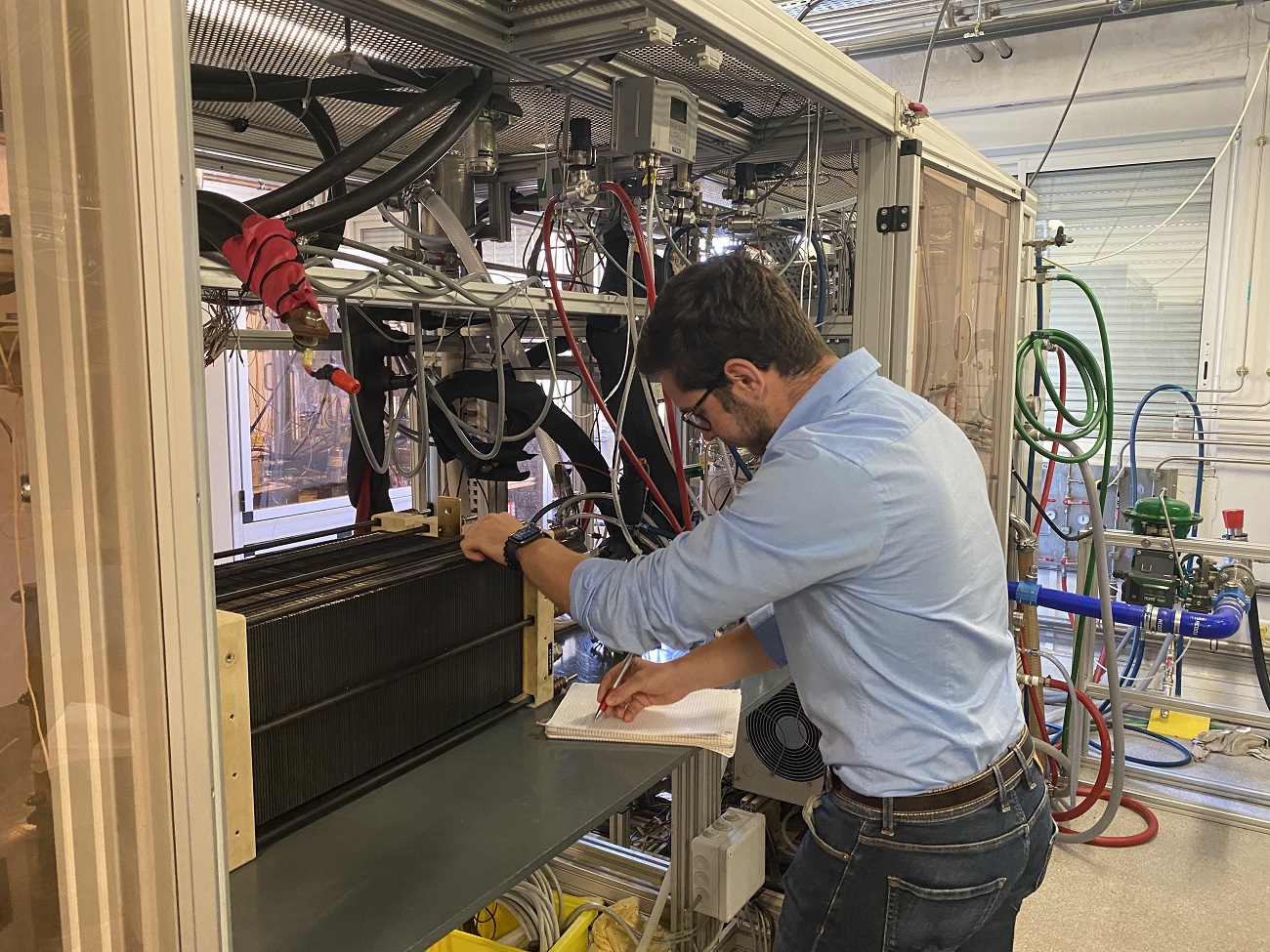
Hydrogen is an important storage vector that can overcome the intermittency issues associated with the development of renewable energy sources. Using an electrolyzer, electrical energy can be converted into hydrogen that can be stored and reused later in the form of electricity via a fuel cell. These technologies therefore represent one of the solutions to the necessary transition of our energy production methods. The focus will be on their technical, industrial, and economic aspects, but also on the medium/long-term prospects for this vector and solutions for producing "green" hydrogen.
• Microgrids.
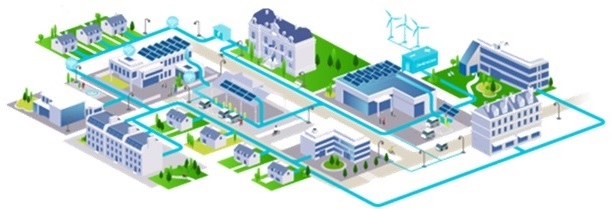
A microgrid is a system that combines energy production, storage, and distribution. Used particularly in isolated locations, they enable partial or complete autonomy for a region and control over its technologies and performance indicators (energy, environmental, economic, and societal). Through economies of scale, they can be generalized to regional energy planning and can be used to simulate the use of different energy carriers and means of production throughout the day. The focus will be on electrical microgrids.
Key scientific and educational leaders in the field
Faculty membersArts et Métiers Pierre GARAMBOIS, Camille FAVAREL, Florian HUET, Julien GOMAND
External contributors: EDF, CEA, VINCI Energies, ENEDIS, ENOGIA, Acelor Mittal, Alstom Hydrogen Power, various SMEs, etc.
Related technology platform
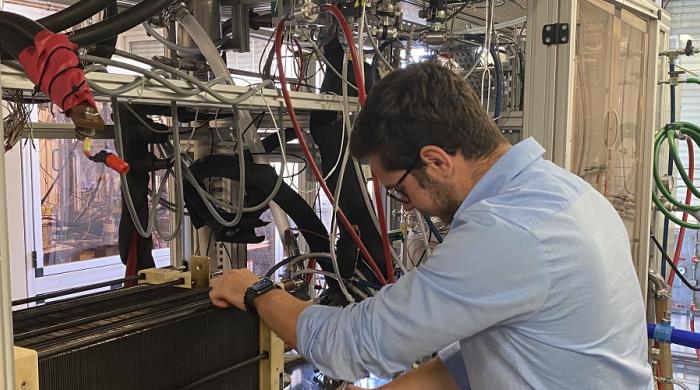
Laboratory technical platform Lispen on the Aix-en-Provence campus
Assessment methods
Continuous assessment and tests at the end of the module.
Partners
- Manufacturers
EDF, EDF EN, EDF Optimal Solutions, ENEDIS, GRDF, CEA, INES, ENOGIA, AREVA, VINCI Energies, Alstom Hydrogen Power
- Institutional
Capénergies, H2 Club PACA
Targeted companies
All companies in the energy sector, as well as all industries wishing to improve their energy efficiency.
Practical information
STUDENT Curriculum
- Required qualification: AMaster of Science ) degree in Science and Technology
- Equivalent international level: Master's degree
- Course language: French
- Period: Late September to early February in class + February to September in a company
- Number of hours
- 150 hours of specific classes and lectures
- 128 hours of project work
- At least 24 weeks of work experience
- ECTS credits 13
Professional Training Contract Program
- Required qualification: AMaster of Science ) degree in Science and Technology
- Equivalent international level: Master's degree
- Course language: French
- Period: from September to the end of August
- Number of hours:
- 150 hours of specific classes and lectures (identical to the student curriculum)
- 40 weeks in a company
- In practice, the first semester is identical to the student curriculum for classes, with the exception of the final project days, which take place in a company for students on professional training contracts. The second semester is identical (in a company) for both curricula.
- ECTS credits: 13
Contact
Head of Education: pierre.garambois@ensam.eu
Corporate Relations Department: magali.fournie@ensam.eu
Registrar's Office: contrats.pros.aix@ensam.eu
Keywords
#Environment #Energy #EnergyPolicies #EnergyAudit #EnergyEfficiency #EnergyManagement #RenewableEnergy #EnergyFlow
> Read the testimonial of Thomas Grosjean, who completed his work-study engineering program as part of a professional training contract.
Don't hesitate to choose this type of training. For those who are starting to get a little tired of the school routine, it's a great opportunity. Plus, don't forget that you'll be paid throughout the year. The transition from school to work will be a gradual one.