Like many students, Louis took a break before finishing his studies.
Last year, he decided to take a gap year to devote himself to a personal project that was close to his heart. Here's a look back at an experience that was enriching in every way.
What is your academic background? Where do you rank in your class?
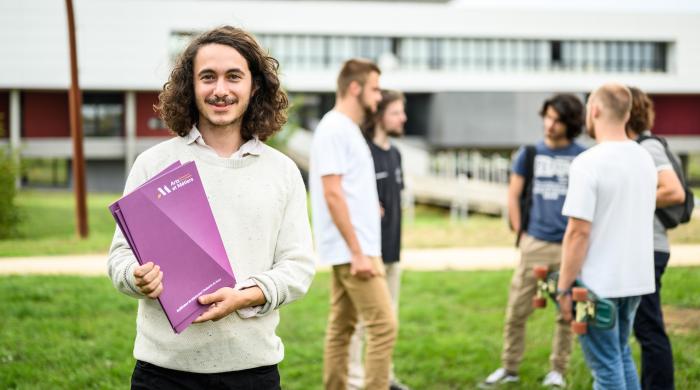
After two years in preparatory classes for the grandes écoles, I enrolled Arts et Métiers the Aix-en-Provence campus, where I spent two years. Alongside my studies, I was involved as president of the photography association and a member of the student union.
After that, I decided to take a gap year to focus on a personal project: an international humanitarian mission.
I am now pursuing a dual degree with IAE Aix-Marseille for a Master of Science Business Management. This will allow me to gain a deeper understanding of management and project management.
Why did you take a gap year?
During my first two years of training on campus, I discovered many academic disciplines and a great sense of camaraderie within the Gadz'Arts community. However, after those two years, I still didn't know how to focus my third year between the many areas of expertise on offer and my desire to have a personal experience that would open my eyes to the world.
So I asked to take a gap year. My plan was to do an internship and then an international humanitarian mission. All I had to do was find the mission and the organization to go with, as I had already found an internship.
How did you organize your gap year?
At first, I did a three-month internship at Assystem to learn about the engineering profession and in the hope that it would help me decide what to do next. This allowed me to apply what I had learned at Arts et Métiers to real industrial problems. Thanks to this internship, I realized that project management suits me better than working in a design office.
Then I looked for another way to get involved. Service is one of the values of the Scout movement, of which I am a member. I decided to go on a six-month humanitarian mission.
The idea of having plenty of time to discover, understand, and get used to a culture that was completely foreign to me excited me greatly.
I had a bit of trouble finding an NGO that wasn't involved in "voluntourism," where volunteers don't have any real tasks and are only there to bring in money. This kind of trip is very expensive for six months.
Luckily, I found a very reputable NGO called "Pour un Sourire d'Enfant" ( www.pse.ong) in Cambodia. For more than 25 years, PSE's mission has been to lift Cambodian children out of extreme poverty and lead them to skilled, dignified, and well-paid jobs by providing comprehensive care for their needs and educational programs ranging from early childhood to vocational training. Their motto is: "From poverty... to a profession." This year, more than 6,500 children are benefiting from these programs!
Tell us about your experience!
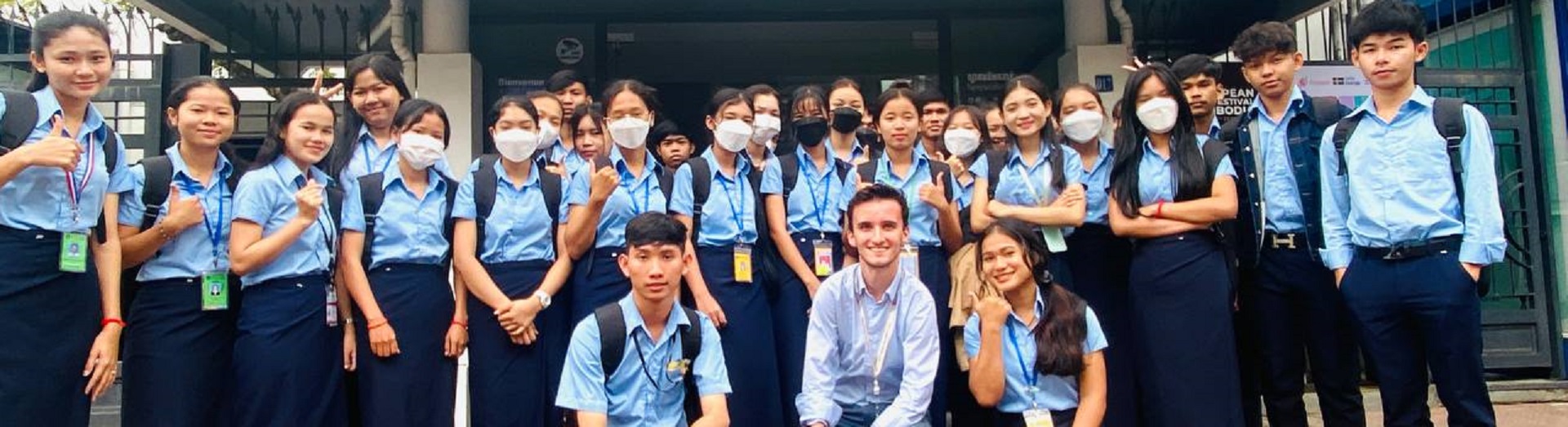
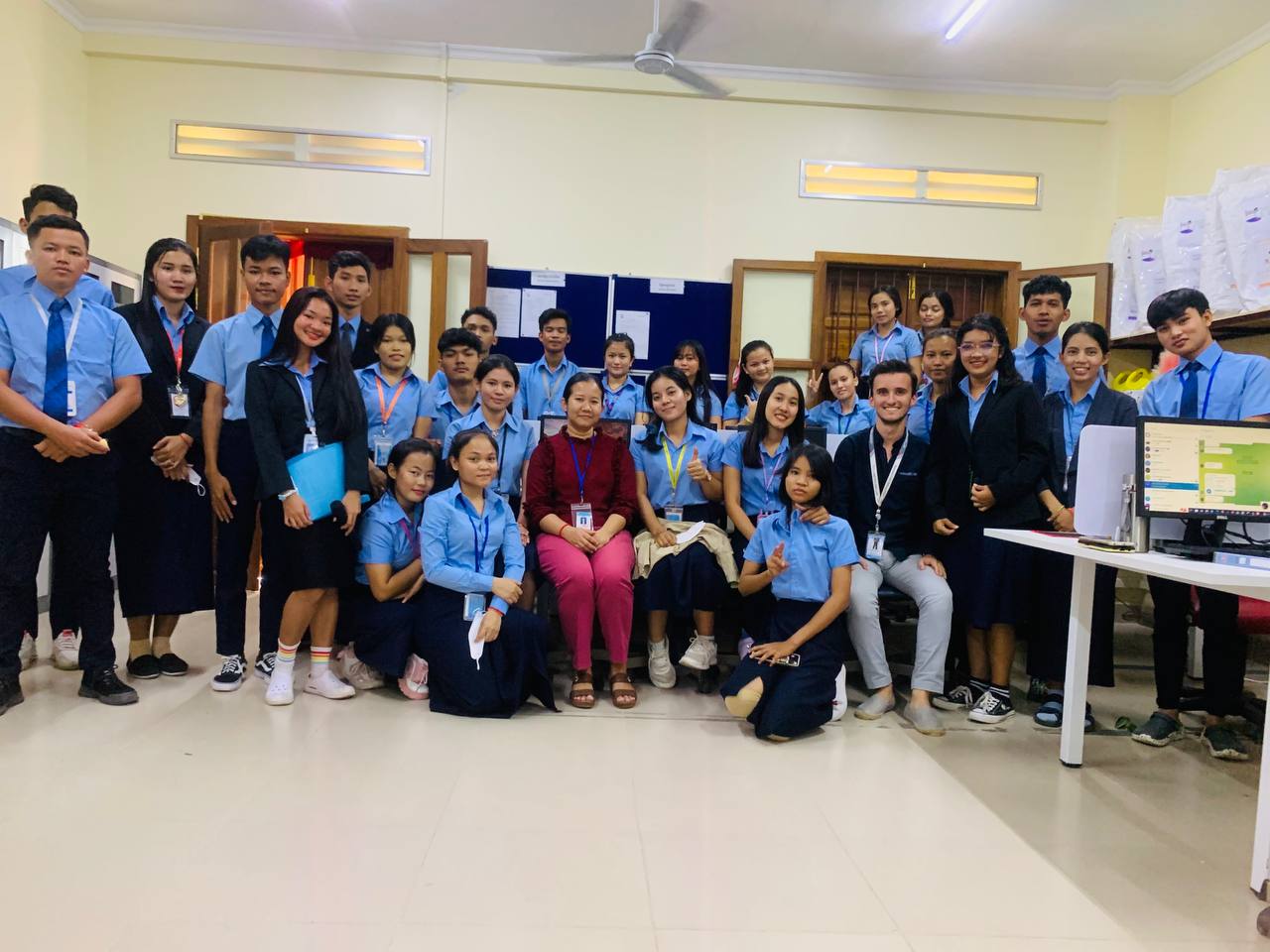
I worked at the Professional Training Institute (PSE-I) in the School of Business as an assistant to the director.
My duties were varied: organizing conferences with international speakers, assisting faculty with company visits, proofreading students' resumes, implementing mentoring programs, and planning mock interviews to train students.
But my contribution as a volunteer didn't stop there! I was able to take part in many other activities: looking after babies at the PMI (maternal and child welfare center), giving evening classes to students, participating in scout activities at the weekend... Overall, I was very busy during my six months there.
What have you learned from your experience?
This experience was fabulous!
It was a big challenge for me to leave for so long and so far away: arriving in a new country where I knew no one, with a language I didn't know and a culture so different.
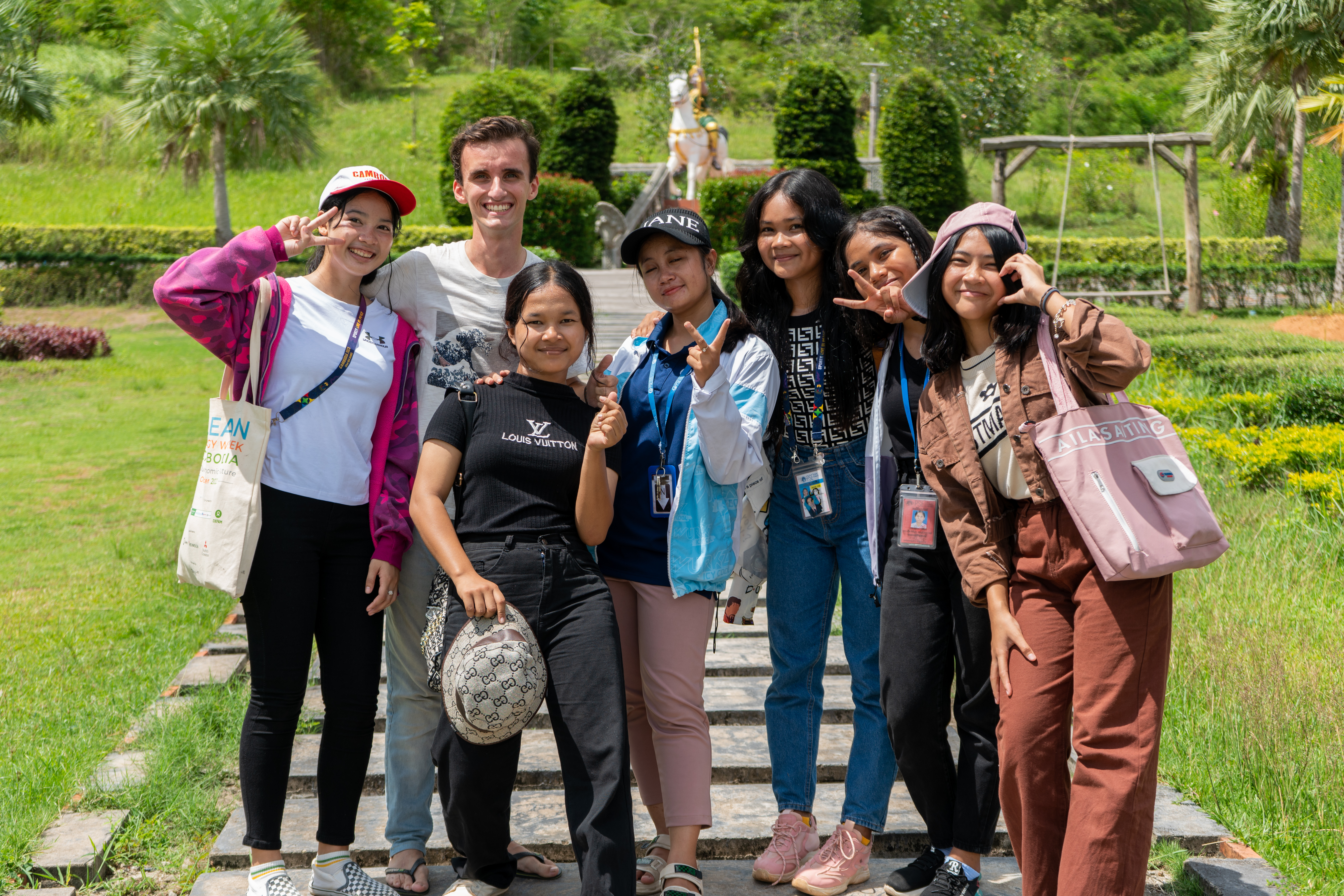
But the welcome went very well and I quickly settled in. I also had the opportunity to visit much of the country, which was very enriching, and the chance to learn the basics of the local language: Khmer. This made conversation much easier and, above all, meant that I was no longer just a "tourist" but someone seeking to discover the local culture.
The most rewarding and exciting part is meeting the students: they all have difficult backgrounds, but they do their best to work hard because they know it's their only way out.
I was able to form genuine friendships with them, both students and staff. The goodbyes were very sad. I have only one desire, and that is to return to see the students again and witness their progress.
What if we had to do it all over again?
I can only encourage students who would like to embark on a humanitarian mission! They won't regret it. But it's important to do your research and find out as much as you can about the organization beforehand.
I think it makes sense for students who are unsure about their career path to take a gap year. This gives them the time and opportunity to do a longer internship.
Then, if the opportunity arises, I would love to return to Cambodia as a VIE (international corporate volunteer) or VSI (international solidarity volunteer).
As a growing trend, an increasing number of students are temporarily putting their studies on hold to focus on professional or personal projects. Some go abroad, do volunteer work, complete an internship, or work. Arts et Métiers students in the Grande Ecole Engineering Programme option, known as a “gap year,” and grants it to students who request it, depending on the project they are pursuing. A gap year is not a sabbatical.
For more information, please contact the PGE Academic Affairs Office. Apprentices, however, are not eligible for this type of program under the regulations.