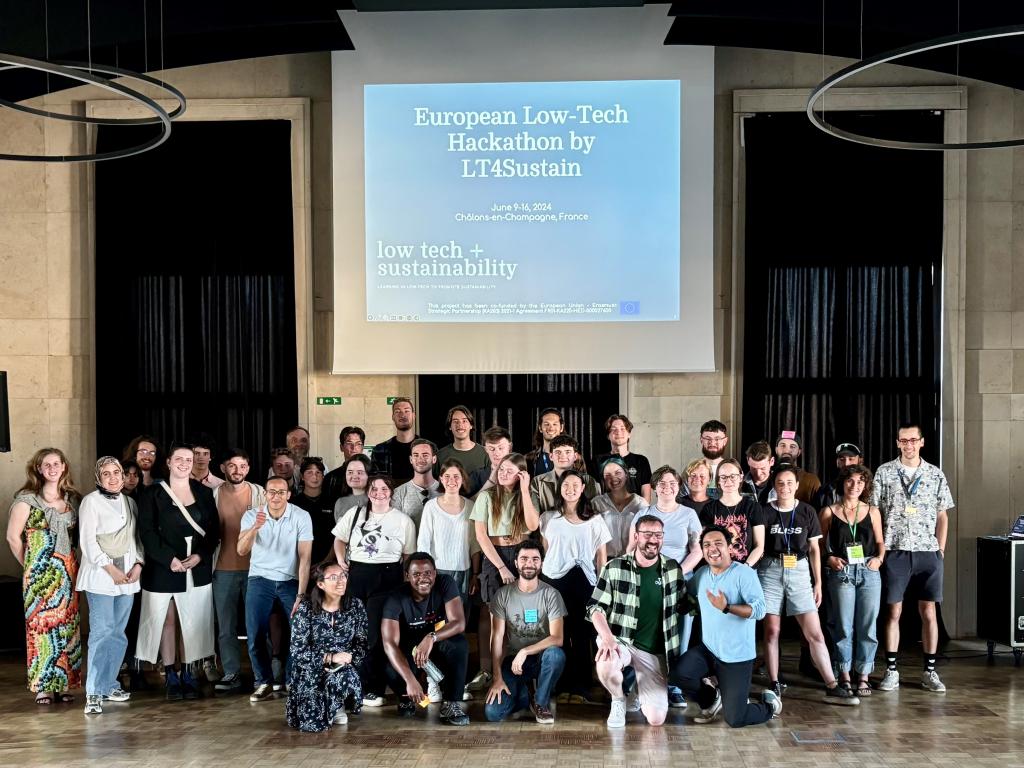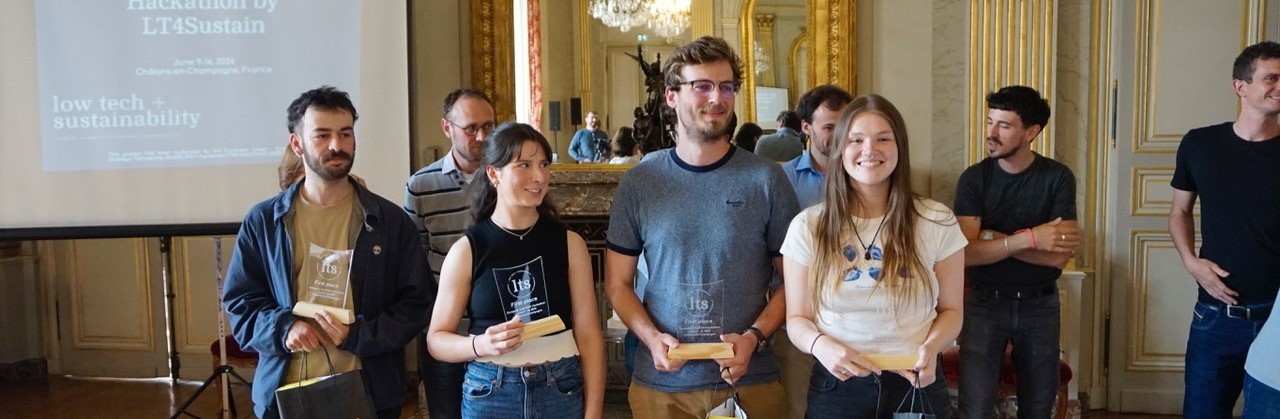
From June 9 to 16, the Châlons-en-Champagne campus hosted the Low-Tech hackathon, a landmark event dedicated to ecological transition.
Organized as part of the European Erasmus+ project LowTech for Sustainability (LT4Sustain) Led by Tatiana REYES from the Arts et Métiers Institute Arts et Métiers Chambéry, this hackathon brought together nearly 80 participants, including students, researchers, and practitioners from the five project partners: University of Technology of Troyes, University of Mons, TU Dublin, Grenoble Institute of Technology and Low-Tech Lab in Grenoble.
A warm welcome on campus
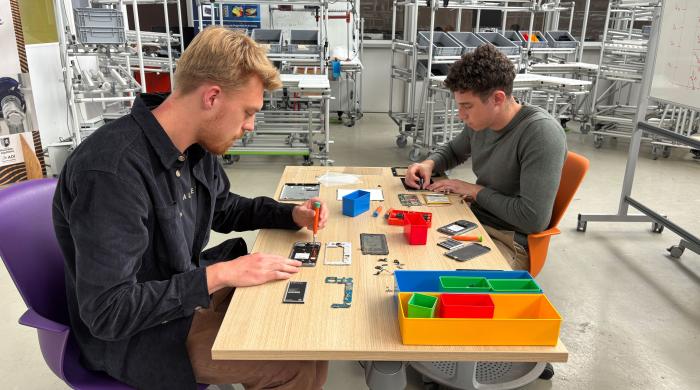
The logistics staff worked hard to welcome participants, accommodate them in the residence, and provide them with breakfast and friendly breaks. The staff of the Collaborative Workspace in Engineering Sciences made the Fablab and the Library available to them. This allowed students to design and prototype their low-tech solutions in a functional environment and under optimal conditions. T-shirts and trophies made at the FabLab were also distributed to participants.
A collaborative project
This Hackathon provided participants with an opportunity to develop innovative and sustainable solutions that meet the needs of the Châlons region. Guided by local and international experts, the six groups of students worked on urban agriculture, multimodal mobility, digital transformations, and heating and cooling solutions for residential spaces. The event benefited from the support of local stakeholders such as DRIGET, the City and theChâlons-en-Champagne metropolitan area, as well as the Champagne house Joseph Perrier, highlighting the importance of local cooperation in implementing sustainable solutions.
The solutions presented
The projects developed were presented to a jury composed of local stakeholders and low-tech experts, including Quentin Mateus from LowTech Lab, Arnaud Cretot from Neoloco. Four major solutions were proposed:
A composter designed from a treadle sewing machine.
Recovering waste heat from a refrigerator and transferring it to a cabinet.
A third-place bus stop where users can not only wait comfortably, but also pick up parcels from the post office and local producers, park their bikes, and repair them using a toolbox provided. This project won over the jury.
The transformation of military wasteland into vegetable gardens.
Conferences and round tables
At the same time, a series of 16 conferences and round tables open to the public were held, attracting more than 100 participants online and in person. Speakers such as Philippe Bihouix, author of "L'âge du Low-Tech" (The Age of Low-Tech), and Emmanuel Poisson from Explore shared their expertise and visions for a more sustainable future, raising awareness among all participants about low-tech approaches.
A big thank you to the staff of the logistics department, Fablab, and library for their contribution to the success of this event, which helped raise awareness of the emerging LowTech theme on the Châlons-en-Champagne campus.
In fact, a new specialized unit within the Grande Ecole Engineering Programme its first students this coming September!