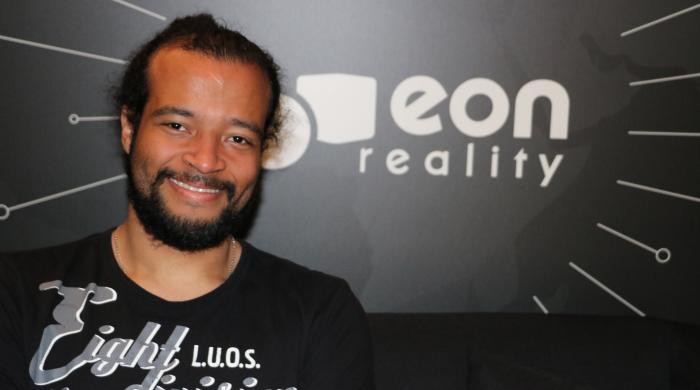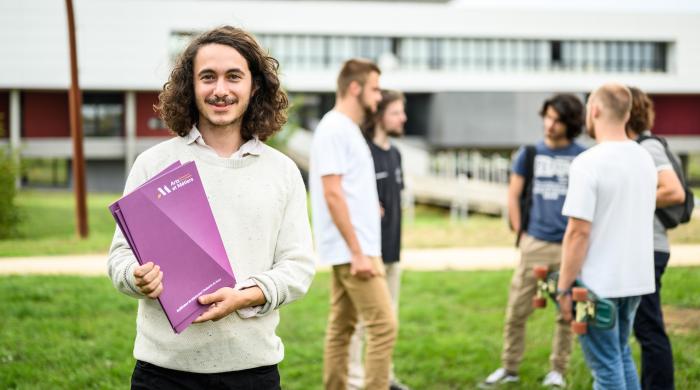
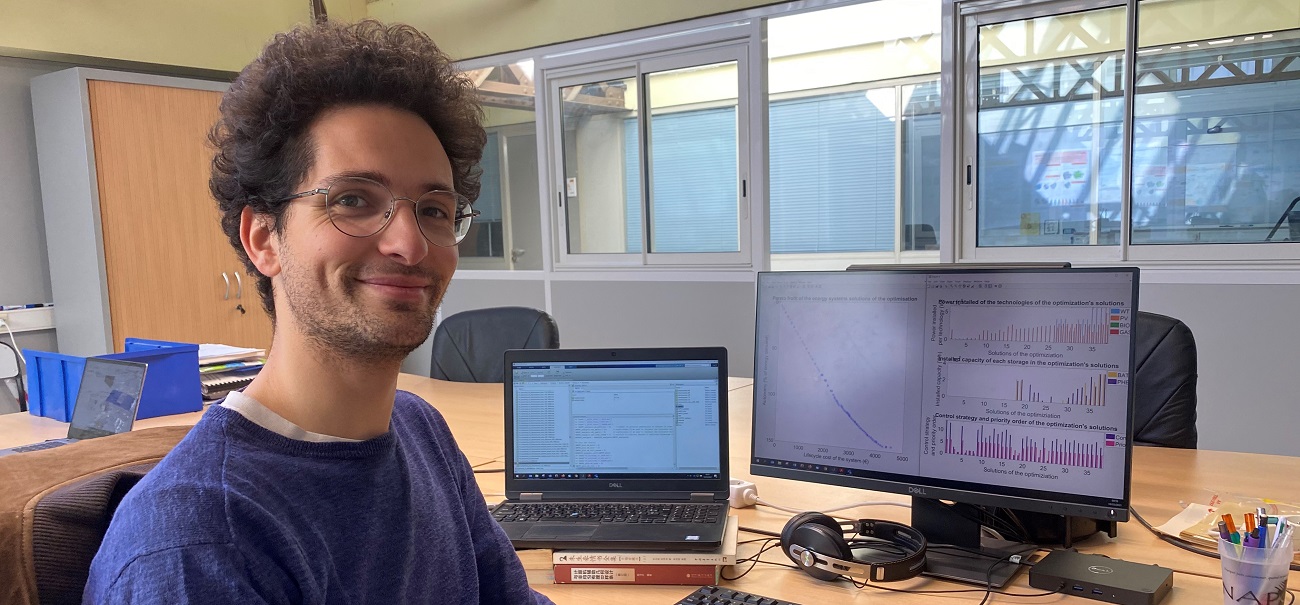
Meet Nathanael Dougier, a third-year doctoral student in energy engineering at the Lispen laboratory on the Arts et Métiers campus Arts et Métiers .
In line with current climate concerns, his research aims to develop a decision-making tool for designing hybrid electricity mixes (wind, solar, hydro, storage, etc.) to meet a region's electricity consumption needs.
A look back at his committed career path and his decision to pursue a PhD.
A PhD: the best way to train in research
I studied general engineering, with a focus on energy and the environment, atIMT Atlantique. At the end of my engineering studies, I had the opportunity to take a "Parcours Excellence Recherche" (Research Excellence Course), which gave me my first taste of the field of research.
I had wanted to do research (academic or corporate R&D) for a long time. Writing a thesis seemed like the best way to train myself.
Research as an obvious solution to environmental and societal challenges
"I looked for a thesis topic that matched my interests and beliefs,"explains Nathanael. "I was fortunate to find the right conditions at the Lispen laboratory, under the supervision of Lionel Roucoules, Pierre Garambois, and Julien Gomand."
My thesis work focuses on designing electricity mixes at the regional level, i.e., choosing electricity generation and storage technologies. For example, if a city wants to generate its own electricity in order to be self-sufficient or reduce its environmental impact, my job is to help it select the right technologies and choose a management strategy.
I am designing a computer tool (programmed in Matlab) that finds the best possible mixes for a given situation. This tool takes as its input the region's electricity consumption, meteorological data for the study period, and the potential of each technology. It uses a physical model of each element and a simulation of its operation to evaluate the performance of an electricity mix. Subsequently, an optimization step (using a genetic algorithm) allows several compromises to be found between economic, technical, and environmental objectives.
The aim is therefore to offer the user several solutions tailored to their objectives. This means that the focus is not solely on the cheapest solution, as has long been the case. It also provides more choice in terms of the performance and composition of the electricity mix. For example, the user may be willing to pay a little more for a much less polluting mix or for one technology rather than another.
This topic is in line with current climate concerns, and my work will help develop more sustainable electricity mixes, i.e., those with a reduced impact on the environment and at a reasonable cost.
The doctorate: a challenge in terms of project management and independence
The doctoral experience is exciting but requires a significant investment. My assessment of my first two years of thesis work is very positive. Every day is different, and you learn something new every day. The thesis is a challenge in terms of long-term project management. You have to be rigorous and organized to plan your work over three years. The autonomy you have in your work allows you to work at your own pace and gives you a much greater sense of responsibility.
I have been able to try out other activities: I teach classes on sensors and automation. I also had the opportunity to put together a class on wind power.
As I come to the end of my third year, I still need to refine my results and write my thesis manuscript.
I have successfully developed skills in various areas (energy modeling, optimization, sensitivity analysis, etc.) and acquired a sound research methodology.
Once I have completed my thesis, I would like to continue researching energy and environmental topics (energy efficiency, mix assessment, renewable energy development, storage, etc.). Several paths are open to me: an R&D job combining research and practical application, a postdoctoral contract abroad to discover another country and new ways of working, etc.
Any advice for people interested in pursuing a PhD?
When choosing a thesis, the subject is important, but so is the working environment (laboratory) and living environment.
"Do your research before you start to get the most out of this experience. And enjoy yourself!" advises Nathanael.